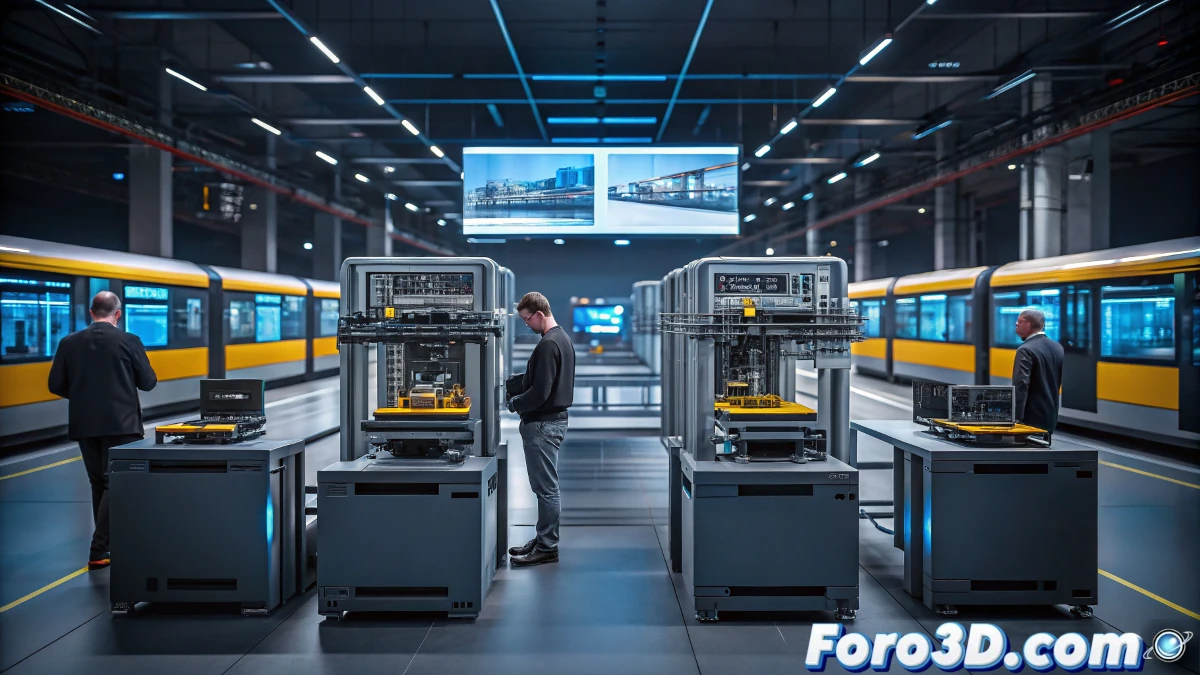
The Rise of Additive Manufacturing in the German Capital
In recent years, Berlin has become a key point for the development of industrial 3D printing. With innovative initiatives and the backing of public investment, the city has driven the growth of this technology in strategic sectors such as transportation, construction, and healthcare.
Institutional Support for Innovation
The local government has allocated significant resources to consolidate Berlin as a center for advanced manufacturing. Through research projects and collaboration between universities, tech companies, and public institutions, solutions have been created that improve efficiency and reduce production costs.
“Berlin is laying the groundwork for a more efficient and sustainable industry thanks to 3D printing.”
Impact on the Transportation Sector
The use of 3D printed parts has revolutionized the maintenance and manufacturing of spare parts in railway and urban transport systems. Specialized companies have managed to optimize the production of critical components, eliminating dependencies on external suppliers and reducing repair wait times.
- Greater autonomy: internal manufacturing of spare parts without intermediaries.
- Cost reduction: reduced need for storage of traditional parts.
- On-demand production: immediate printing of components when required.
Construction and Medicine: Beyond Transportation
In construction, the use of 3D printed materials is enabling the development of more resistant and sustainable infrastructure. In the field of medicine, the technology is used to create detailed anatomical models, improving treatments and personalizing prosthetics for patients.
Berlin as a Benchmark in Advanced Manufacturing
With the continuous advancement of additive manufacturing, Berlin aims to position itself as a global leader in 3D printing by 2030. The combination of strategic investment, technological development, and cross-sector collaboration is driving a change in how goods are produced and resources are managed.