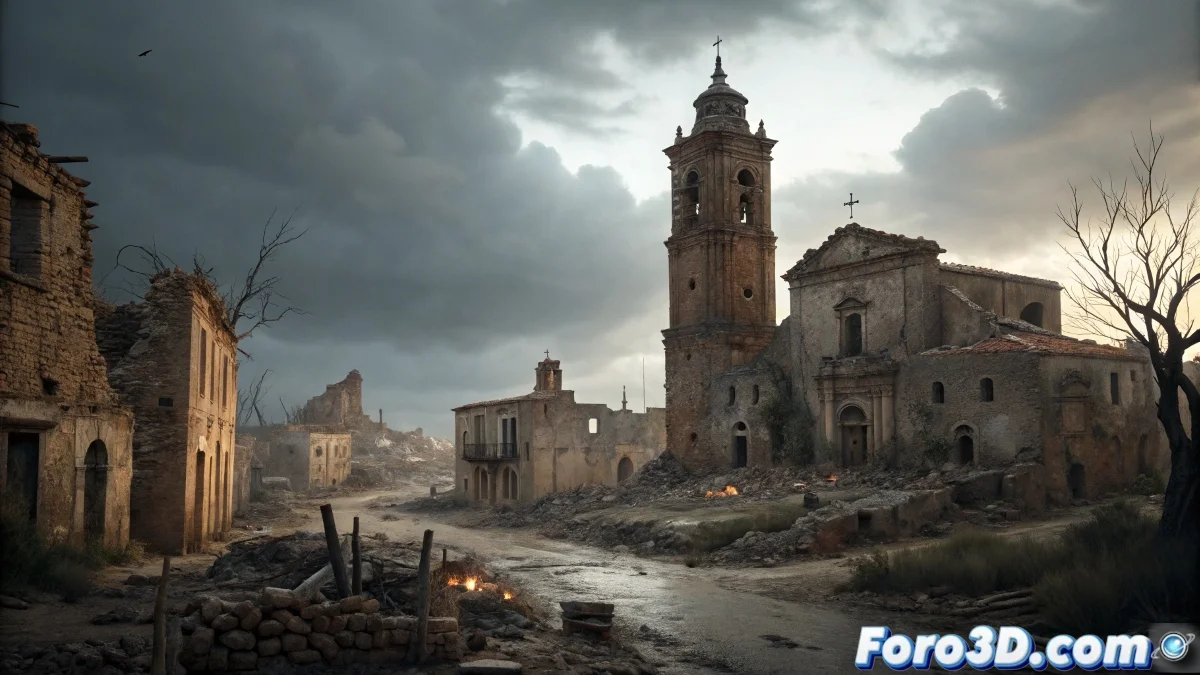
The Echo of Souls
Among the Aragonese lands stands a silent testament that speaks of both history and mystery. 🏚️ The old town of Belchite, destroyed during the 1937 combat of the Spanish Civil War, remains as a collection of ruins petrified in time that were never rebuilt. This scene frozen at the exact moment of its destruction has become the epicenter of numerous paranormal phenomena documented by investigators. The EVPs recorded among its crumbling walls capture voices, desperate screams, and prayers that seem to emerge directly from the past, creating an atmosphere where the boundary between the historical and the supernatural blurs completely.
Memory and Legend
Beyond its reputation as a haunted place, Belchite represents a profoundly human symbol of historical memory and reconciliation. The duality between the documented facts of the armed conflict and the legends of souls trapped between dimensions creates a unique narrative fabric. This ghost town functions as a meeting point where historians seek to preserve factual truth, while paranormal investigators explore the emotional echoes that seem to inhabit its empty spaces. The combination of historical tragedy and supernatural mystery has turned Belchite into a place of pilgrimage for those seeking to understand the limits of our perception of reality.
Numerous paranormal investigators have recorded shocking EVPs in its ruins
Recreation in Nuke
For digital compositing artists, Belchite presents the perfect challenge to explore techniques that fuse historical realism with subtle supernatural elements. Nuke offers the precise control needed to build scenes that respect architectural authenticity while incorporating believable paranormal effects. The creative challenge lies in evoking the presence of the invisible without falling into exaggerations that compromise the solemnity of the historical site.
Project Setup and Nodal Organization
The convincing recreation of Belchite requires meticulous planning from the initial composition phase. The node graph structure determines workflow efficiency and flexibility for iterations.
- Reference Organization: Import and organize historical photographs and reference material in the node graph
- Modular Structure: Design logical node groups for different elements such as ruins, atmosphere, and effects
- Format Management: Configure projects with appropriate color depth and resolution for cinematic quality
- Backup System: Implement incremental saves and versioning to protect work during development
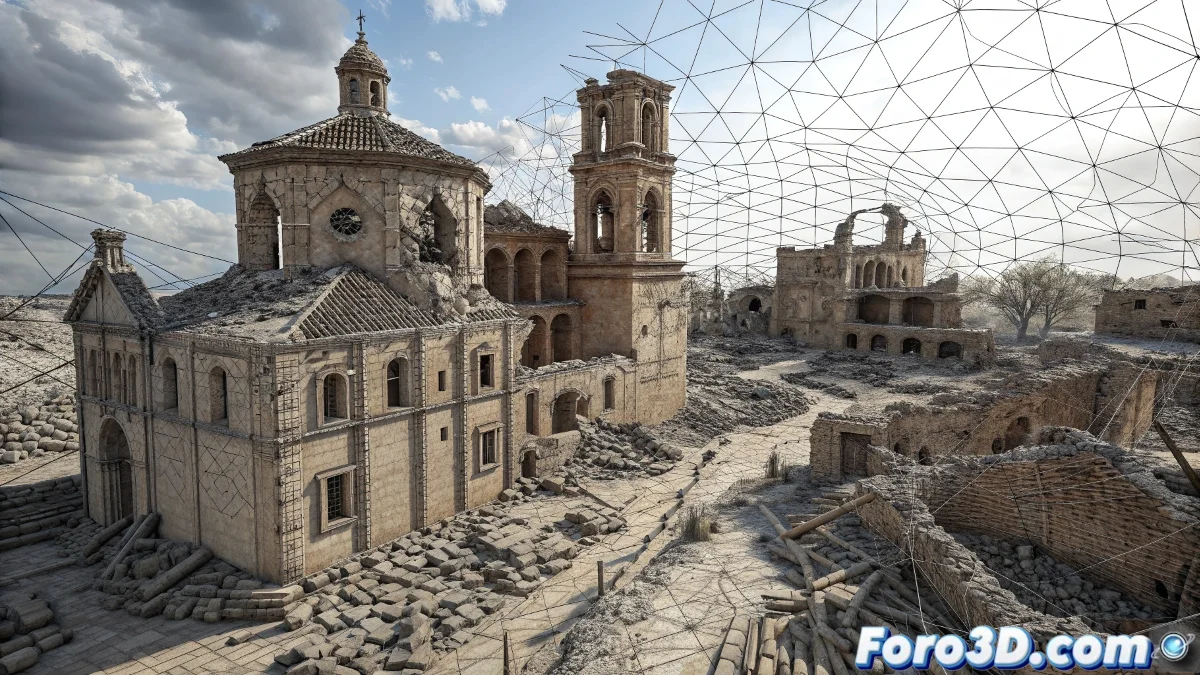
Building the Historical Environment
The visual foundation must convey historical authenticity while establishing the appropriate emotional tone. Each architectural element tells a part of the story.
- Integration of 3D elements projected onto cards to create realistic depth and perspective
- Application of deterioration and erosion textures that show the passage of time on materials
- Compositing of different ruin planes to create a sense of scale and the town's expanse
- Inclusion of specific architectural details that reflect the construction style of the era
Atmospheric and Environmental Effects
The atmosphere is the element that ties all visual components together and establishes the emotional tone. Environmental effects should feel organic and integrated.
- Creation of fog and suspended dust using combinations of noise patterns and controlled gradients
- Implementation of particle systems to simulate earth kicked up by the wind among the ruins
- Development of ambient lighting that reflects specific weather conditions and times of day
- Application of atmospheric depth effects to accentuate distance and isolation
Paranormal and Narrative Elements
Supernatural effects should be incorporated