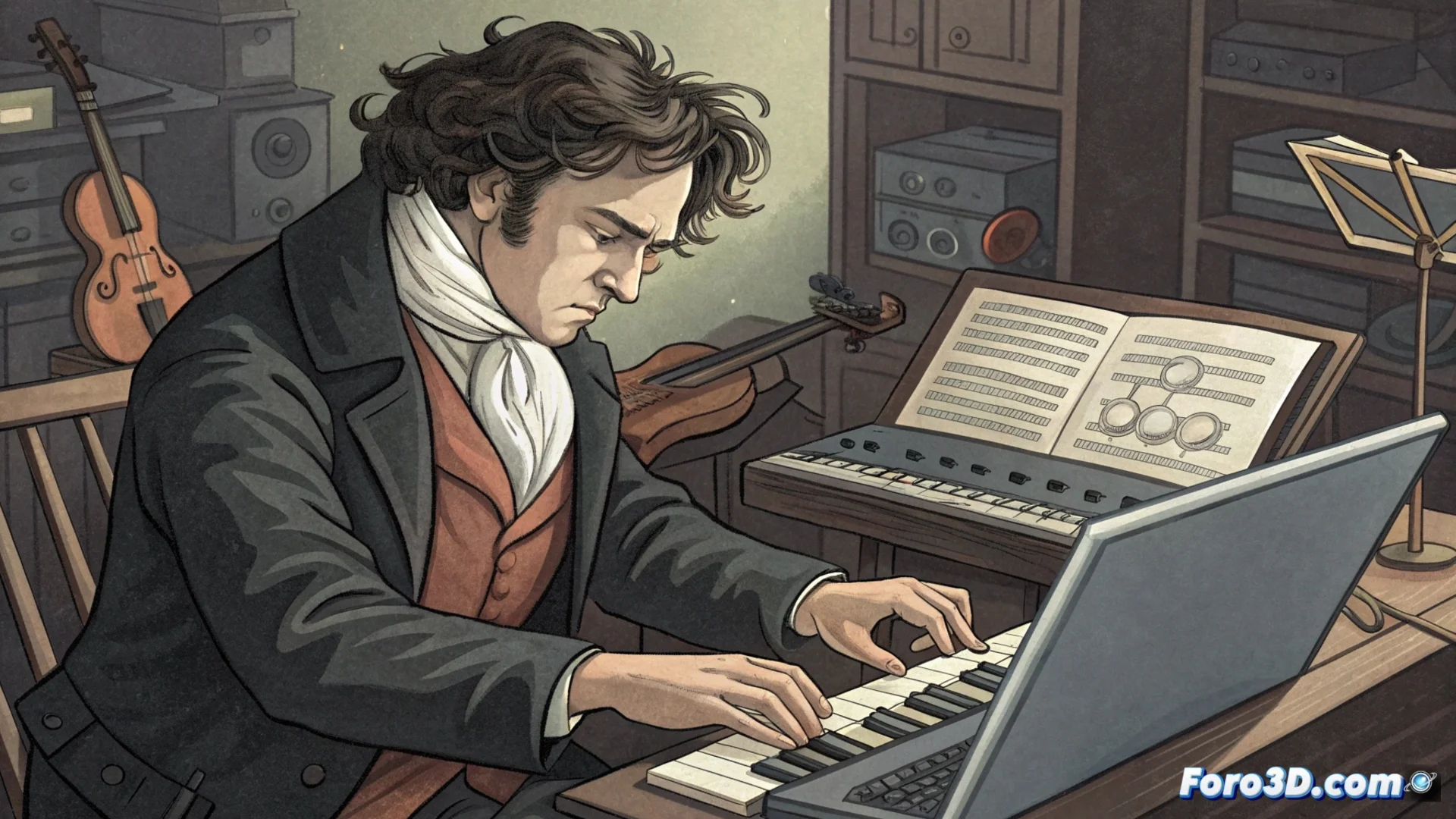
Beethoven Designs a Symphony for Planet Earth Today
What if Ludwig van Beethoven's genius existed in our time? Even if his hearing deteriorated, his creative mind would adopt today's digital tools. Instead of limiting himself to sheet music, he would explore how to turn data streams into sonic experiences. His goal would be to create a Symphony for Planet Earth, a work that is not fixed, but continuously generated from live information. 🎵
The score is written with real-world data
This symphony would process seismic information, climate patterns, and biodiversity states. Each event, like an earthquake or a temperature change, would trigger a specific musical motif. An algorithm, under the composer's supervision, would orchestrate these elements to form a coherent piece. The violins could map tectonic plate movements, and the wind instruments would interpret atmospheric circulation patterns. The health of the oceans would directly modulate the intensity and texture of the cellos and double basses.
Data sources that feed the composition:- Seismic activity: Translated into rhythms and counterpoints in the string section.
- Climate variables: Temperature and pressure changes define the harmonies of the brass and woodwinds.
- Biodiversity reports: The state of species influences the melodies and silences of the work.
The idea is not only artistic, but also educational. By perceiving the sonic changes, the audience would intuitively understand phenomena like global warming.
A sonic broadcast to raise awareness
This constantly evolving work would be available on a global audio broadcast. Anyone with an internet connection could listen to how the planet sounds at that precise moment. Beethoven would use his legacy to direct attention to the urgency of preserving the environment, making the audience feel the environmental changes.
Key features of the broadcast:- Universal access: Available to any online user, at any time.
- Real-time updates: The music changes as new data arrives.
- Educational capacity: Transforms complex data into a direct sensory experience.
The master's touch in a world of data
It is likely that, within this constant flow of information, the composer would find a way to include an unexpected sforzando, a sudden and powerful musical accent, every time a harmful human action is recorded, such as unnecessarily starting a combustion engine. This artistic gesture would underscore the direct connection between individual actions and the planet's sonic state. 🌍