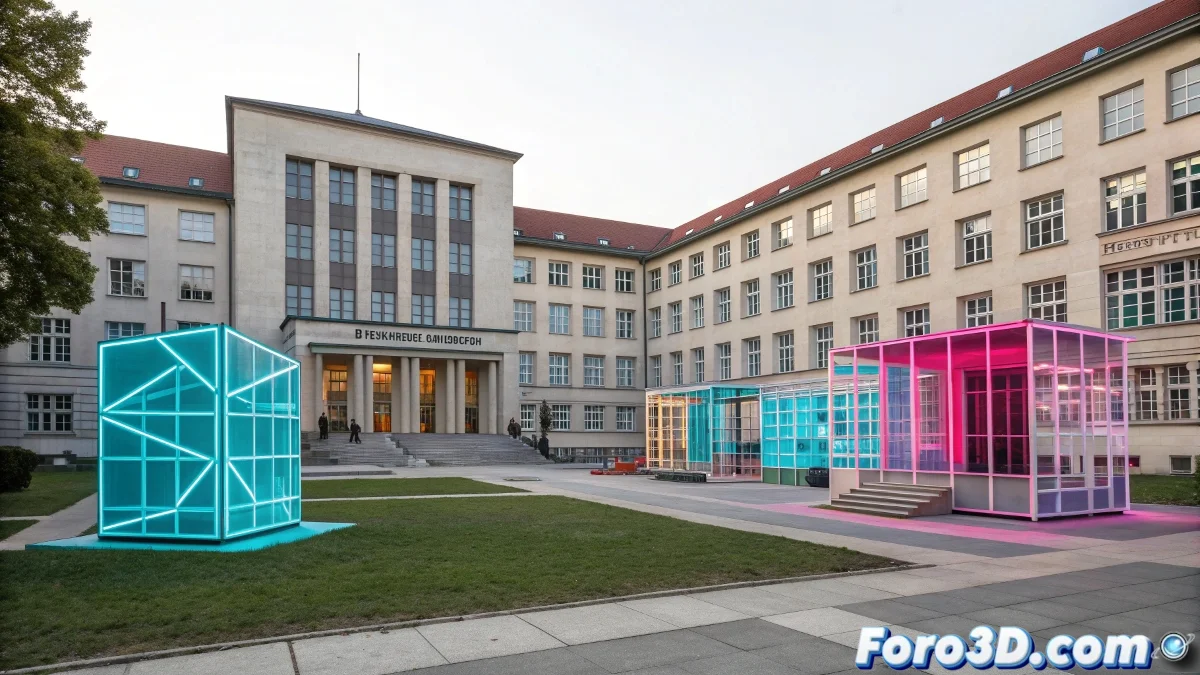
Bauhaus Legacy Meets Digital Fabrication
The renowned Bauhaus University Weimar, the cradle of modern design and functionalist architecture, has embarked on a fascinating journey into the technological future. By integrating 3D printing into its academic programs, the institution demonstrates how a century-old tradition can perfectly dialogue with the most advanced tools of digital fabrication. A natural evolution for the school that revolutionized design in the 20th century and now prepares its students for the challenges of the 21st.
Over a Hundred Years Later, the Essence Endures
Founded in 1919 under the premise of uniting art, craft, and technology, Bauhaus finds in 3D printing the ideal medium to update its educational philosophy. The same principles of functionality, simplicity, and efficiency that guided Walter Gropius and his contemporaries are now applied using high-precision printers and advanced modeling software. The essence remains, even though the tools have evolved in an extraordinary way.
The Digital Workshop as a Natural Extension of Learning
- Fabrication of architectural models with millimeter precision
- Rapid prototyping of furniture and design elements
- Experimentation with complex organic geometries
- Testing of innovative and sustainable materials
Applied Research That Transcends the Classroom
The university is not limited to teaching but leads research projects that could redefine the construction of the future. From 3D printed concrete for modular housing to structures inspired by natural patterns optimized through algorithms, the institution keeps alive the innovative spirit that has always characterized it. Collaborations with industry ensure these advances transcend the academic sphere.
Projects That Honor the Past While Looking to the Future
- Development of sustainable building materials
- Structural optimization through generative design
- Integration of artisanal techniques with digital processes
- Digital preservation of architectural heritage
An institution that demonstrated that design must serve people now teaches how technology can amplify that service in the digital age.
For students, this technological integration means being able to materialize their ideas with previously unthinkable precision, testing structural and formal solutions in record time. The ability to iterate rapidly between the digital model and the physical object greatly enriches the creative process and brings academic training closer to today's professional reality 🏗️.
And so, while the ghosts of Gropius and Klee watch from somewhere in the universal design, their academic heirs demonstrate that true tradition does not consist of repeating the past, but of reinventing it with each new technology... although the founding masters probably would have killed to have a 3D printer in their workshop 😅.