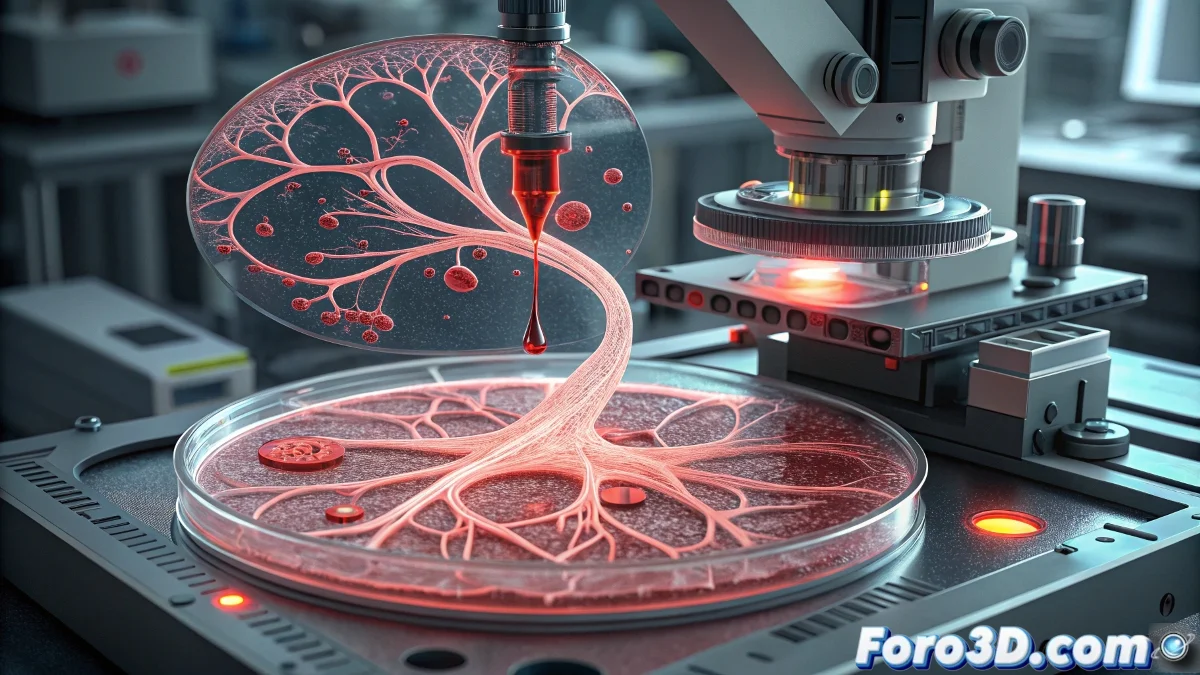
The Vascular Revolution Comes from the Basque Country
A team of researchers from the Basque Country has achieved what many considered the holy grail of tissue engineering: creating functional blood vessels using advanced 3D bioprinting techniques. This breakthrough is not just another technical achievement, but a turning point that could redefine the future of transplants and regenerative medicine. The solution to a problem that has haunted science for decades seems closer than ever thanks to this innovative methodology.
The Historical Challenge of Vascularization
For years, the scientific community had made impressive advances in creating tissue structures, but all hit the same wall: without a functional vascular system, any tissue thicker than a couple of millimeters was doomed to necrosis. The Basque researchers compare this challenge to building a complete city without first installing water pipes and electrical networks. Form without function is useless in the complex ecosystem of the human body.
The Engineering Behind the Vascular Miracle
- Precision bioprinting with living endothelial cells
- Use of biocompatible hydrogels as structural scaffolds
- Prior digital modeling of complex vascular networks
- Layer-by-layer deposition controlled by specialized software
Beyond Printing: The Functionality
What distinguishes this achievement is not simply the creation of tubular structures, but their ability to transport fluids similarly to natural vessels. The cells used in the process maintain their functionality and begin to organize as they would in a natural environment. A process that combines artificial precision with the inherent biological intelligence of the stem and specialized cells used in the biofabrication process.
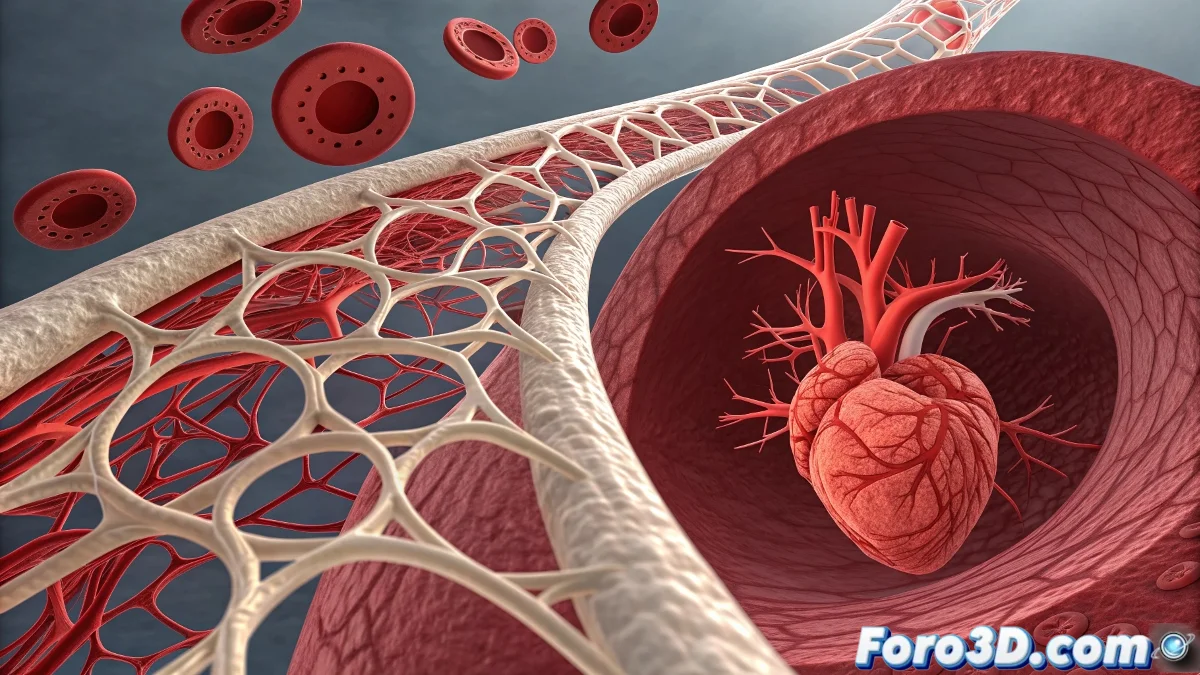
Implications for the Medical Future
- Development of complete organs for transplant
- Personalized therapies using the patient's own cells
- Drastic reduction of immune rejection
- Advances in pharmacological testing with vascularized tissues
A monumental step that brings medical science fiction closer to clinical reality, demonstrating that sometimes the greatest advances come from solving the most fundamental problems.
This breakthrough represents that missing puzzle piece needed for regenerative medicine to make the definitive leap from the laboratory to common clinical practice. The ability to create functional vascular networks opens the door to more complex tissues and, eventually, complete organs ready for transplant ❤️.
And all this shows us that, in regenerative medicine, the most important thing is not building the perfect organ, but installing its internal plumbing correctly... because a luxury liver is useless if blood doesn't reach it to function 😅.