A Barnacle Adhesive Could Improve Intestinal Treatments
Nature offers ingenious solutions to complex medical challenges. 🦪 Researchers are now focusing on the powerful glue that barnacles use to adhere to surfaces, aiming to design a new system that delivers medications directly to the colon. This bioinspired approach seeks to treat conditions like ulcerative colitis more precisely and effectively.
An Intelligent Vehicle Inspired by Marine Biology
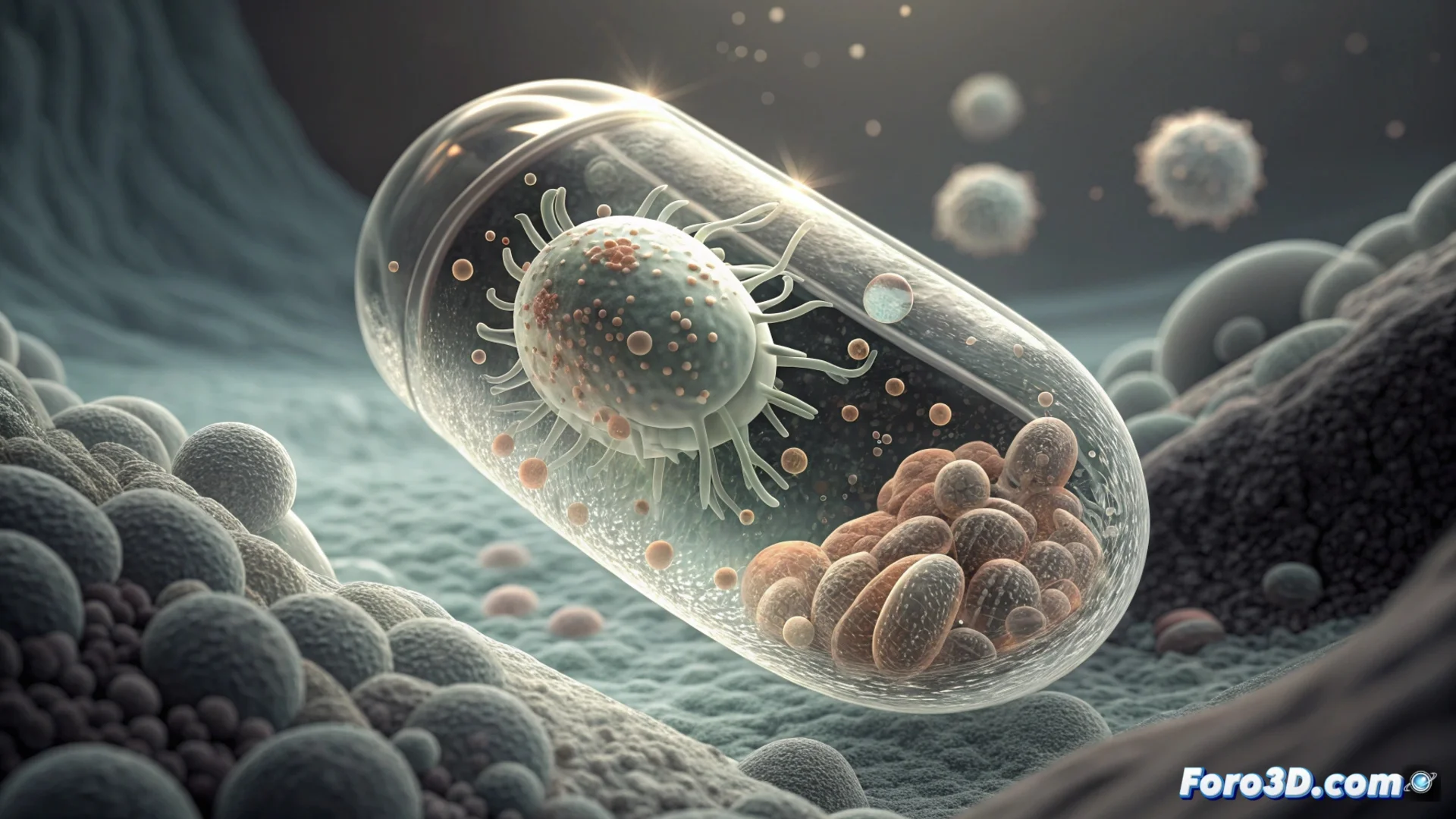
The team from the University of Sheffield processes this natural biopolymer to manufacture microcapsules. These tiny spheres can encapsulate and protect drugs, such as mesalazine, during their journey through the digestive tract. The key lies in their selective behavior: the material is stable in the acidic environment of the stomach but disintegrates in the alkaline environment of the large intestine, releasing its payload right where it is needed. 🎯
Key advantages of this system:- Targeted release: The drug is activated specifically in the colon, increasing its therapeutic efficacy.
- Reduce side effects: By preventing the medication from being absorbed prematurely in the small intestine, adverse reactions are minimized.
- Optimize dosage: It could allow for smaller amounts of medication or less frequent administration.
The next time you struggle to remove a barnacle from a boat, think that its stubborn glue could help millions of people.
Promising Results and Next Steps
Initial tests in a model simulating the human digestive system have yielded encouraging data. The capsules derived from the adhesive maintain their structure under conditions mimicking the stomach and small intestine, fulfilling their role as a protective barrier. The next crucial step will be to test the system in animal models to validate its safety and efficacy in vivo.
The potential of this strategy:- Offer an alternative to current treatments, which often require high doses.
- Achieve more localized and controlled delivery of the active ingredient.
- Address inflammatory bowel diseases with an innovative and less invasive method.
Looking to the Future of Therapy
This project exemplifies how biomimicry can revolutionize medicine. By imitating strategies proven by evolution, such as the barnacle adhesive, pathways open up for developing smarter and more body-friendly therapies. If subsequent trials are successful, this controlled-release vehicle could mark a before and after in how chronic intestinal conditions are managed. 🌊