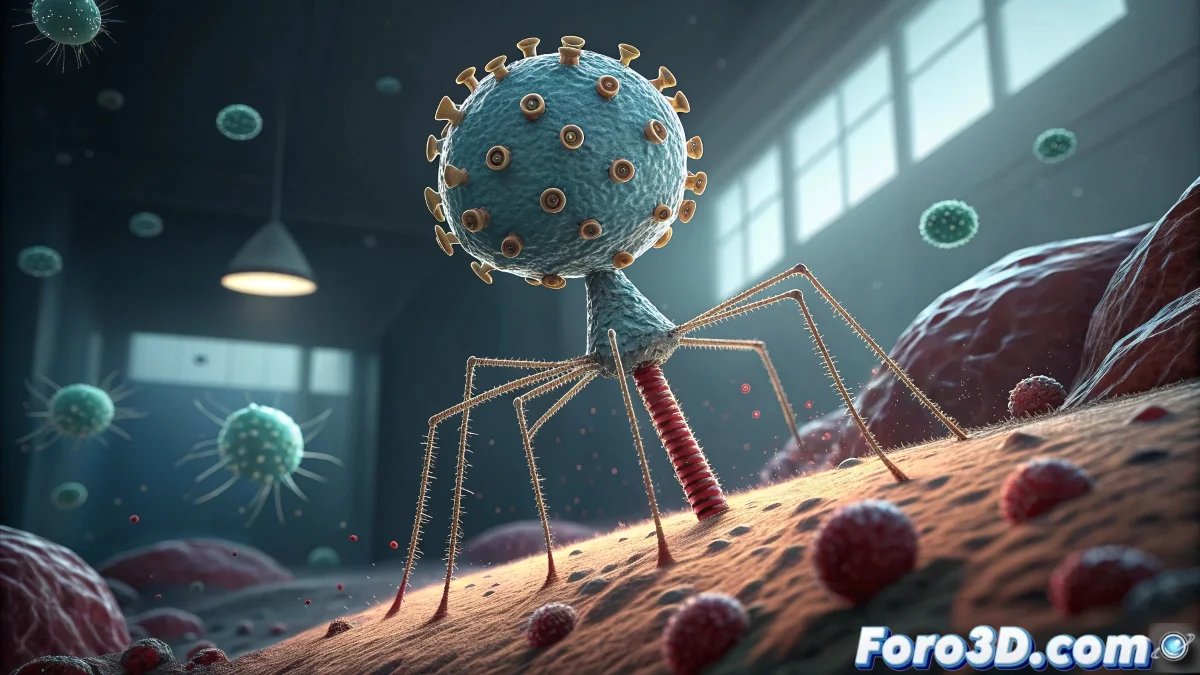
When Your Enemy's Enemy Becomes Your Best Ally
A recent study has brought to the table a hopeful alternative in the fight against one of the greatest threats to modern medicine: antibiotic-resistant infections. The solution might lie in bacteriophages, viruses that specifically infect and destroy bacteria. Despite their potential to save lives in cases where conventional drugs fail, access to these innovative therapies is still very limited in countries like Switzerland, leaving many patients without this treatment option. It is a field full of promises but also regulatory barriers. 🦠
Houdini: Visualizing the Microscopic War
To understand the elegance and precision of this therapy, tools like Houdini are invaluable. They allow the creation of detailed visual simulations of how these hunter viruses locate, adhere to, and ultimately destroy target bacteria. Using particle systems, fluid dynamics, and programmable collisions, this process can be illustrated at the microscopic level, transforming a complex concept into a clear and educational visual narrative.
Simulating the Precision of a Targeted Treatment
Recreating this therapy in Houdini requires an approach that combines biological realism with visual clarity.
- Modeling the Actors: Create simple geometries to represent bacteria and the distinctive shape of bacteriophages.
- Population Dynamics: Use particle networks (POP Networks) to simulate Brownian motion and random encounters in a liquid medium.
- Programming the Interaction: Using VEX or POP Wrangle, code the infection logic: the bacteriophage binds to the bacterium, infects it, and lyses (breaks) it.
- Lighting and Rendering: Set up lighting that highlights the action and render with an engine like Redshift to achieve a scientific and clear look.
The result is a powerful scientific communication tool. 💻
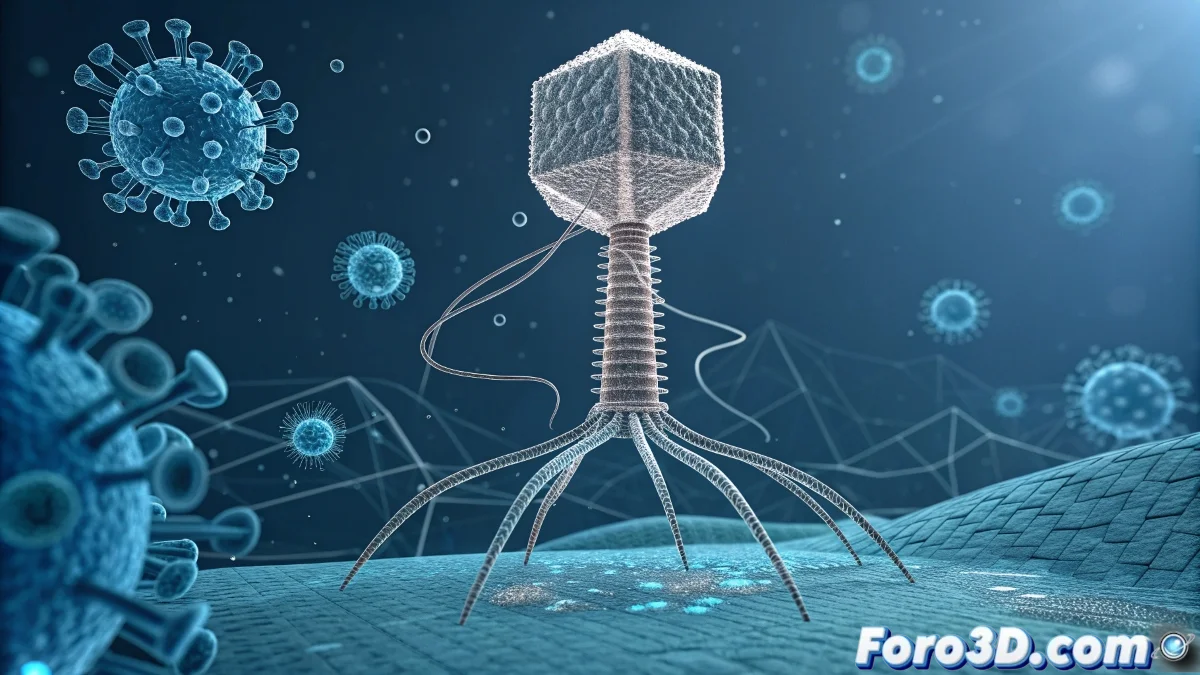
This approach could revolutionize personalized medicine and the fight against superbugs, offering precise and less invasive alternatives.
The Potential and Challenges of Phage Therapy
Beyond visualization, phage therapy represents a paradigm shift. Unlike broad-spectrum antibiotics, which wipe out both good and bad bacterial flora, bacteriophages are specific. This allows for tailored treatments for each patient and bacterial strain, minimizing side effects. However, its development faces challenges such as the need to identify the right phage for each bacterium and the slowness of regulatory frameworks to approve live therapies. 🧪
In the end, this therapy reminds us that sometimes the most elegant solutions already exist in nature. We just need the wisdom to understand them and the technology to apply them. And who would have thought that viruses, so often feared, could become some of the smallest heroes in medicine. 😉