When Science Fiction Becomes Reality: Bacteria That Create Medicine ♻️
Researchers have discovered that certain fecal bacteria possess the extraordinary ability to transform plastic waste into paracetamol, one of the most widely used drugs worldwide. This revolutionary finding not only opens new strategies for plastic recycling but also proposes a sustainable method for drug production. Biotechnology once again demonstrates its potential to solve problems that seemed unsolvable, and Blender presents itself as the ideal tool to visualize this microscopic process in a comprehensible and visually appealing way.
Modeling the Microscopic Universe in Blender
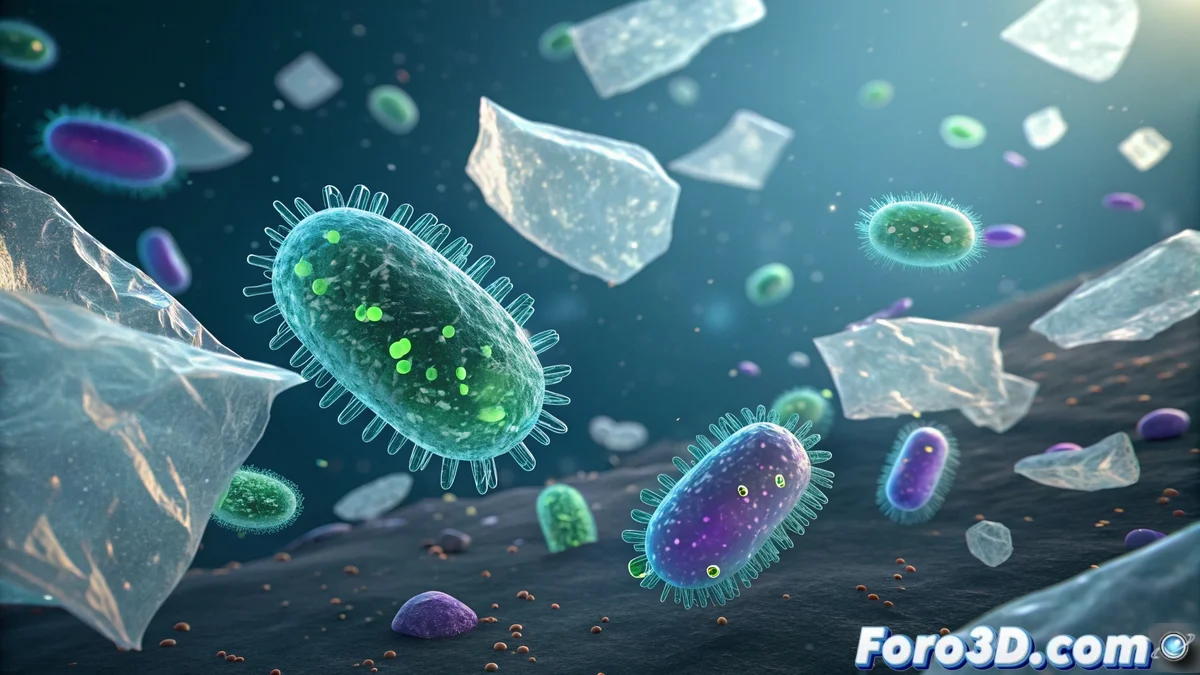
To represent this news in 3D, a scene is created that simulates a microscopic environment where bacteria interact with plastic fragments. The process begins by modeling the bacteria as organic organisms with irregular surfaces and cellular details, using subdivision surface and displacement modifiers to achieve realism. The plastic waste is modeled as fractured and angular shapes, creating a visual contrast between the organic and the synthetic that is fundamental to the visual narrative. 🦠
Material System and Shaders for Visual Differentiation
The key to communicating the transformation process lies in the materials and shaders. Translucent materials with subsurface scattering are assigned to the bacteria, simulating their cell membranes, while the plastic fragments receive shaders with high roughness and vibrant artificial colors. To represent the resulting paracetamol particles, emissive shaders with blue or white tones that contrast with the environment are used, visually indicating the chemical conversion. This approach allows for clear differentiation of each element and its role in the process.
In scientific visualization, materials don't just decorate; they explain processes invisible to the naked eye.
Volumetric Lighting and Atmosphere Effects
Setting up proper lighting is crucial to emulate the microscopic environment. A volume scatter is used to simulate an aqueous or gelatinous medium where bacteria and particles float, adding realism and depth to the scene. Area lights with a cool color temperature highlight zones of chemical activity, while the paracetamol is illuminated with faint points of light that suggest its biochemical nature. The result is a scene that appears to be observed through an electron microscope, with that characteristic scientific feel.
Composition and Narrative of the Transformation
The scene is organized to tell the story of the transformation:
- Bacteria in the foreground showing details of their structure
- Decomposing plastic fragments in the process of degradation
- Paracetamol particles emerging as a visible result
- Visual trajectories that guide the eye through the process
Using a camera with a macro configuration and reduced depth of field accentuates the feeling of observing a miniature world, adding dramatic impact to the narrative.
The Final Touch: Between Science and Domestic Irony
While laboratories advance in how fecal bacteria can perform advanced chemistry with our waste, at home we are still struggling to prevent the plastic from the Tupperware from turning into an independent life form in the fridge. Biotechnology works wonders, but our domestic plastic management remains an organizational chaos that not even the most advanced bacteria could solve.
In the end, the true irony is that we need fecal bacteria to solve problems we ourselves created, while Blender allows us to visualize solutions we cannot yet implement on a real scale. The rendering can be perfect, but our relationship with plastic... still needs many more adjustments. 😅