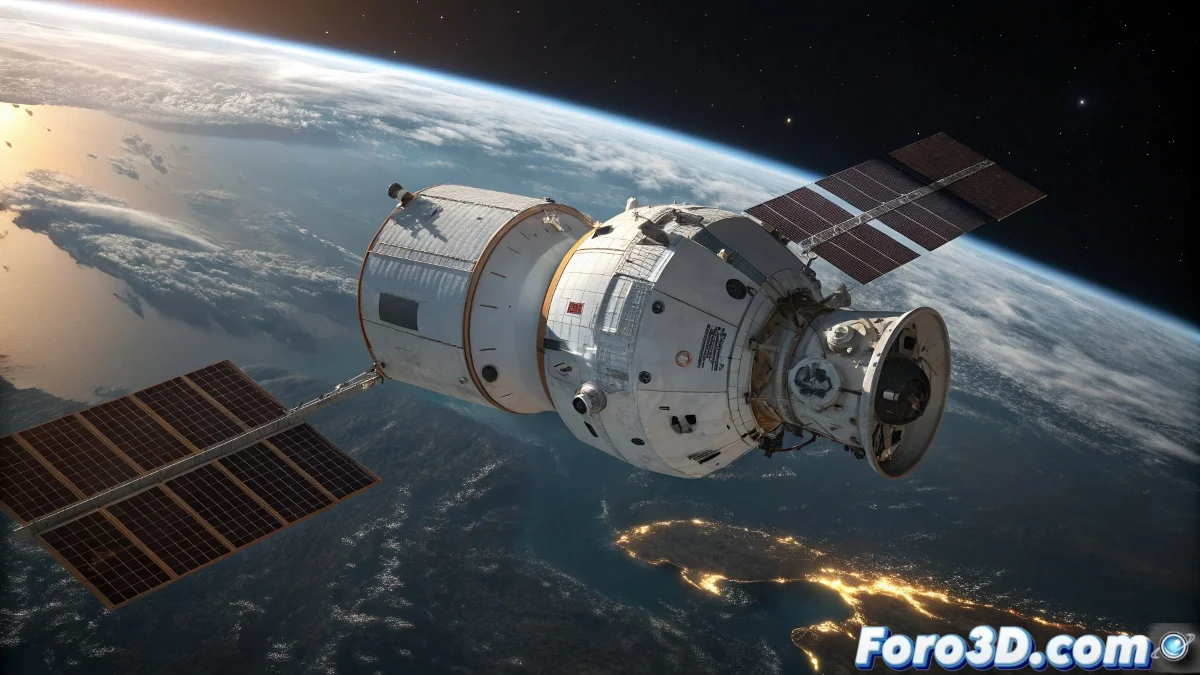
When Space is Rendered Before Launch
While Axiom 4 prepares for its undocking from the ISS, we 3D artists are already recreating every detail digitally. Because in our community, perfect orbits are achieved with keyframes, not rockets. 🚀✨
Why This Mission is Gold for 3D Artists
- Real Data: Official trajectories and models for greater precision
- New Challenges: Simulating microgravity and orbital mechanics
- Collaborations: Material for scientific and educational projects
- Inspiration: The private space age needs visualization
"My undocking simulation was so realistic that NASA asked me for the .blend file... just kidding, but I wish" - 3D Artist with space dreams.
3D Space Toolkit
| Task | Software | Key Technique |
|---|---|---|
| Spacecraft Modeling | Blender | Millimeter Precision |
| Orbital Simulation | Unreal Engine | Custom Physics |
| Microgravity Effects | Houdini | Fluid Dynamics |
| Scientific Visualization | Three.js | Interactive Datasets |
How to Recreate the Mission in 3D
- Gather technical data (trajectories, dimensions)
- Model the ISS and Dragon capsule using real references
- Configure orbital physics and undocking animation
- Add thruster effects and space environment
- Optimize for realtime (Unreal) or final render
The Future We Are Rendering
These simulations open doors to:
- Virtual training for astronauts
- Visualization of complex scientific data
- Interactive educational content
- Rapid prototyping of future missions
While Axiom Space makes history, we can document it in 3D before it happens. Because in our community, space has no limits... only polygons to optimize. 🌍🛰️
So go ahead: animate that undocking, simulate those microgravity experiments, and remember - if your render fails, you can always say it was a problem of... artistic gravity. 😉