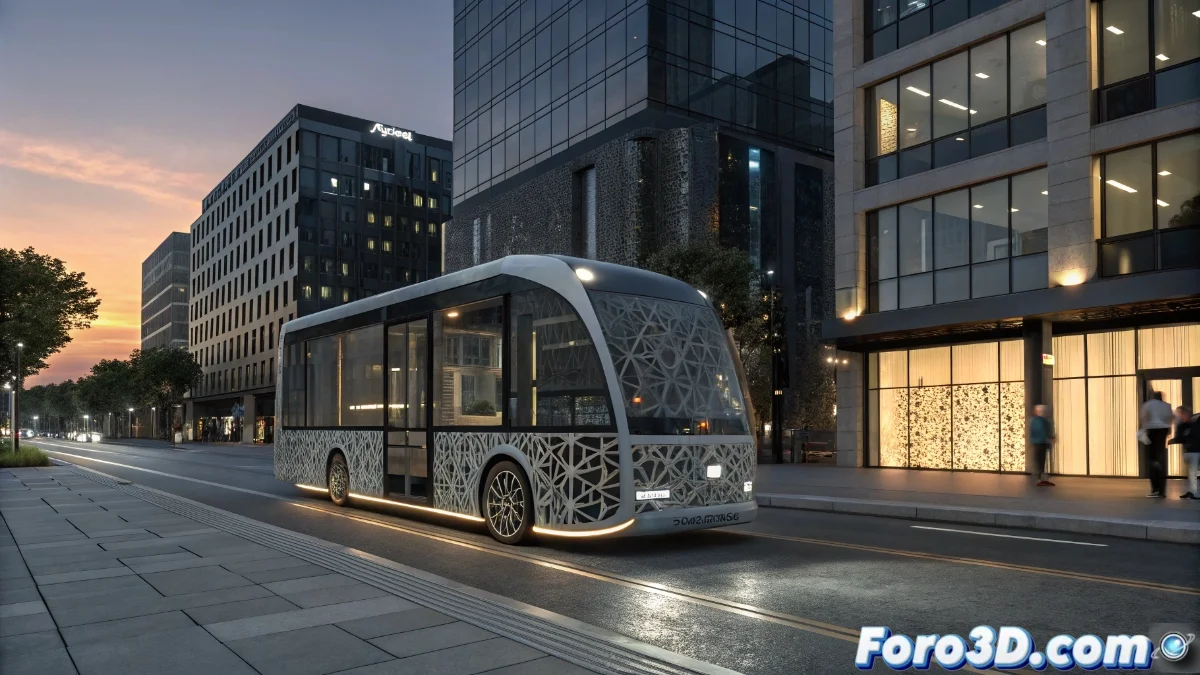
Auve Tech Reinvents Urban Transport with Autonomous Shuttles Featuring 3D-Printed Bodies
The company Auve Tech is marking a before and after in contemporary urban mobility through the development of fully autonomous shuttles that incorporate bodies manufactured using 3D printing. This innovative manufacturing approach enables extraordinarily agile and highly customized production of electric vehicles, perfectly adapting to the specific demands of various metropolitan environments 🚍.
Revolution in Urban Vehicle Manufacturing
The implementation of additive technology allows Auve Tech to achieve drastic reductions in conventional production timelines, transforming processes that traditionally required months into cycles of just weeks. This unprecedented manufacturing agility enables comprehensive customization of vehicles according to specific route requirements, passenger capacities, or integration with existing urban design.
Key Advantages of Additive Manufacturing:- Time Reduction: From months to weeks for complete production
- Advanced Customization: Adaptation to specific routes and variable capacities
- Waste Minimization: Up to 80% less waste compared to subtractive methods
The combination of 3D printing with autonomous driving systems represents the immediate future of sustainable urban transport
Technological Integration for Smart Mobility
These autonomous shuttles fuse 3D printing with level 4 autonomous driving systems, operating without human intervention in controlled and predefined environments. The electrification of transport is harmoniously complemented by sustainable manufacturing processes, creating comprehensively eco-friendly mobility solutions from conception to operation.
Integration Features:- Level 4 Autonomy: Driverless operation in delimited areas
- Composite Materials: Ideal combination of lightness and structural strength
- Rapid Implementation: Customizable fleets according to demographic changes
The Immediate Future of Urban Mobility
Cities can now implement customized fleets with unprecedented speed, effectively responding to demographic fluctuations or temporary transport needs. The futuristic vision where vehicles are manufactured on demand is progressively materializing, although the challenges of conventional traffic remain as a reminder that some urban limitations still escape immediate technological solutions 🕒.