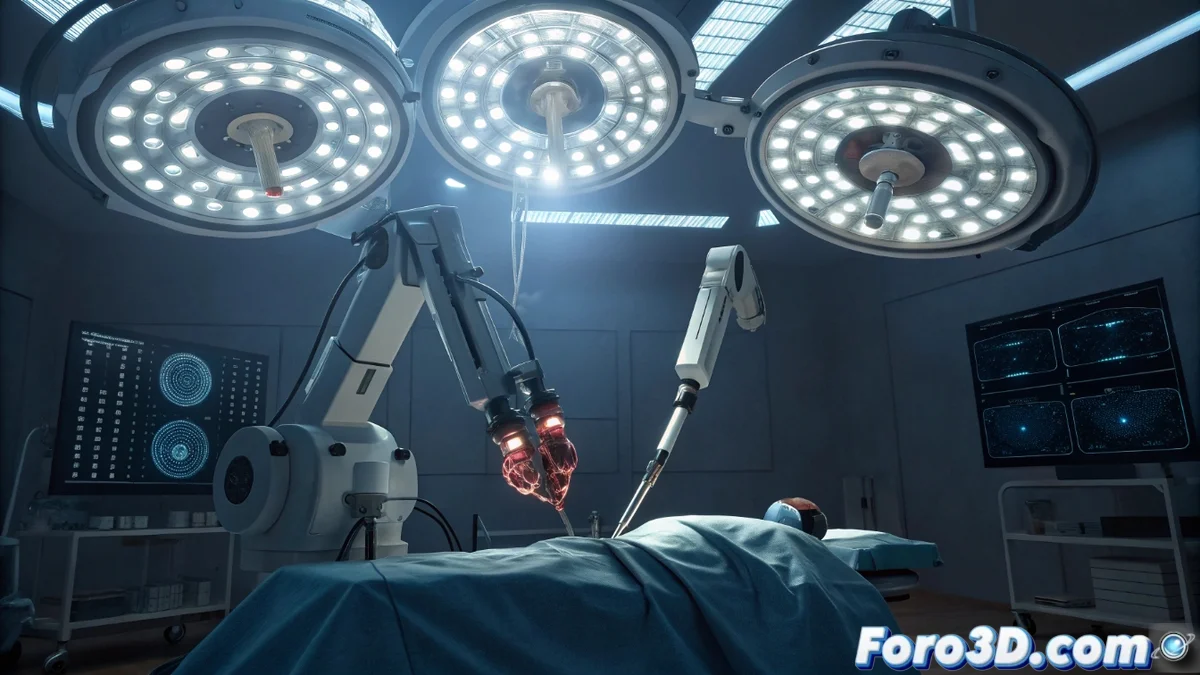
Autonomous Surgical Robots: The Revolution in the Operating Room
Autonomous robotic surgery represents the pinnacle of technological innovation in contemporary medicine, performing surgical interventions with submillimeter precision that consistently surpasses conventional human capabilities. These systems integrate advanced artificial intelligence with specialized surgical instruments, enabling procedures ranging from complex cardiac surgeries to delicate neurosurgical operations. 🏥
Fundamental Technologies in Autonomous Surgery
The architecture of these robotic systems incorporates multiple interconnected technological components that function in perfect synchronization. Ultra-high-resolution tactile sensors and multidirectional spectral cameras capture detailed anatomical information, while machine learning algorithms process this data in real time to guide the robot's movements with extraordinary accuracy.
Key technological components:- Three-dimensional vision systems that generate precise anatomical maps
- Predictive algorithms that anticipate movements and adjust trajectories
- Image fusion platforms that integrate tomography with augmented reality
Technological synergy allows surgical techniques to adapt to each patient's specific anatomical variations during the procedure.
Transformation of Surgical Practice
The implementation of autonomous robotic surgery is radically transforming traditional surgical paradigms. Procedures are performed through minimally invasive incisions that significantly reduce tissue trauma, drastically decreasing the risk of postoperative infections and patient pain.
Significant clinical advantages:- Complete elimination of human tremor in high-precision interventions
- Ability to operate on extremely delicate anatomical structures
- Optimization of recovery times and clinical outcomes
The Evolved Role of the Human Surgeon
This technological revolution does not replace surgeons but transforms them into specialized supervisors of highly complex surgical processes where their clinical judgment and experience remain fundamental elements. The irony lies in the fact that these systems can perform millimeter-precision brain surgeries but still require technical assistance for simple tasks like uncapping instruments. 🤖