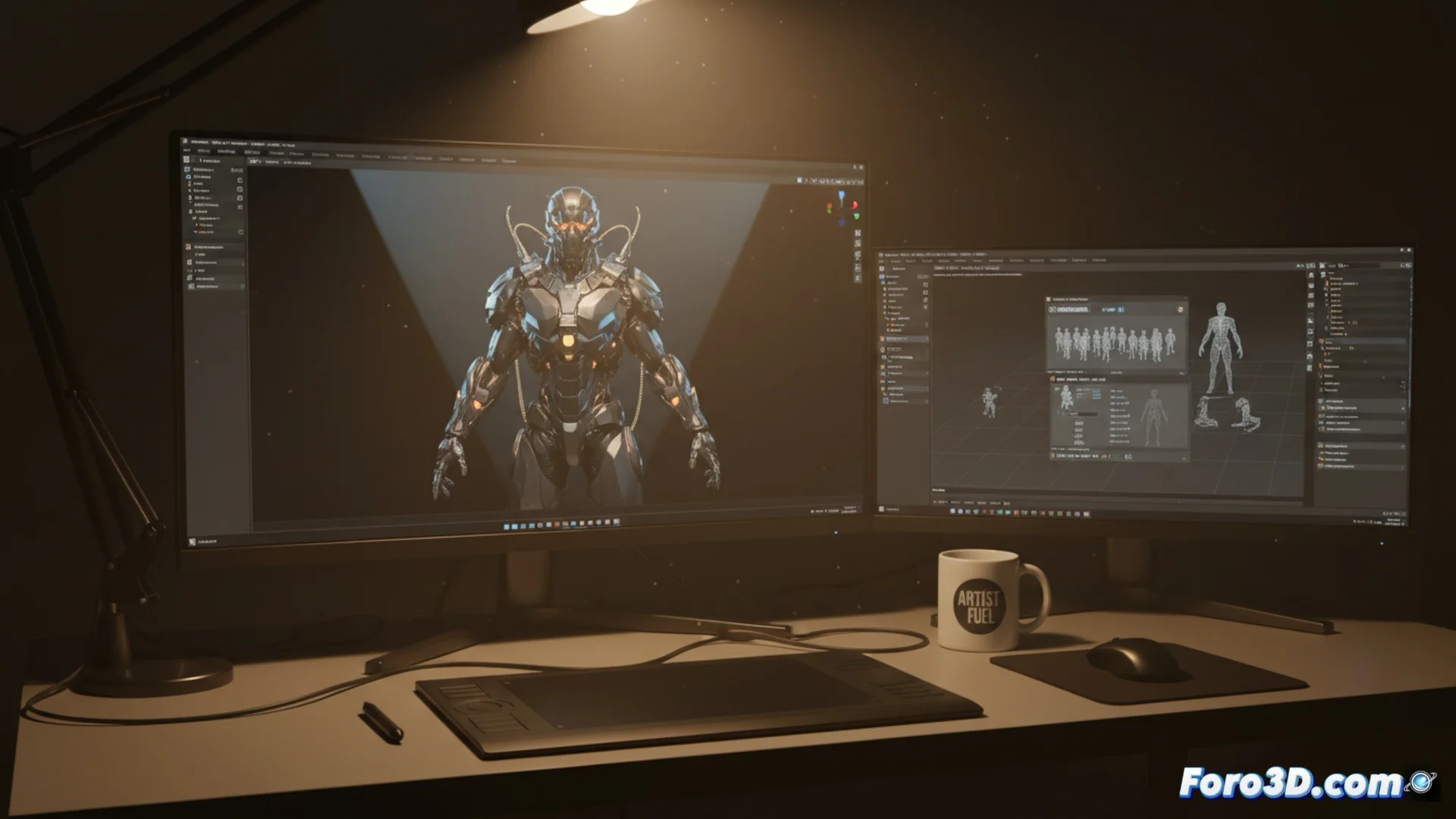
Autodesk Maya Powers Its Workflow with Artificial Intelligence
The integration of artificial intelligence into 3D creation tools is transforming how artists work. In Autodesk Maya, this technology is applied directly within the Arnold render engine to process final images more efficiently. 🚀
Faster and Cleaner Rendering
The key component is the use of AI algorithms that analyze a scene while it renders. Their main function is to identify and complete missing information to reduce noise or grain in the resulting image. This allows the artist to see a more defined result in less time, which is crucial when production deadlines are tight.
Key advantages of the system:- Accelerate rendering: Waiting times are significantly shortened.
- Achieve superior quality: Final images have fewer imperfections and artifacts.
- Optimize resources: Available computing power is better utilized.
AI does not replace the artist, but collaborates with them, processing data at high speed to free up creative time.
Expanding Horizons with Plugins
Native features are just the beginning. An ecosystem of third-party plugins takes machine learning capabilities to another level. These specialized add-ons solve complex problems that the base software does not address directly.
Examples of applications with plugins:- Simulate crowds: Generate and control the behavior of large groups of characters automatically.
- Create animation: Suggest or complete movements based on input data.
- Refine textures: Improve or generate texture maps with greater detail and realism.
An Assistant for Both Technical and Artistic Tasks
The role of AI goes beyond cleaning renders. It becomes a comprehensive assistant that can automate repetitive and tedious tasks, allowing the professional to focus on making creative decisions. For example, a system can study an animator's style to suggest coherent poses, or analyze a 3D model's geometry to propose an optimal skeleton structure. It is a symbiosis where human intuition guides the machine's data processing power. 🤖