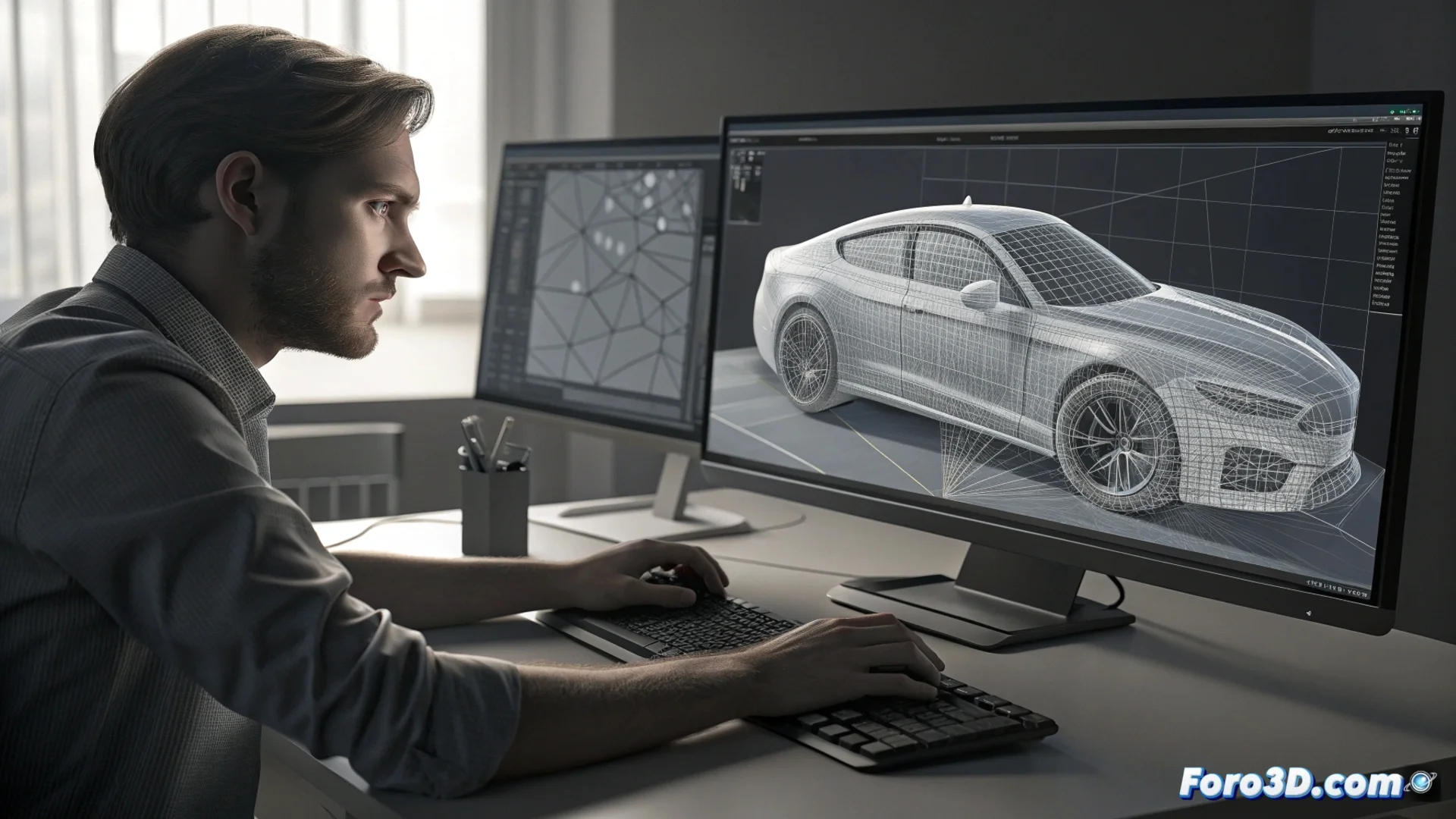
Autodesk Flow Optimizes Complex 3D Models for the Web
Facing the challenge of handling massive 3D models, Autodesk Flow emerges as a cloud-based solution. This service, which evolved from the Memento tool, specializes in taking complex data such as laser scans or BIM models and preparing them for accessible environments like web browsers or virtual reality experiences. Its mission is clear: lighten the load without sacrificing key visual detail. 🚀
A Simplified Cloud Workflow
The process with Autodesk Flow is remarkably straightforward. Users upload their model to the platform, where automated processing handles the heavy lifting. The system analyzes the geometry and textures of the original file to generate an optimized version that can be downloaded and integrated immediately. This eliminates complex technical steps and democratizes access to high-quality visualizations.
Key advantages of automated processing:- Efficient conversion: Transforms dense point clouds or heavy meshes into lightweight files ready for the web.
- User control: Allows adjusting the final level of detail and choosing output formats like OBJ or the versatile glTF.
- Immediate accessibility: Results can be viewed in real-time in engines like Unity, Unreal, or WebGL viewers.
The real challenge often lies in deciding which details to preserve when the original model has an overwhelming polygonal density. The algorithm must choose, and that choice doesn't always align with the importance the creator places on a tiny element.
Intelligent Algorithms to Preserve the Essentials
The core of the service lies in its intelligent optimization algorithms. These examine the model to clean unwanted artifacts, close holes in the mesh, and, most crucially, selectively reduce the number of polygons. The system decides which geometric and textural details are essential to maintain the overall appearance and which can be simplified. The result is a manageable mesh that preserves the visual essence of the original.
How it facilitates sharing and collaboration:- Multi-platform visualization: Optimized models can be explored from a mobile phone, tablet, or standard computer, without needing specialized graphics hardware.
- Simple integration: Makes it easy to package and embed models in web pages or VR/AR applications for dissemination.
- Breaks technical barriers: Allows clients, work teams, or the general public to interact intuitively with architectural, heritage, or product models.
Overcoming the Challenge of Complexity
Autodesk Flow addresses the central problem of working with ultra-high-resolution 3D data. By automating preparation for the web and virtual reality, the service not only saves valuable time but also opens new possibilities for sharing, presenting, and collaborating with complex models. Its value lies in making the intricate accessible, although the perfect balance between performance and detail remains an artistic and technical decision. 💡