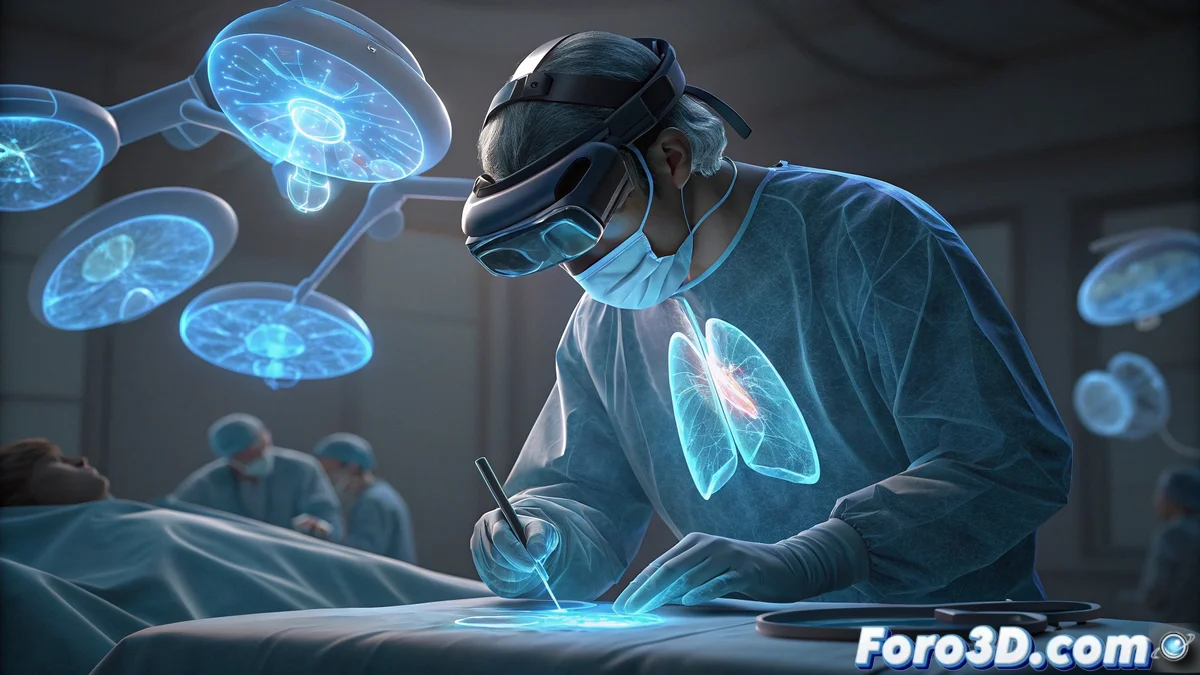
Augmented Reality Glasses Transform Surgical Procedures
Augmented reality is redefining standards in surgical environments through optical devices that project contextual digital information directly into the medical professional's field of vision. This technological innovation allows full concentration on the surgical act without interruptions to consult auxiliary screens 🩺.
Increased Precision in Critical Interventions
These display devices provide real-time digital overlays that significantly enhance the identification of complex anatomical structures. Surgeons can visualize three-dimensional reconstructions that reveal tumors, blood vessels, and nerve networks with unprecedented clarity.
Key Advantages in Complex Procedures:- Visualization of anatomy through tissues using precise digital models
- Incision planning with reduced error margins
- Safe navigation in complex anatomies with greater operator confidence
The irony lies in the fact that after years of training their senses, surgeons now rely on glasses that indicate where to intervene, similar to assembly instructions but with vital consequences
Technological Integration in the Hospital Ecosystem
Surgical augmented reality seamlessly interconnects with imaging diagnostic systems such as CT scanners and MRI machines, creating a unified digital environment where preoperative information merges with intraoperative reality.
Interoperability Capabilities:- Connection with surgical planning software for contextual visual guides
- Fusion of preoperative data with the operating room reality at decisive moments
- Remote collaboration where specialists share the lead surgeon's perspective
Transformation of the Surgical Paradigm
This disruptive technology not only improves clinical outcomes through less invasive procedures and accelerated recoveries, but fundamentally redefines the relationship between the surgeon and their work environment. Dependence on these digital tools marks a turning point in the evolution from traditional surgical techniques to digitally augmented environments 🔬.