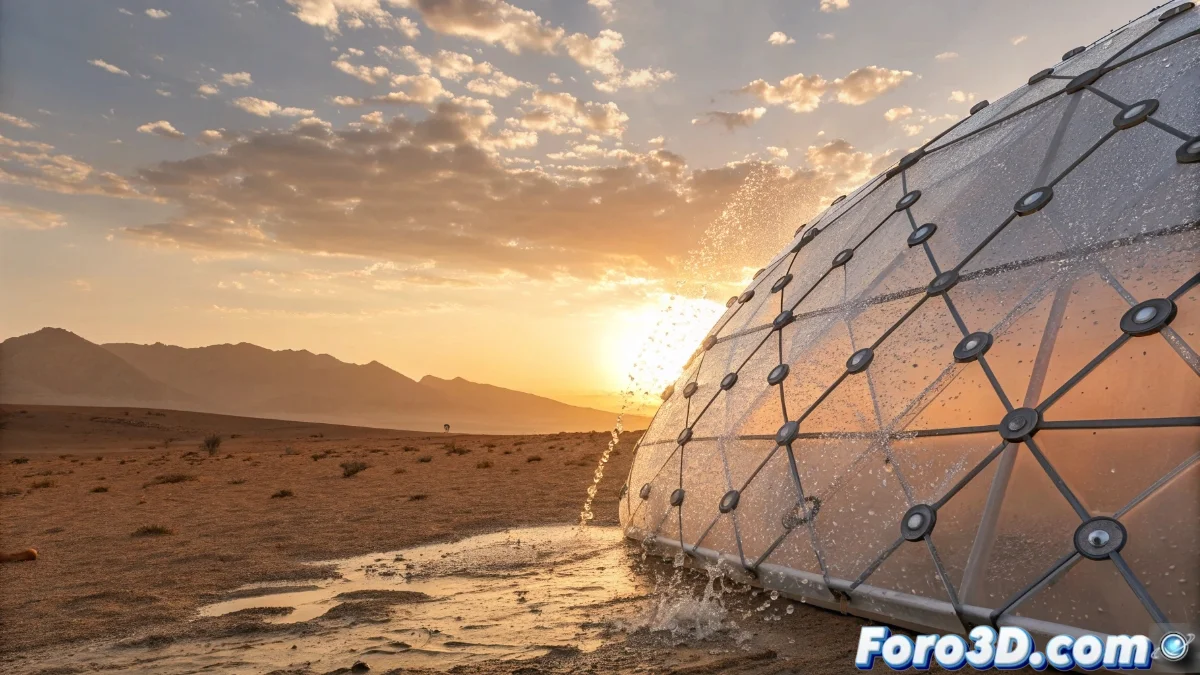
Atmospheric Water Generators with Hydrogels: Autonomous Technology for Obtaining Drinking Water
The hydrogel technology for atmospheric water generation is revolutionizing access to drinking water in areas of water scarcity. These innovative systems use superabsorbent polymeric materials that function as smart molecular sponges, capturing environmental humidity through completely natural processes and without requiring electrical energy for their basic operation 💧.
Humidity Absorption and Release Mechanism
The fundamental process begins when the hydrogel is exposed to the air, where its polymeric chains with hydrophilic functional groups establish hydrogen bonds with water vapor molecules. During periods of high relative humidity or at night hours, the material experiences a significant expansion as it saturates with water captured directly from the atmosphere. Subsequently, through the application of passive solar heat or small pressure changes, the hydrogel releases the stored water through a contraction process, allowing collection via drip systems or simple condensation 🌫️.
Key features of the process:- Absorption through natural hydrogen bonds without energy consumption
- Material expansion during water saturation in high humidity conditions
- Controlled release through minimal thermal or pressure stimuli
While people seek water with effort, these hydrogels work silently extracting humidity from the air as if they were at an invisible bar
Practical Applications and Highlighted Benefits
These generation systems find particularly valuable application in arid regions with some atmospheric humidity, rural communities without access to electricity, and as an emergency solution in natural disaster situations. The technology represents a significant advance in sustainable water management, offering complete autonomy and production of water without contaminants associated with combustion processes 🔄.
Main advantages of the technology:- Complete energy autonomy without the need for electricity
- Minimal maintenance and scalability from household units to community systems
- Production of naturally filtered water from atmospheric impurities
Recent Advances and Future Perspectives
The most recent research has developed improved hydrogels that substantially increase capture efficiency, with some prototypes capable of producing several liters of water daily per square meter of material under optimal conditions. These advances promise scalable solutions to address the growing global water scarcity, especially in regions where access to drinking water represents a constant challenge 🌍.