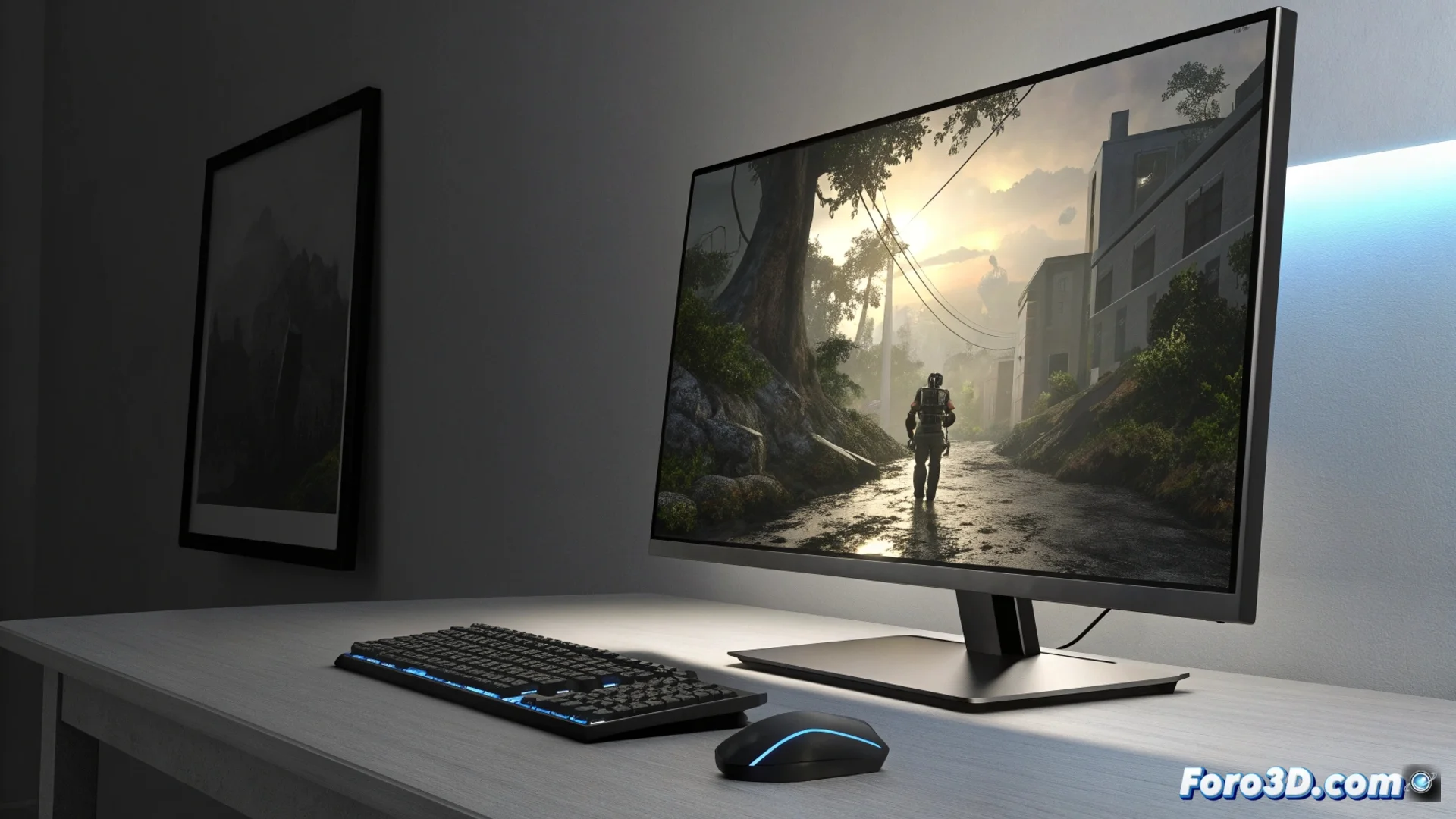
Asus Presents Monitors That Triple or Quadruple the Refresh Rate at 1080p
The brand Asus has unveiled a new line of gaming screens that incorporates a dual-resolution function that operates dynamically 🎮. These devices can process visual content in native 4K, but when the user decides to reduce the definition to Full HD, the panel not only doubles its refresh rate, but boosts it up to three or four times more.
How Does the Dual-Resolution Mode Work?
The technology works by detecting the input signal and modifying the internal image scaling. Upon receiving a 1920x1080 pixel signal, the monitor activates a specific circuit that accelerates the screen refresh far beyond the usual. This differs from typical solutions, where switching to Full HD normally only doubles the base frequency of the 4K resolution. Asus does not specify all the components it uses to achieve this effect, but confirms that the panels are manufactured to support these extremely high frequencies in the lower resolution mode.
Key Features of the Technology:- Automatic Detection: The system identifies the resolution of the incoming signal and adjusts performance.
- Accelerated Internal Scaling: A dedicated circuit manages the conversion to maximize refresh speed.
- Prepared Panels: The screens are designed to operate stably at very high frequencies in 1080p.
This strategy responds to what gamers demand who seek advantages in genres like first-person shooters.
Context and Practical Uses for Gamers
This approach meets the needs of users who prioritize competitive performance in games where every millisecond counts. At its maximum resolution of 4K, the monitor operates at its native frequency, estimated at 120 Hz or 160 Hz, offering high visual fidelity. When switching to 1080p, the experience is oriented toward pure responsiveness, with a noticeably smoother image that can help track fast movements with greater precision. The transition between modes depends on the source, such as a console or graphics card, sending the signal with the target resolution.
Application Scenarios:- Competitive Games (eSports): Prioritize extreme fluidity, reaching up to 480 Hz, for an advantage in reactions.
- 4K Games: Enjoy high graphical fidelity when speed is not the main factor.
- Dynamic Choice: The user can switch between supreme visual quality and ultra-fast performance depending on the title being run.
The Modern Dilemma: Quality or Speed
Some users may wonder if they prefer to see fewer pixels but faster, or more pixels but more calmly. This is the contemporary dilemma between absolute sharpness and extreme fluidity. Asus's new monitors offer an elegant solution, allowing to choose the optimal experience for each situation without compromising the hardware 🚀. They represent another step in the customization of gaming equipment.