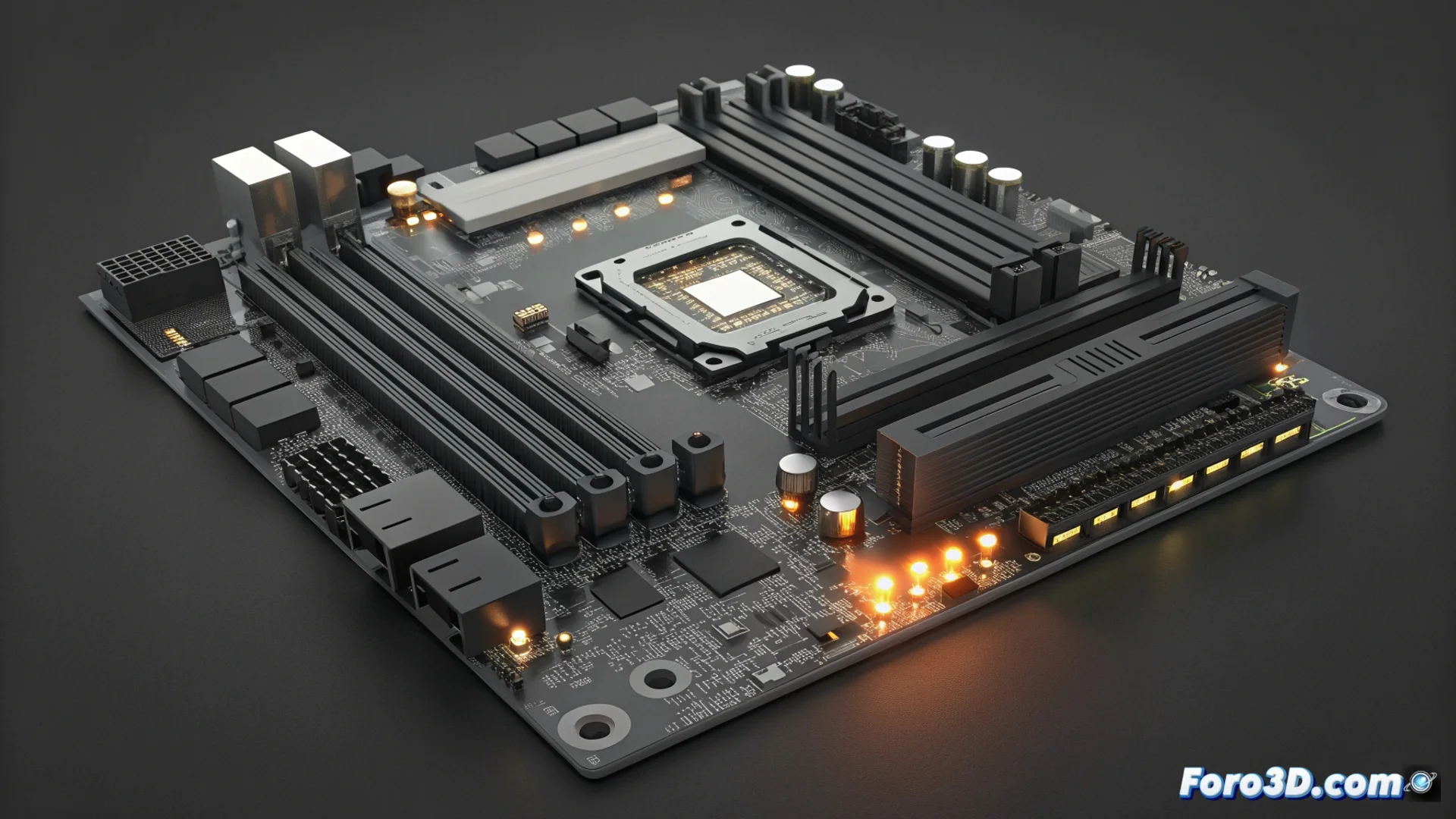
Asus Doubles UEFI Memory on Its AMD 800 Motherboards
Asus has announced a significant change in the hardware of its upcoming motherboards for the AM5 platform. The brand has confirmed that models with the AMD 800 chipset will integrate a 64 MB UEFI ROM, thus doubling the capacity that has been used until now. This jump in firmware storage promises to better manage future hardware and deploy more powerful configuration tools. 🚀
Advantages of Expanding UEFI Space
Having 64 MB of memory instead of 32 MB transforms what the motherboard can do. The additional space allows storing more support code, making it easier for the board to work with a wider range of AMD processors without the user having to manually update the BIOS. Additionally, engineers can implement more complex utilities to adjust performance, manage memory, and control voltages, providing unprecedented control over the system. 💻
Key Benefits of Expanded UEFI:- Extended Compatibility: The motherboard can support future CPUs without the need for immediate firmware updates.
- Enriched Tuning Tools: Advanced options are enabled to optimize system performance and stability.
- Greater Flexibility for the Manufacturer: Asus has more room to develop and add features in future software revisions.
Doubling the memory sounds like a lot, but there will always be someone who finds a way to fill every byte with options they might never use.
The Wi-Fi Driver: A Temporary Solution
Another novelty in this launch is Asus's decision to include the driver for the Wi-Fi module directly within the UEFI memory. This measure aims to ensure that the connectivity hardware works from the first boot, even before installing an operating system. However, the company is clear in stating that this is a provisional solution. 🔄
Details on the Wi-Fi Driver Strategy:- Immediate Functionality: The user has access to Wi-Fi connectivity without additional drivers on the first boot.
- Provisional Policy: Asus plans to remove this driver in future firmware updates to free up valuable space.
- Return to the Norm: Ultimately, driver installation will fall to the operating system, as is standard in the industry.