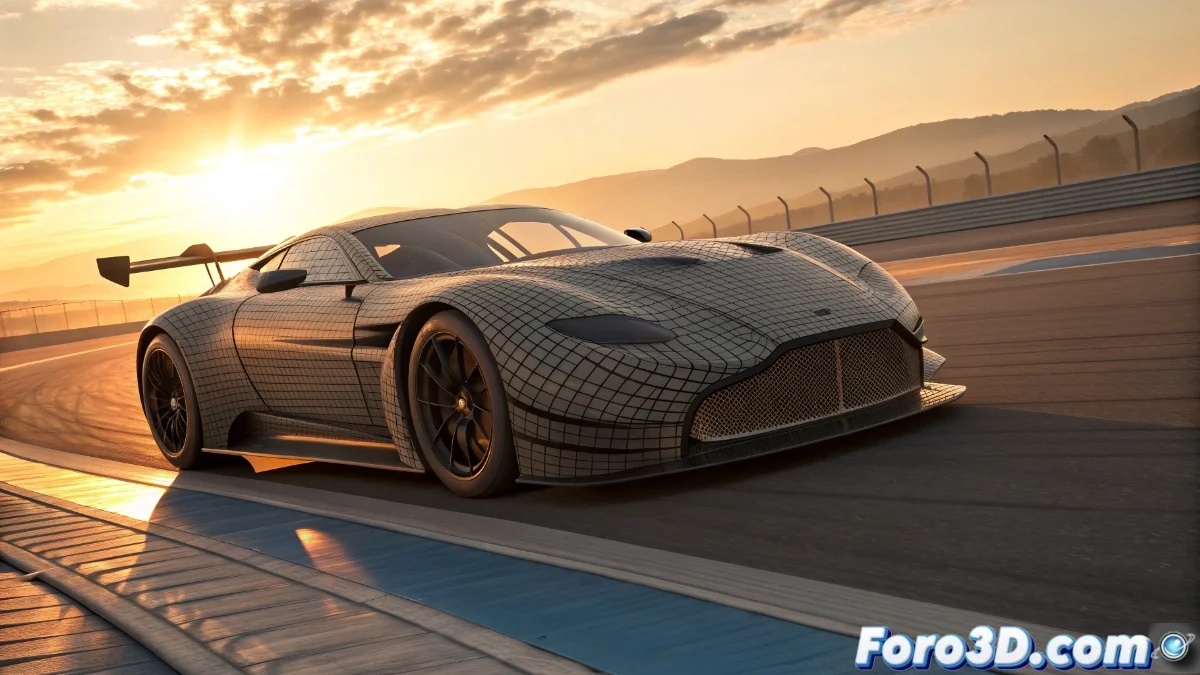
Aston Martin Revolutionizes Vulcan Manufacturing with 3D Printing
The legendary British brand is radically transforming the production of its track-only Vulcan supercar through additive manufacturing technologies. Using state-of-the-art 3D printers, engineers create critical components such as ventilation ducts and grilles with geometries that push the boundaries of conventional manufacturing 🏎️
Competitive Advantages of Additive Manufacturing
Three-dimensional printing allows for the design of parts with organic shapes that integrate perfectly into the available spaces of the chassis. These components not only significantly reduce the vehicle's total weight but also maximize aerodynamic efficiency by directing airflow with millimeter precision towards the most critical cooling systems.
Key Benefits of Printed Components:- Weight reduction compared to traditional manufacturing methods
- Optimization of thermal management during extreme track conditions
- Complex internal geometries that improve airflow by 40%
"Additive manufacturing allows us to create solutions that were unthinkable just five years ago, especially in high-performance vehicles where every detail counts" - Aston Martin Head of Engineering
Advanced Materials and Extreme Customization
The specialized composite materials used in the 3D printing process offer the ideal combination of structural strength and lightness essential for a competition car. The brand can develop fully customized parts for each specific section of the Vulcan, adjusting the material properties according to the technical requirements of each component.
Material Highlights:- Thermoplastic compositions reinforced with carbon fiber
- Resistance to extreme temperatures and high-frequency vibrations
- Ability to modify density and flexibility according to the application
The Future of Elite Automotive Manufacturing
This technological revolution is setting new paradigms in the design of track-only supercars, where every gram of weight and every millimeter of aerodynamic surface is crucial for performance. The ability to produce impossible geometries with conventional methods demonstrates how additive manufacturing is redefining the limits of competitive automotive engineering 🚀