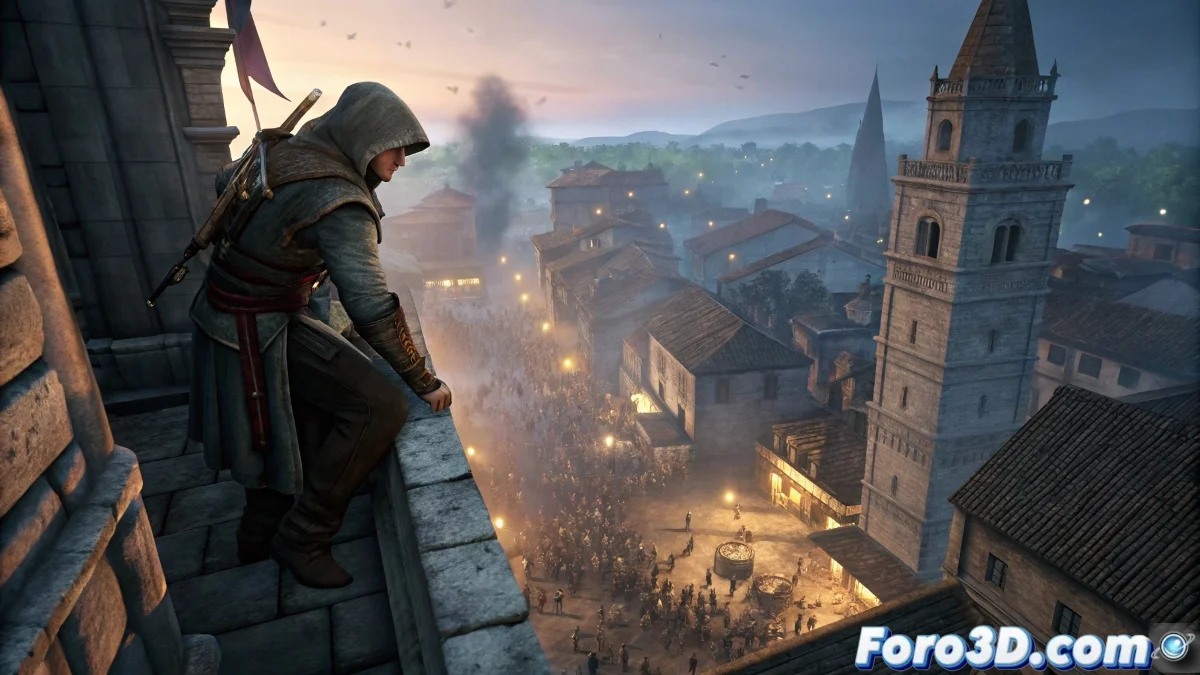
The Assassins Leave Pixels Behind for Real Action
Netflix has decided that jumping between virtual rooftops was no longer enough 🏃♂️. The live-action adaptation of Assassin's Creed promises to bring the secret war between assassins and templars to flesh and blood, with all the visual challenge this entails. Because, let's be honest, who doesn't want to see someone break their neck in a historically accurate way?
When History Meets Digital Effects
The series, under the direction of minds behind Westworld and Halo, proposes a digital reconstruction of historic cities that will make any 3D artist cry. From the streets of Florence to the rooftops of Paris, every impossible leap will be a feast of:
- 3D scans for historical accuracy
- Virtual environments in Unreal Engine
- Physical simulations of cloth and particles
A perfect mix between historical documentary and parkour hallucination. As if your history teacher had too much coffee.
A Paradise for Digital Artists
For the creators of foro3d.com, this adaptation is pure gold for reference. Imagine recreating:
- The perfect hidden blade in ZBrush
- Renaissance facades with historical textures
- Parkour sequences with realistic physics
The ideal exercise: model your own synchronization tower, complete with eagle included 🦅. That said, don't try the leap of faith at home... unless you have an authentic historical mattress.
Technology at the Service of the Death-Defying Leap
Between Marvelous Designer for the costumes, Blender for the weapons, and Nuke for the final compositing, the production pipeline will be as complex as the Templar conspiracy. And with the number of moving shots, even the virtual cameras will need parkour training.
So get ready to travel in the Animus, where visual effects are as important as not crashing into the ground. And if the series doesn't convince you, you can always blame a desynchronization... or your Netflix connection 😉.