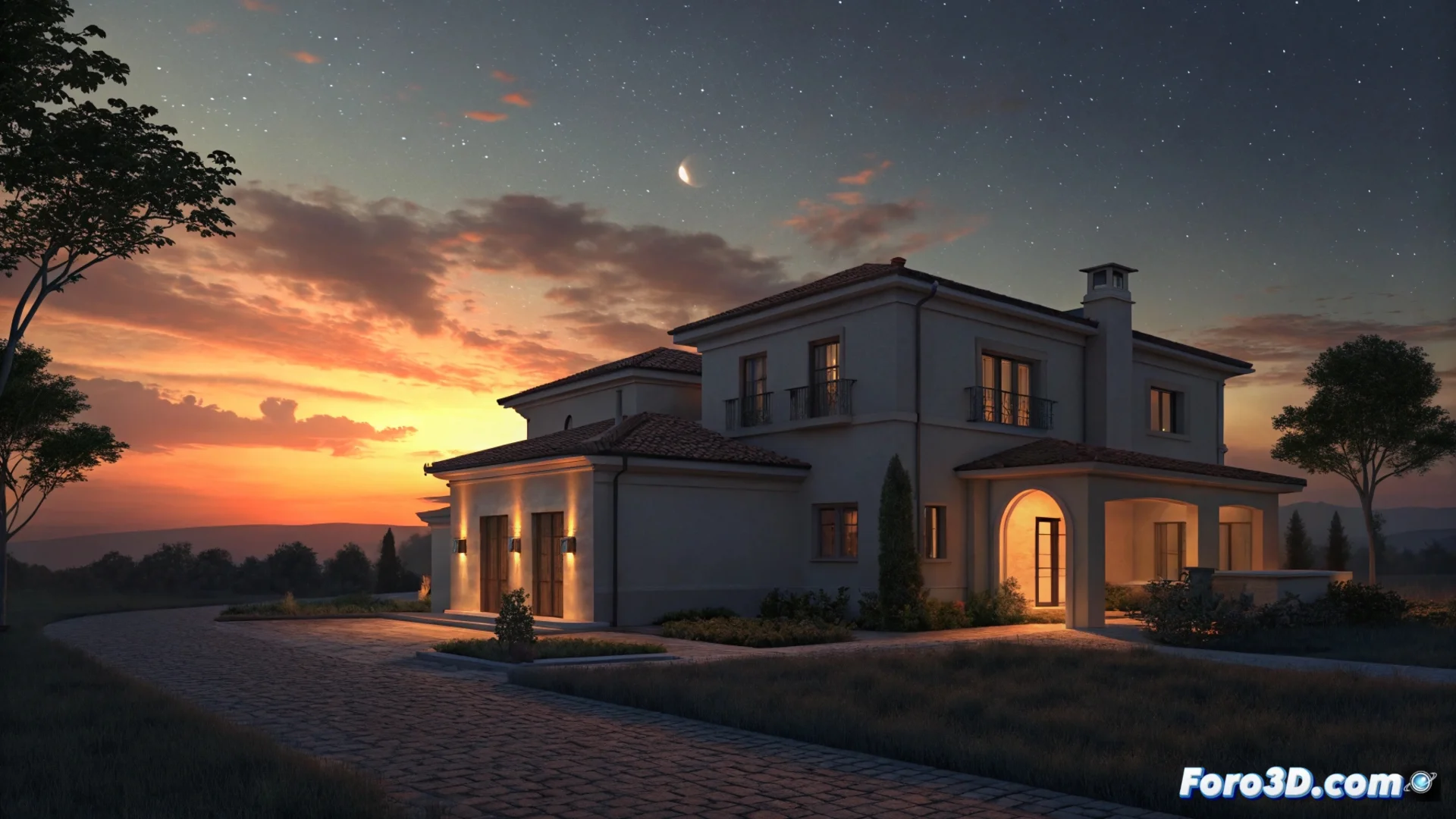
Artlantis Physical Sky: simulates realistic ambient lighting
The Physical Sky in Artlantis is an engine that fully automates the calculation of ambient lighting for renders. This system interprets real-world parameters to generate believable skies and light, eliminating guesswork in project visualization 🏗️.
How does the physical sky engine work?
The core of the system is based on astronomical and atmospheric parameters. Instead of relying on manual adjustments, the software takes exact geographic coordinates along with a specific date and time. With this data, it internally determines the sun's height, how light disperses in the atmosphere, and the resulting tones for the sky and clouds.
Key parameters it processes:- Solar position: Calculates the sun's angle based on location and time of year.
- Atmospheric dispersion: Simulates how particles in the air affect light color and intensity.
- Sky coloration: Derives sky and cloud tones in a physically accurate way.
Simply define the project location and the time of day you want to represent. The software does the rest.
Advantages for optimizing workflow
Integrating this simulator significantly speeds up the process of creating renders. Users avoid the tedious work of manually setting up each light source and adjusting the environment to achieve credibility.
Main benefits:- Save time: Skip manual setup of lights and skies.
- Physically correct base: Ensures starting lighting is realistic.
- Creative flexibility: Allows adding additional design elements on a solid lighting foundation.
Final result in architectural visualization
The result is a visual representation that closely matches the real lighting conditions of any place and time. This helps architects and designers present their projects under credible and specific lighting, improving communication with the client. The system allows visualizing, for example, how a building would look at three in the morning in December, responding to precise and unconventional visualization demands 🌆.