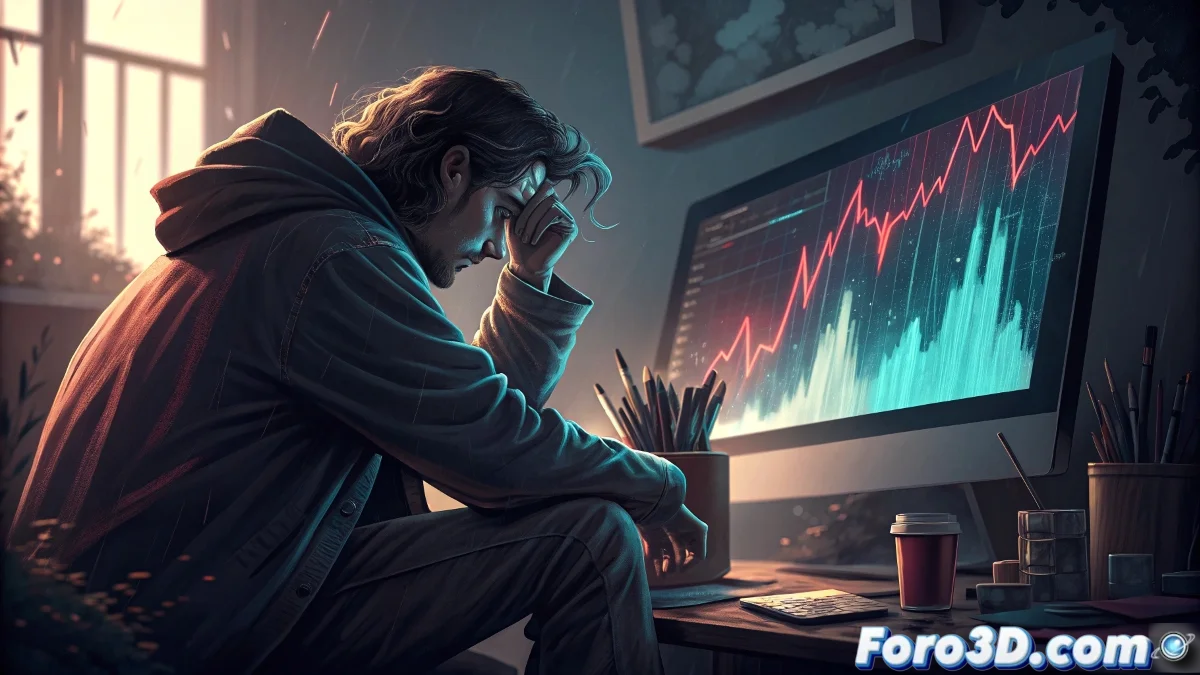
The Economic Impact Worrying the Creative Community
The statistics don't lie, and those presented by UNESCO in its latest report paint a worrying picture for the artistic sector. Almost four out of ten creators are experiencing significant reductions in their income directly attributable to the advancement of generative artificial intelligence. This figure not only reflects a trend but points to a structural transformation in how creative work is valued and compensated in the digital age.
The report, which analyzes data from multiple countries, shows how disciplines such as illustration, graphic design, and creative writing are among the most affected. What began as a support tool has become direct competition for many professionals who see clients opting for cheaper automated solutions.
AI does not replace artists, but it is radically redefining their market value
Key Findings from the Global Report
- Average reduction of 38% in income from creative projects
- Decrease in commissions especially in areas like commercial illustration
- Downward pressure on fees due to competition with AI tools
- Widespread concern about the future of creative careers
The Dilemma Between Innovation and Livelihood
While technology advances at breakneck speed, legal and ethical frameworks seem to be running behind without catching up. UNESCO warns of the urgent need to establish protection policies for cultural workers, similar to those existing in other economic sectors. The balance between technological innovation and labor protection presents itself as the great challenge of this decade.
Artists find themselves at a crossroads, having to adapt or resist tools that, paradoxically, can both enhance and devalue their work. Many are incorporating AI into their creative workflows, while others defend the preservation of traditional methods against what they perceive as the dehumanization of art.
Recommendations and Paths Forward
- Development of certifications distinguishing human work vs. AI-generated work
- Compensation policies for the use of works in model training
- Retraining programs for artists affected by automation
- Regulatory frameworks protecting intellectual property rights
The international organization issues a call to action to governments, technology companies, and the creative community itself. The solution, they suggest, is not to stop progress but to manage it with criteria, ensuring that technological advances do not sacrifice the cultural ecosystem that has contributed so much to human development.
The real challenge is not whether AI can create art, but how to ensure artists can continue to make a living from their art
And while algorithms learn to imitate the masters, some artists wonder if their next competition will be a human or a set of mathematical parameters... the future is now, and it comes with a bill 💸