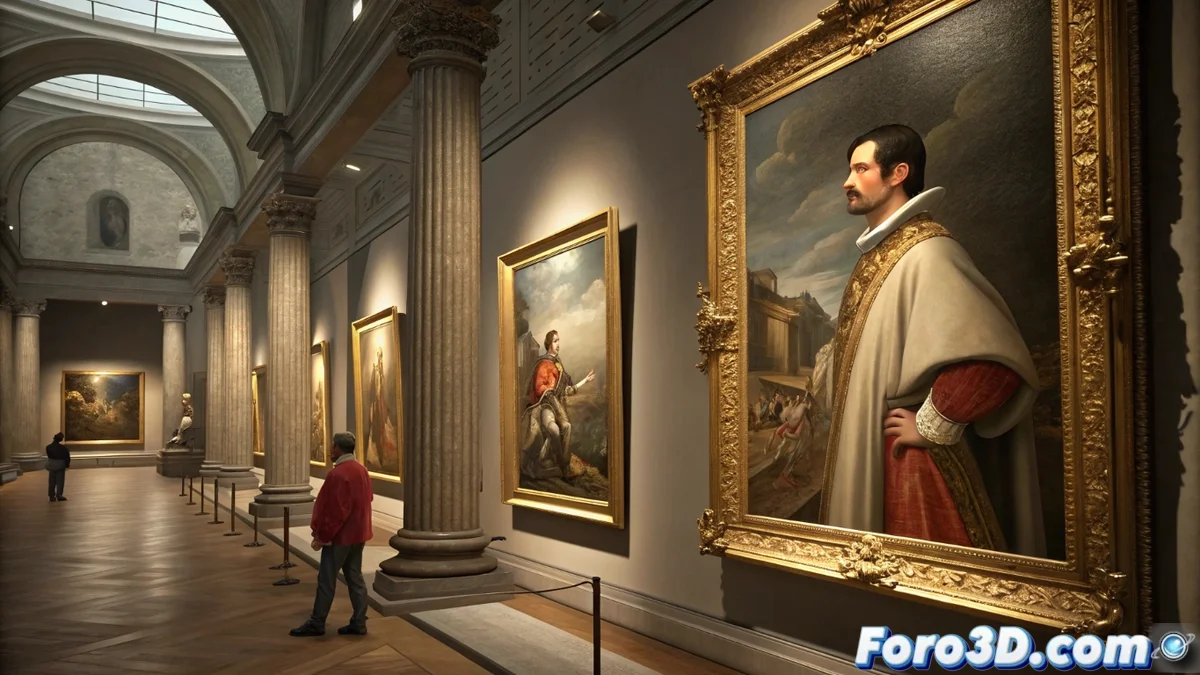
Artistic Restoration as a Cultural Bridge at the San Fernando Academy
This week marks the opening of an exceptional exhibition at the Real Academia de Bellas Artes de San Fernando. Titled The Art of Restoration, the event highlights cultural patronage and displays a carefully selected collection of twenty fundamental pieces from art history, allowing a unique immersion into the meticulous work of conservation. 🎨
A Dialogue Between the Past and Contemporary Techniques
The exhibition focuses on how professional restoration acts as a true temporal bridge. Works by giants such as Velázquez, Zurbarán, and Bellini are not only presented for their intrinsic aesthetic value, but as testimonies of a European artistic evolution that has been revitalized. Each intervention has brought back to light nuances, colors, and details that the patina of time had obscured, fostering a direct conversation between the original creation and current preservation methods.
Iconic Works and Their Transformation:- Works by Velázquez and Zurbarán: Prime examples of Spanish Baroque painting, where restoration has recovered the depth of the blacks and the texture of the fabrics.
- Works by Bellini: Representatives of the Italian Renaissance, in which the highlights and the delicacy of chiaroscuro have been enhanced.
- Diverse Selection: The twenty works, from the Fundación Callia collection, span different schools and periods, illustrating a wide spectrum of challenges and solutions in conservation.
Restoration is not just a technique; it is a philosophy of respect for the material and the artist's original idea, allowing it to continue speaking to us with its intact voice.
The Fundamental Role of Private Support
The project would not be possible without the financial and visionary commitment of the Fundación Callia. Its participation underscores the critical importance of private patronage in safeguarding our collective cultural heritage. This support makes exhibitions of this caliber accessible to the public, fostering artistic appreciation in a modern context where the classical and the digital converge.
Impact of Patronage on Culture:- Financing Complex Processes: High-end art restoration requires specialized resources and advanced technology.
- Democratization of Access: It makes it possible for masterpieces, usually in reserves, to be exhibited and educate a wide spectrum of visitors.
- Promotion of Awareness: Projects like this highlight the ongoing need to invest in the conservation of historical legacy.
Final Reflection on Time and Conservation
There is a profound and poetic irony in the fact that artistic treasures that have survived centuries of historical vicissitudes now require modern technological interventions to recover their splendor. We will admire Velázquez in a state of almost original purity, thanks to varnishes, ultraviolet light studies, and infinite patience. It is as if, through the science of conservation, we could negotiate with time itself, momentarily tricking it so that beauty endures. This exhibition is a testament to that continuous and necessary effort. 🖼️