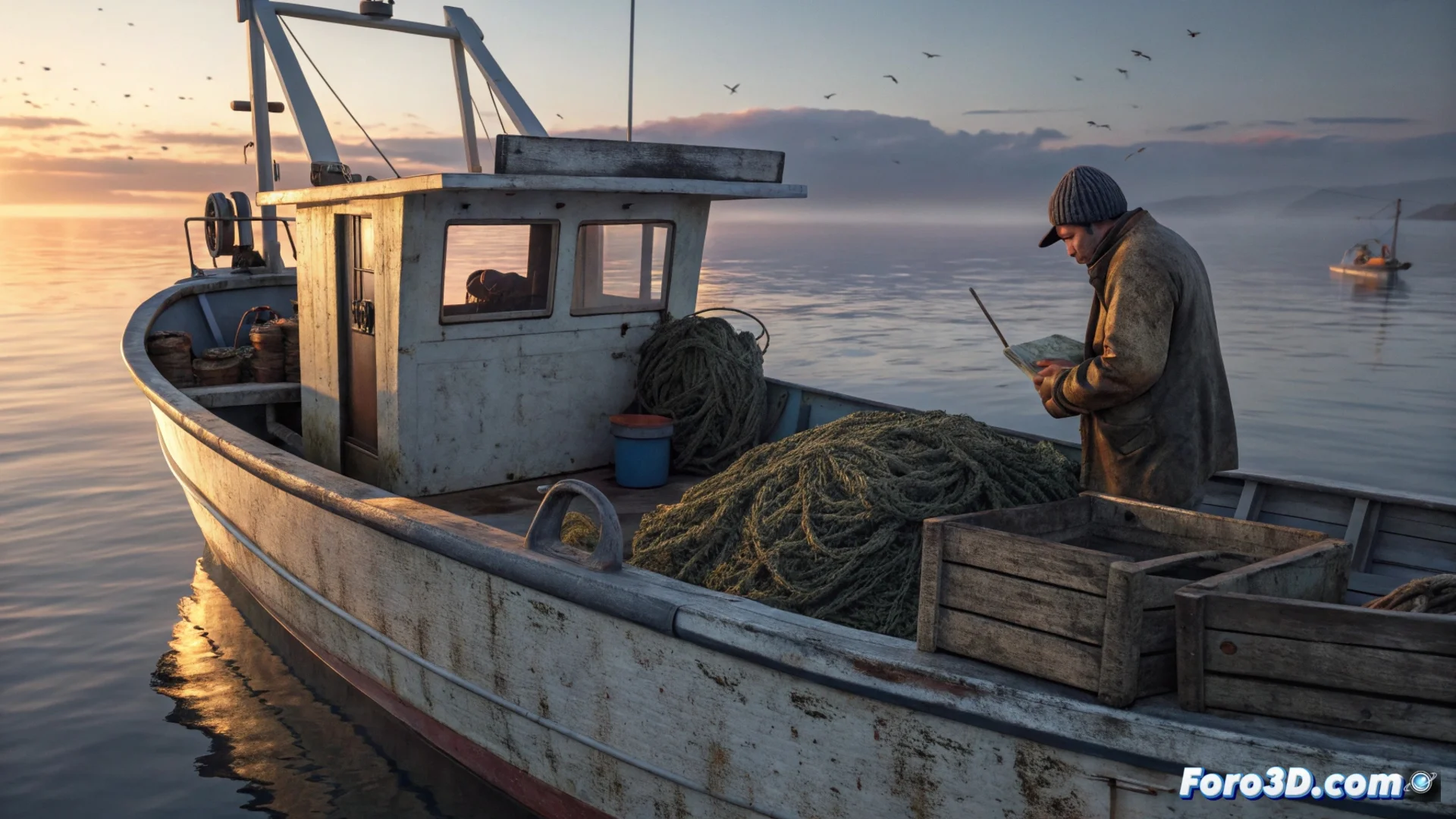
Artisanal Fishing in France Operates Under European Quotas
Artisanal fishermen in France carry out their work within the strict framework defined by the European Union's Common Fisheries Policy (CFP). This system assigns annual catch limits per species, which each member state must distribute among its fleets. Those who fish using traditional methods and small boats must adjust their work to these caps, in addition to complying with rules on sizes, closed seasons, and the types of gear they can use, with the stated aim of preserving fishing grounds. 🎣
The Regulatory Framework That Defines the Work
Beyond the assigned quotas, the daily life of the artisanal fisherman is conditioned by a complex web of technical rules. These specify, for example, the mesh size in nets to avoid catching fish that are too young. They also delimit the areas where fishing is allowed, sometimes creating marine protected areas with restricted access. A fundamental obligation is to keep a detailed fishing logbook, where all catches and landings are recorded. This document is key to ensuring limits are not exceeded and to guarantee the traceability of fish to the consumer.
Key Technical Obligations:- Use fishing gear with specific dimensions, such as a minimum mesh size, to be selective.
- Respect the closed or protected areas established to regenerate fish stocks.
- Maintain a mandatory daily record of all capture and landing operations.
Adapting to the rules is sometimes perceived as navigating with a torn net: a lot of effort is invested to comply, but the benefit doesn't always reach the boat.
Economic Consequences of Regulation
For many small-scale vessel owners, the biggest challenge is dealing with the continuous reduction of quotas for essential commercial species, such as cod or hake. This restriction forces them to spend fewer days at sea or to seek alternative species with lower market value. Some rules, despite their good intentions, involve extra operational costs, such as modifying equipment or investing in technology to document catches digitally. Additionally, the complexity of administrative procedures consumes valuable time that fishermen spend managing permits and declarations instead of fishing.
Challenges for Profitability:- Fewer opportunities to fish high commercial value species due to quota cuts.
- Forced investments to adapt the boat and gear to comply with new regulations.
- A significant bureaucratic burden that reduces productive hours at sea.
Balance Between Conservation and Production
The system seeks a complex balance between protecting marine resources and allowing artisanal fishing, which is crucial for many coastal communities, to remain viable. Traceability and strict control are pillars to ensure the activity is sustainable in the long term. However, the application of these rules must consider the economic reality of fishermen, so that the effort to conserve the sea does not end up sinking those who live from it in the most responsible way. The future of the sector will depend on finding this meeting point. ⚓