Functionality and Scope
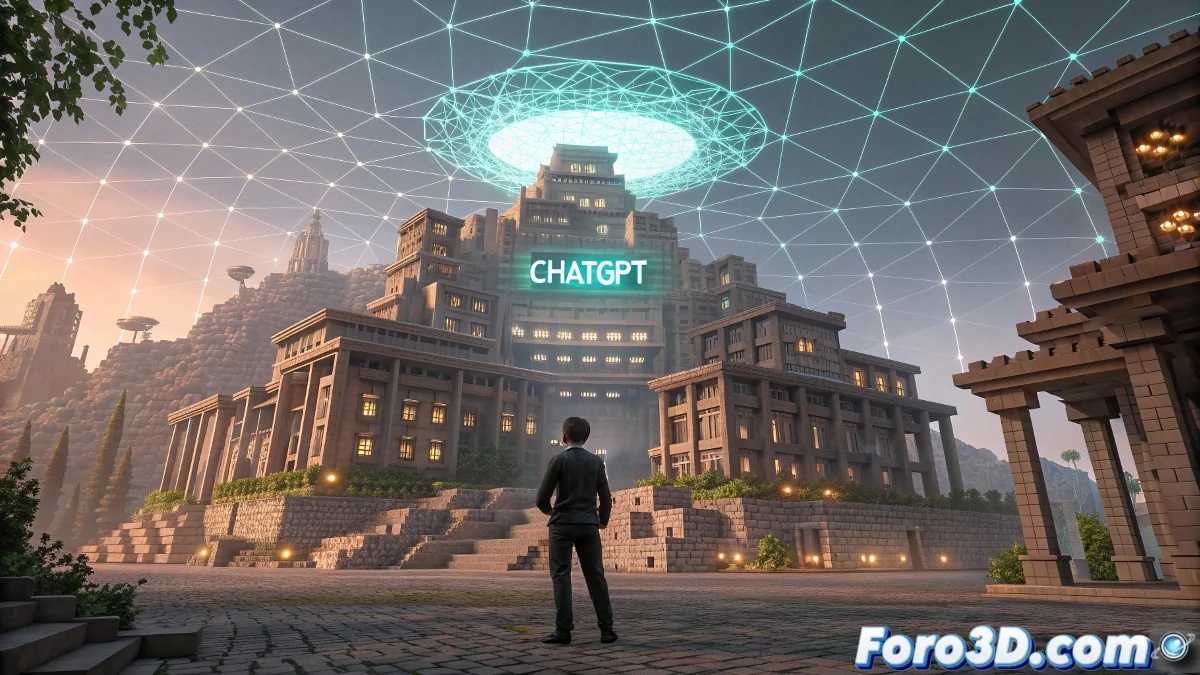
The boundaries between gaming and artificial intelligence research have blurred spectacularly thanks to a project that redefines what's possible within Minecraft. 🧠 A creator has used the astonishing amount of four hundred thirty-nine million blocks to physically build the architecture necessary to host an AI model based on ChatGPT. This monumental construction houses five million parameters that allow the system to maintain coherent conversations and respond to questions in a surprisingly fluid manner. Most notably, all inferences are executed directly within the game's engine, demonstrating that virtual environments can transcend their original playful purpose to become high-level experimental platforms.
Educational and Technical Implications
This experiment represents much more than a simple technical curiosity in the gaming world. The ability to physically visualize a machine learning model's architecture using blocks offers unprecedented educational opportunities. Students and researchers can now explore complex artificial intelligence concepts in a tangible and visual way, understanding the scale and complexity of these systems in a completely new form. The project sets a fascinating precedent for the development of small-scale functional models within accessible and familiar environments for millions of users worldwide.
The model is capable of interacting with players and simulating real-time responses
Technical Architecture of the Project
The implementation of this system requires a deep understanding of both machine learning and Minecraft's internal mechanics. Each component has been meticulously translated into the game's visual language.
- Block Structure: Four hundred thirty-nine million blocks organized in patterns representing neural layers
- Operational Parameters: Five million parameters distributed throughout the built architecture
- In-Game Processing: Inference system that operates completely within the Minecraft engine
- Conversational Interface: Mechanisms for text input and real-time response generation
Technical Challenges Overcome
The realization of this project involved solving unique problems that arise when combining such disparate technologies as Minecraft and advanced language models.
- Adaptation of machine learning algorithms to the game's computational limitations
- Performance optimization to maintain playability while executing complex calculations
- Creation of input and output systems that translate between the game and the language model
- Management of the massive scale of the construction without compromising world stability
Future Applications and Potential
The implications of this technical success extend far beyond the specific project, pointing to innovative directions for multiple fields.
- Interactive educational platforms for teaching AI concepts in a visual and accessible way
- Rapid prototyping of machine learning architectures in virtual environments before real implementation
- Democratization of access to AI technologies through familiar tools and platforms
- Inspiration for projects that combine gaming creativity with advanced technical research
Impact on the Developer Community
This achievement has resonated deeply in technical and gaming communities, establishing new benchmarks for what's possible within the apparent limits of a video game.
- Practical demonstration that technical limits are often perceptual barriers rather than real ones
- Inspiration for ambitious projects that combine different technological disciplines
- Validation of the "game-based learning" concept for advanced technical topics
- Creation of a benchmark for future AI integrations in gaming environments
While most players continue building castles and farms, this creator demonstrated that sometimes the most valuable resource in Minecraft is not diamond, but natural language processing capability. ⚡ Because, let's be honest, what would be more impressive than an artificial intelligence that responds to you while you mine coal?