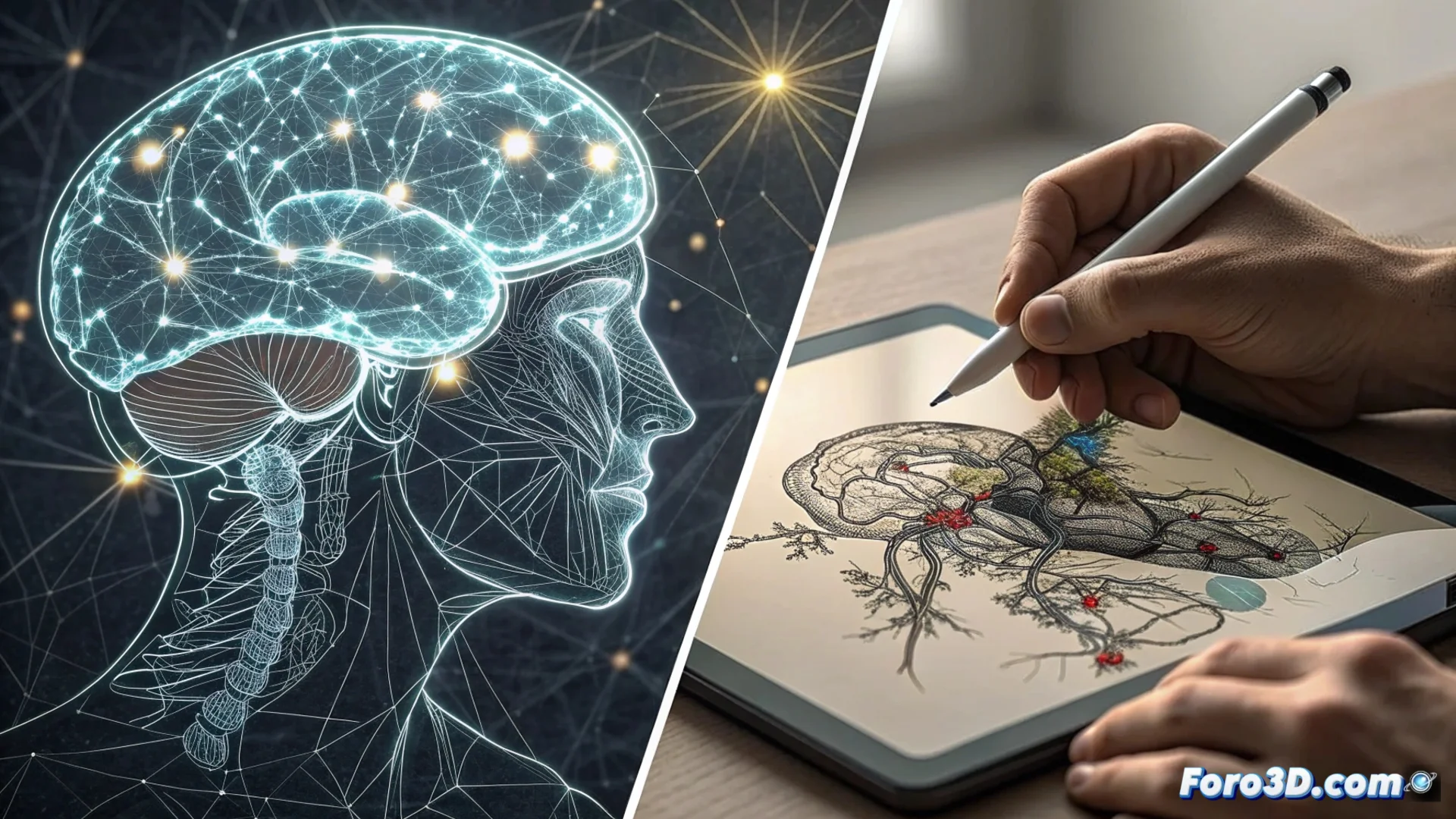
Artificial Intelligence Transforms the Conceptual Workflow
Currently, artificial intelligence tools have been mainly incorporated to assist in the early stages of a creative project. Their function is to accelerate idea exploration, generate base sketches or propose initial concepts, but not to execute complete works autonomously. 🚀
AI as a Catalyst, Not a Substitute
Creators use these systems to iterate quickly over multiple variants, always retaining authorship and final decisions. This impact is similar to adopting new specialized software: it optimizes the method but does not replace the artist's vision. The technology acts as a collaborator that expands possibilities, not as a replacement.
Characteristics of AI's Current Role:- Focuses on initial phases like conceptualizing or sketching ideas.
- Allows testing many options in a short time.
- The professional maintains creative control and judgment for selection.
The evolution of AI is not an instant revolution, but a path of mutual adaptation between technology and society.
A Development with Organic Rhythm
The progress of artificial intelligence in the creative field is neither linear nor definitive. It resembles an evolutionary process, with periods of significant advancement followed by phases of adjustment and learning. It first affects a specific area, then adapts and expands to others, gradually integrating new capabilities. 🦕
Key Stages in This Evolution:- Initial phase of assistance in specific and limited tasks.
- Periods of rapid adoption and improvement of functionalities.
- Moments of adjustment where its best practical application is defined.
Integrating More Depth into the Process
The near future points to AI not only helping to conceive ideas, but also to develop and refine them. It could, for example, generate detailed variations of a design or anticipate technical problems in a 3D model. To achieve this, tools must understand the user's context and intent at a much deeper level, a technical challenge under full development. The ultimate goal is to enhance human creativity, not supplant it. While some fear automation, practical reality often involves guiding the algorithm to distinguish between the complexity of a photorealistic render and the apparent simplicity of a pencil drawing. The path