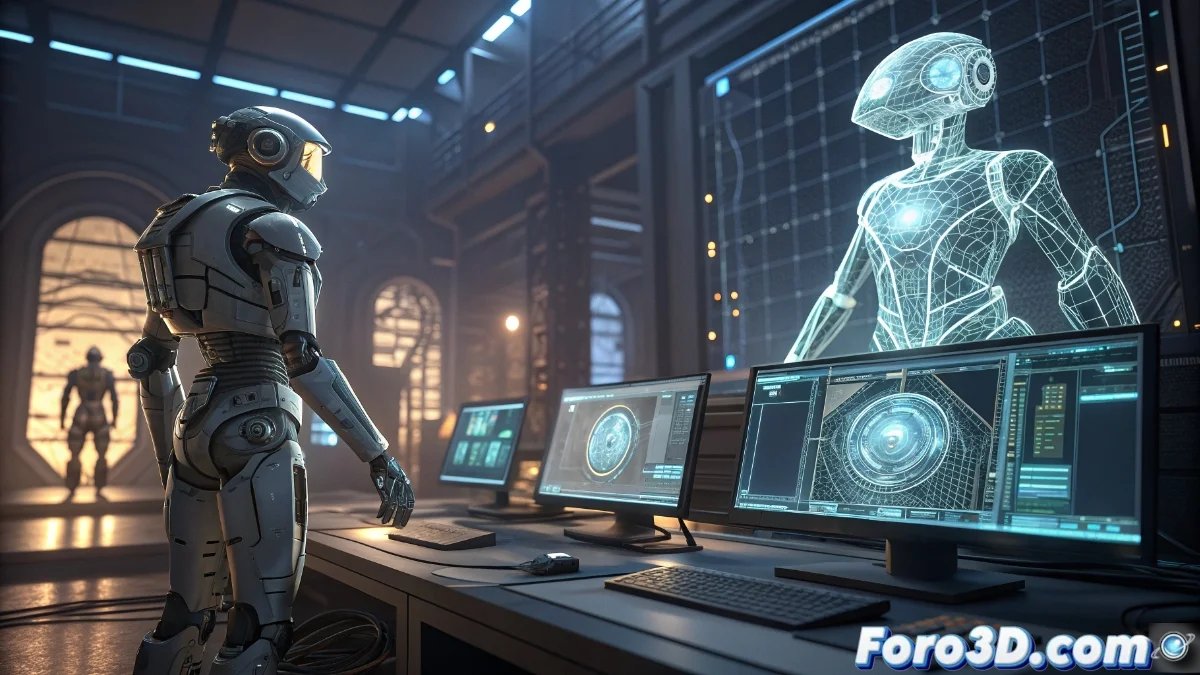
Artificial Intelligence Transforms 3D Modeling with Text Commands
An innovative technology based on artificial intelligence is redefining interaction with three-dimensional models, enabling complex modifications through simple written instructions. This system interprets natural language commands and applies them directly to the 3D geometry, eliminating intermediate steps that used to generate visual inconsistencies. It operates in real time, delivering immediate results that preserve the structural integrity of the original model with exceptional precision 🚀.
Practical Applications in Design and Customization
This versatile technology finds immediate applications in fields such as interior design, video game development, and digital object customization. Users can alter virtual furniture by describing the desired changes, without the need to manually manipulate vertices or polygons. Video game designers optimize their workflows by requesting massive modifications, automating repetitive tasks that previously consumed hours of manual work. The ability to maintain visual coherence among multiple objects during simultaneous edits marks a significant advance in efficiency and result quality.
Key Advantages in Professional Environments:- Automation of massive modifications in 3D models, such as adding lights to vehicles in a game environment
- Reduction of production times by eliminating the need for detailed manual adjustments
- Preservation of structural integrity and visual coherence during complex transformations
The traditional barrier of 3D modeling, which required specialized software knowledge, is drastically reduced when anyone can describe what they want to modify.
Democratization of Three-Dimensional Design
One of the most revolutionary aspects of this system is how it democratizes 3D modeling, allowing people without technical training to make complex adjustments through simple verbal instructions. This technology opens up unprecedented creative possibilities for small businesses, educators, and hobbyists who need to customize 3D content without investing in expensive training or hiring specialists. The improved accessibility transforms ordinary users into potential designers, although creative decision-making remains a human challenge.
Impact on Different Sectors:- Education: Students can modify educational models without advanced technical knowledge
- Small Businesses: Customization of 3D products for clients without the need for professional designers
- Hobbyists: Creative experimentation with three-dimensional models through simple descriptions
The Future of Accessible Design
This technological evolution not only optimizes professional workflows but also democratizes 3D creation, making tools previously exclusive to specialists available to a wider audience. The ability to make precise modifications through natural language brings the power of three-dimensional design closer to people without technical training, although true creativity and artistic direction still depend on human judgment. The system represents a significant step toward a future where anyone can become a 3D designer 🎨.