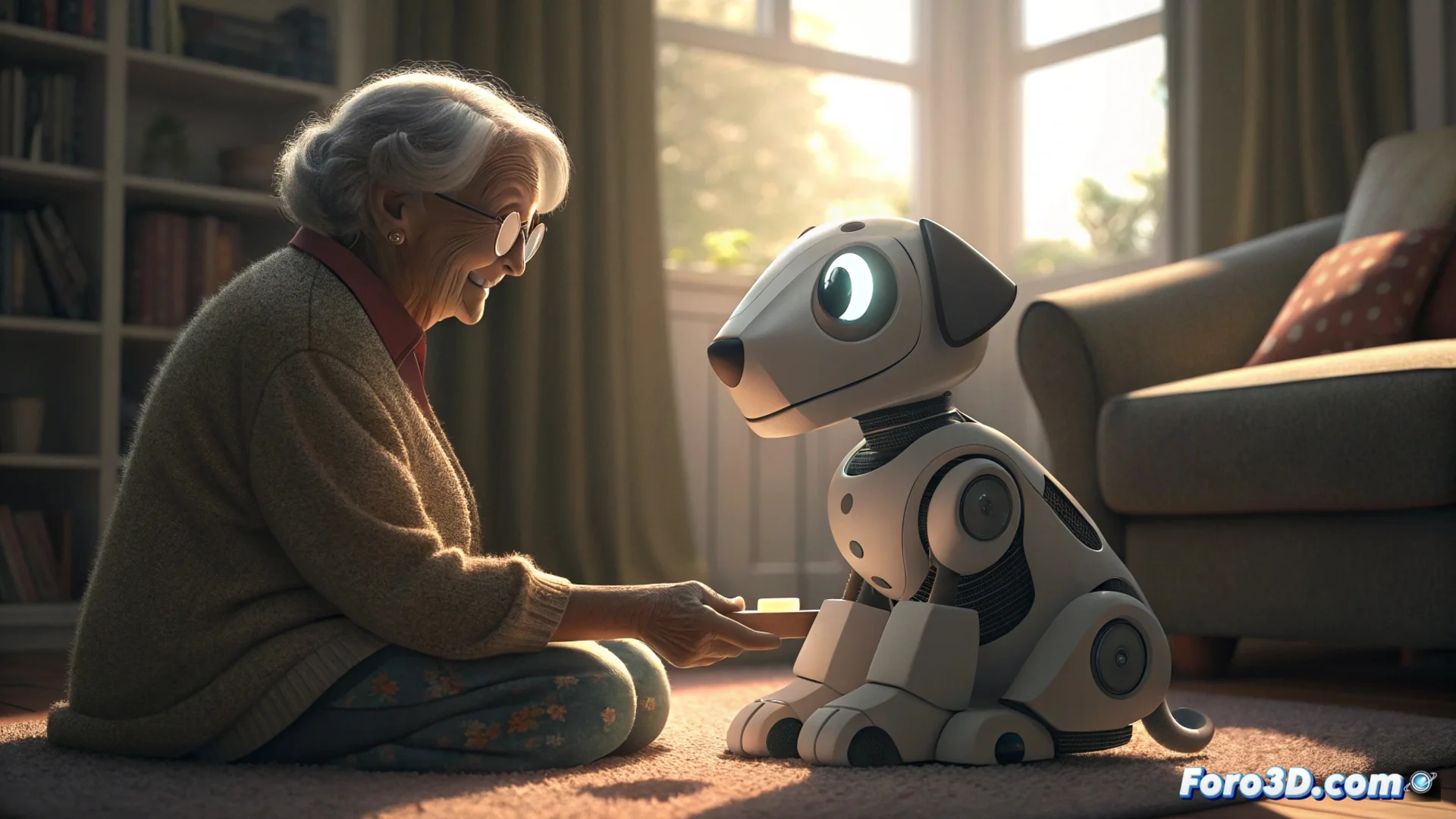
Artificial Intelligence Seeks Physical Companionship
A segment of artificial intelligence no longer focuses solely on optimizing processes. Now it explores how to offer tangible social interaction. The robots presented at fairs like CES, although discreet, show a clear evolution: AI abandons screens to have a physical presence in homes and personal spaces. 🤖
From Data to Organic Interaction
These devices integrate advanced capabilities that allow them to perceive and respond to the environment. They no longer execute random movements, but process sensor information to act contextually. This suggests a basic, but significant, form of robotic companionship.
Key system components:- Machine learning algorithms that analyze data in real time.
- Multiple sensors such as cameras, microphones, and tactile ones to capture the environment.
- Central decision-making system that adapts behavior, does not follow fixed sequences.
The goal is not to replace human interaction, but to complement it, providing a social contact point for those who may feel isolated.
Market and Practical Applications
Several companies are developing these interactive robots, directing their models to specific niches. Some imitate traditional pets to be familiar, while others opt for abstract designs. Their main function lies in sectors such as assisted care or children's entertainment.
Factors driving adoption:- Evolution of hardware components, such as longer-lasting batteries.
- Quieter motors that facilitate prolonged coexistence.
- The ability to update the firmware to adjust behaviors.
The Future of Tangible Companionship
This trend marks a change where companionship technology becomes physical. Although it presents limitations, such as the need to recharge the device, its continuous development seeks to make interaction more natural and sustainable. AI as a tangible entity in our spaces is a growing reality that redefines how we conceive the relationship with machines. ⚙️