Artificial Intelligence Redefines Employment in the Technology Sector
AI tools can now process complex information to detect cybercrimes, anticipate failures in industrial machinery, and create textual, code, or visual content on a massive scale. This power automates functions that previously depended exclusively on people, prompting certain companies to reconsider the size of their human teams. The scenario creates unease among recent graduates seeking to enter the market and junior professionals, who watch as the field they trained for evolves at great speed. 🤖
Organizations Seek to Optimize and Save
Companies integrate these solutions primarily to make their operations more efficient, increase what they produce, and reduce expenses. By deploying systems capable of performing predictive analysis or generating material independently, positions focused on repetitive tasks or basic scrutiny lose relevance. This adjustment in the organizational structure directly impacts entry-level jobs and certain specialties that AI can now cover with lower expenditure.
Direct Impacts on Personnel Structure:- Reduction of roles based on monotonous tasks or simple analysis.
- Reconfiguration of teams, prioritizing the supervision of automated systems.
- Greater focus on hiring profiles that know how to manage and improve technology.
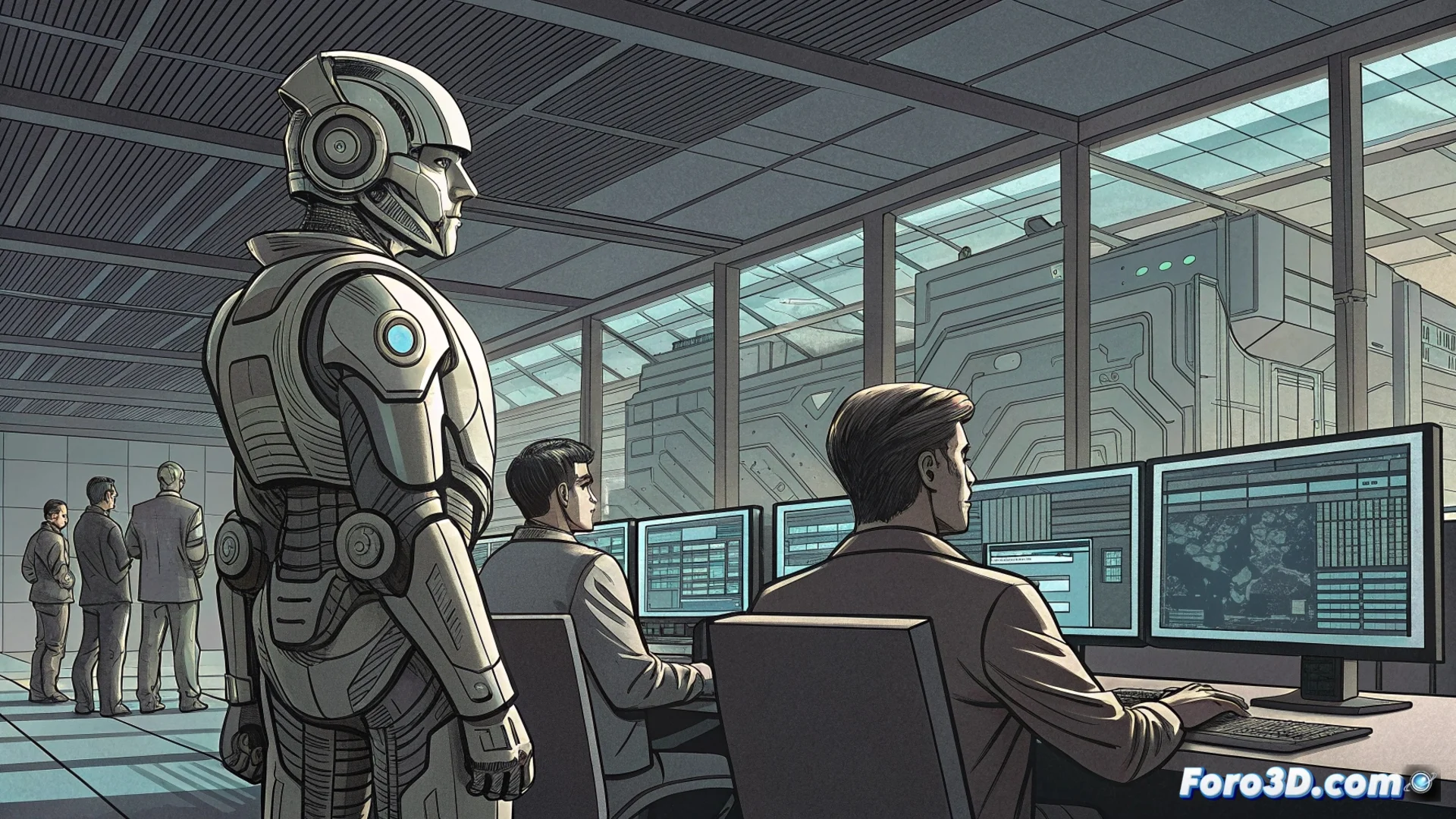
The tool designed to assist humans now rivals for its space, forcing a race where the goal is to learn to use the 'competitor' to avoid falling behind.
The Urgent Need to Evolve Professionally
To thrive in this new context, workers must cultivate capabilities that complement automation. This means acquiring skills to manage, audit, and refine intelligent platforms, while enhancing intrinsically human aptitudes such as analytical reasoning, strategic innovation, and tackling intricate challenges. Continuous training and demonstrating flexibility to redirect one's professional career become crucial elements for maintaining a place in the market. 💡
Key Competencies for the Future Job Market:- Management and supervision of artificial intelligence systems.
- Critical thinking and resolution of non-routine problems.
- Creativity applied to strategy and innovation.
Navigating the Technological Paradox
The situation presents a palpable contradiction: technology created as support ends up competing for the same job opportunities. This establishes a dynamic where professional success depends on the ability to collaborate with the tool that, to some extent, displaces. The path is not to resist, but to adapt, integrating AI as a powerful ally that amplifies human potential rather than simply replacing it. The final message is clear: constant reinvention is the new norm for any professional who wants to remain relevant.