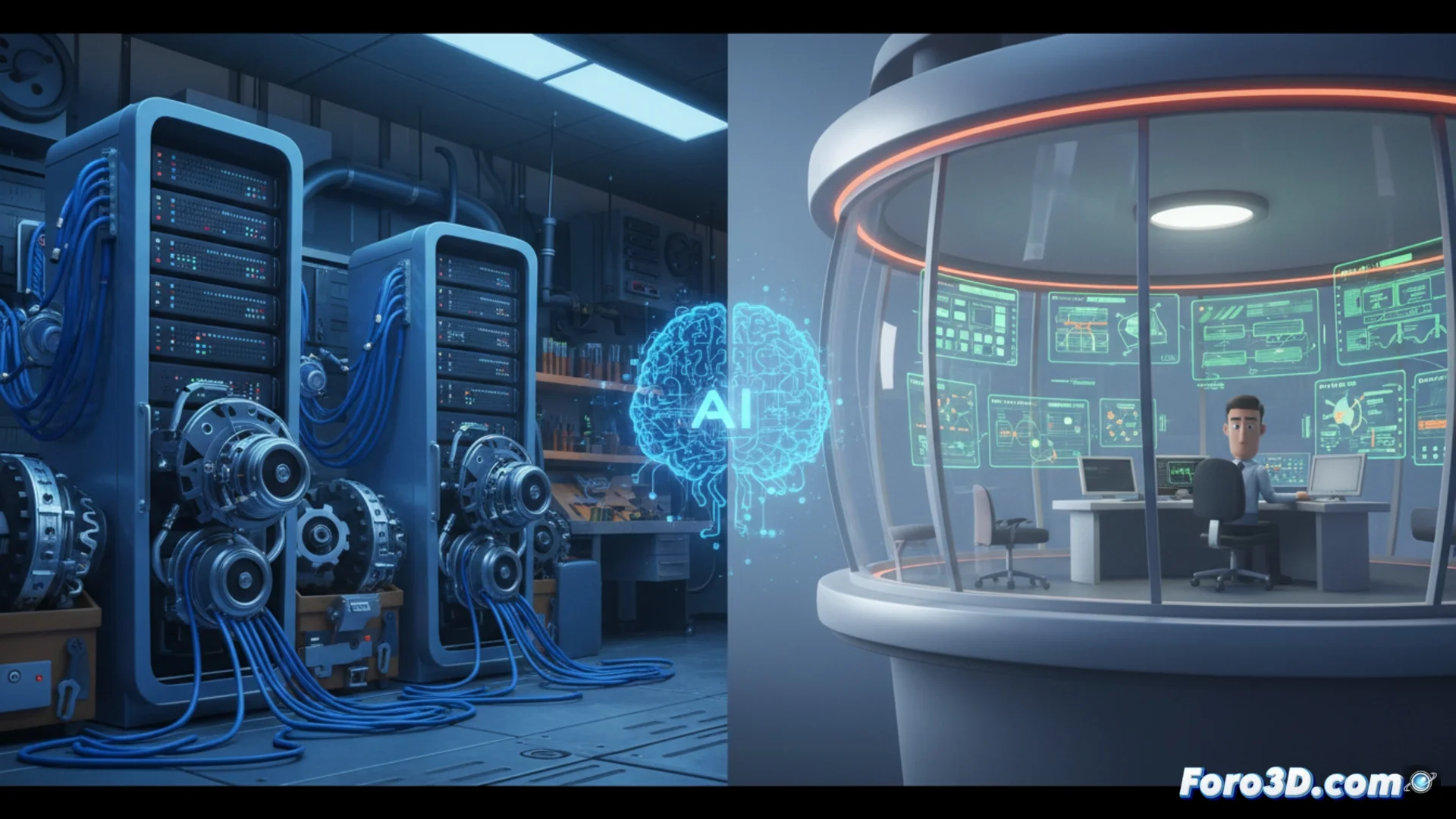
Artificial Intelligence Transforms the IT Department
In a large company, the Information Technologies area functions with a dual role: as a workshop that maintains operating systems and as a command center that coordinates the digital strategy. 🛠️⚙️
A Balance That Is Redefined
Historically, this team was in charge of managing infrastructure, providing support, and protecting security, while also leading projects and developing products. Artificial intelligence is altering this traditional balance. It introduces automation and the ability to analyze data continuously, tasks that previously required direct human intervention. 🤖
AI as an Automated Copilot:- Acts as an autopilot system with an internal black box.
- Accelerates processes and can make decisions, but requires supervision and clear rules.
- Does not eliminate human control, but transforms it toward a more strategic level.
The real challenge is not installing the autopilot, but learning to read its flight log.
The New Focus: Supervise and Validate
The role of the IT team shifts. It is no longer just about executing repetitive tasks, but about interpreting the results generated by the machine, validating its logic, and ensuring that its actions serve the business objectives. 👁️
Keys to Implementing These Tools:- Define operational parameters with great precision.
- Design protocols to audit what the system does.
- Ensure total traceability to be able to reconstruct any process.
The Paradox of Controlled Autonomy
Implementing AI allows the department to delegate the operational part and retain strategic control. This frees up resources to innovate and solve complex problems that technology cannot address alone. The paradox is evident: by giving more autonomy to the machine, we must monitor in more detail how it "thinks". Success lies in balancing the power of automation with expert human guidance. 🧭