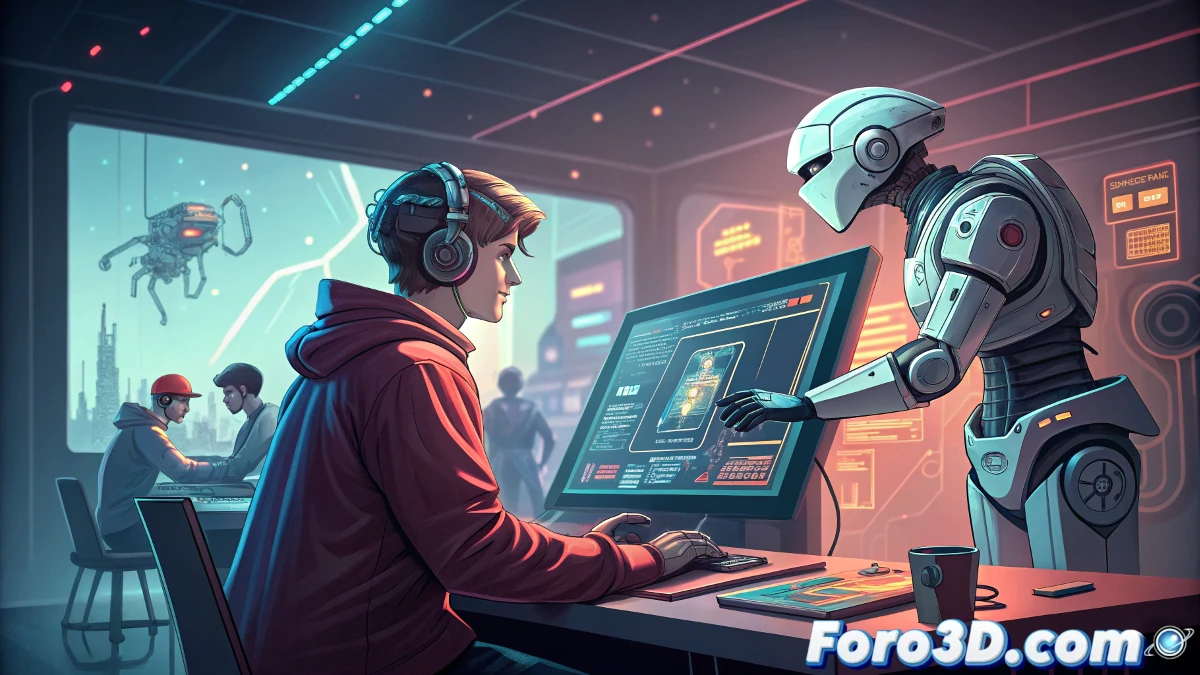
The Arrival of AI in the Gaming World
Artificial intelligence (AI) has begun to make its entrance into the video game industry, promising to transform the way games are created, played, and preserved. Xbox, one of the leading companies in the sector, has recently presented an initiative called Muse, a tool that uses generative AI to create gameplay and game mechanics. Although the possibilities seem infinite, not everyone is convinced of its real potential.
Skepticism Among Experts
Michael Cook, researcher and game designer with extensive experience in AI, has expressed his doubts about the capabilities of Muse. According to Cook, this tool does not generate original ideas or create games from scratch, but rather limits itself to predicting how players might interact with changes in a given level. This raises questions about its practical utility and its ability to innovate in game design.
"AI can be a powerful tool, but it does not replace human creativity." – Michael Cook
The Data Challenge
One of the biggest obstacles for Muse is its dependence on a huge amount of data, specifically gameplay recordings, to function properly. This makes it inaccessible for smaller or independent studios, which lack the necessary resources to collect and process such a volume of information. Additionally, the cost and time required to implement this technology can be prohibitive for many developers.
- Data dependence: Requires large amounts of gameplay recordings.
- High cost: Inaccessible for small or independent studios.
- Implementation time: Slow and complex processing.

The Promise of Preservation
Phil Spencer, head of Xbox, has highlighted that Muse could be key to preserving classic video games, improving their compatibility with modern platforms and even optimizing their visual aspect. However, Cook argues that video game preservation goes beyond graphics and ports; it involves adapting mechanics, narratives, and other aspects that generative AI does not seem capable of handling on its own.
An Uncertain Future
Despite the criticisms, Microsoft continues to bet on Muse and plans to implement it in its development studios in the near future. Although the tool is still in its early stages, its evolution could mark a before and after in the industry. However, it remains to be seen whether it will truly meet expectations or if it will be limited to being a complementary tool in the creative process.
The Balance Between Technology and Creativity
The arrival of AI in video games raises a fascinating debate about the balance between technology and human creativity. While tools like Muse offer new possibilities, it is also crucial not to lose sight of the importance of human design and artistic innovation. The future of video games will depend on how these technologies are integrated without sacrificing the essence that makes games unique.
"Technology must serve creativity, not replace it." – Phil Spencer
In summary, artificial intelligence is opening new doors in the video game industry, but its real impact remains to be seen. Tools like Muse offer enormous potential, but they also pose challenges that require a careful balance between technological innovation and human creativity.