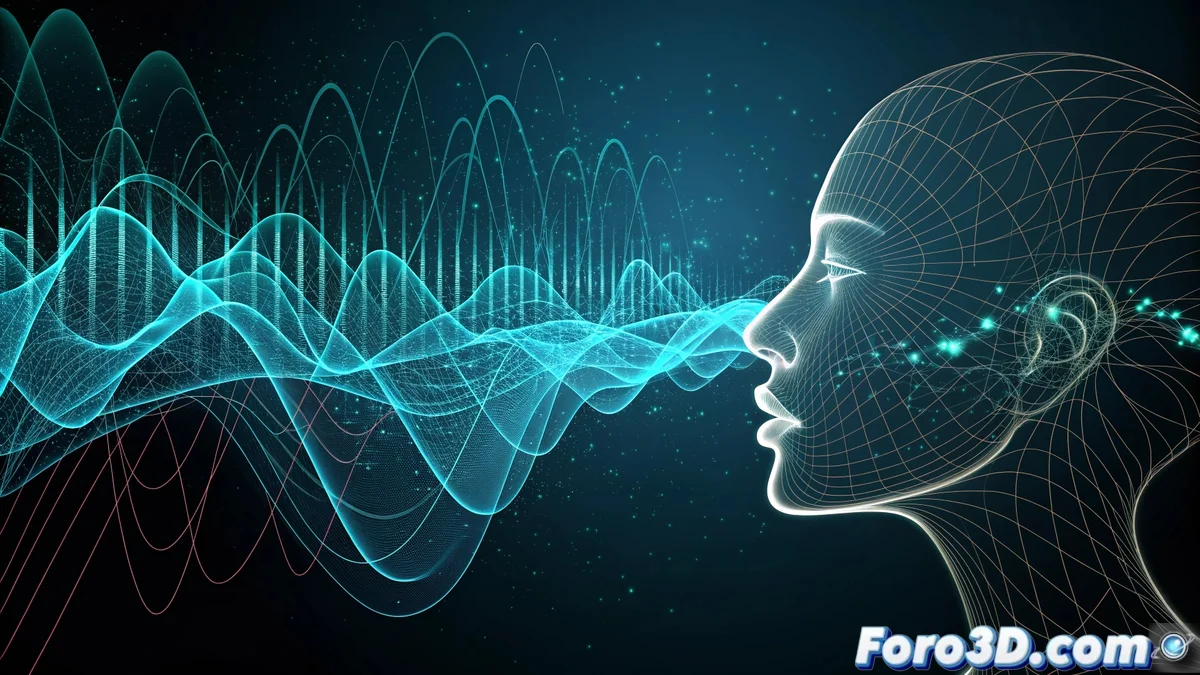
When Your Voice Reveals More Than Words Say
A team of researchers has developed an artificial intelligence capable of analyzing voice and language patterns in conversations to identify early signs of depression and anxiety. The system achieves an accuracy superior to 85%, positioning itself as a revolutionary tool for the early diagnosis of mental disorders. This technology represents a significant advancement at the intersection between artificial intelligence and mental health, offering new perspectives for preventive interventions. 🎤
The Functioning Behind Vocal Diagnosis
The AI model meticulously studies variations in tone, rhythm, and intonation of the voice, along with word choice and speech structure. These parameters allow detecting subtle patterns associated with altered emotional states that might go unnoticed even by trained observers. The technology analyzes up to 200 different vocal features in real time, creating a detailed emotional profile of the speaker.
Transformative Applications in Mental Health
This innovation could be integrated into telemedicine platforms, mobile applications and smart home devices, offering continuous support to mental health professionals. By identifying early signals in a non-invasive way, AI would facilitate faster and more effective interventions, potentially reducing the progression of symptoms to more severe cases requiring intensive treatment.
- Early Detection: Identification of symptoms before traditional methods.
- Continuous Monitoring: Passive tracking without interfering with daily life.
- Improved Accessibility: Tool available at any time.
- Professional Complement: Supports but does not replace clinical judgment.
The human voice contains acoustic biomarkers that reflect our mental state with surprising accuracy.
Scientific Validation and Demonstrated Precision
The clinical trials conducted show that the AI consistently achieves over 85% accuracy in its preliminary evaluations when compared to established professional diagnoses. The researchers emphasize that the system is designed to function as a complementary tool that guides more detailed assessments, never as a replacement for specialized clinical judgment.
Non-Invasive Analysis Technology
The system operates through natural language processing algorithms and advanced acoustic analysis that can be discreetly integrated into existing applications. The technology requires only 2-3 minute voice samples to perform initial evaluations, making it ideal for regular use without creating additional burden for users. 🗣️
Ethical and Privacy Considerations
The developers have implemented strict data protection protocols that guarantee the anonymity and security of the collected vocal information. All recordings are processed locally whenever possible and deleted after analysis, addressing legitimate concerns about privacy in mental health monitoring.
Potential Impact on Public Health
With the documented global increase in mental health disorders, this technology is positioned as a key resource for overburdened health systems. The ability to screen at scale could prioritize cases requiring immediate attention, optimizing limited resources and potentially saving lives through early intervention in at-risk cases.
Now even our awkward silences and abrupt topic changes can be analyzed by algorithms. Who would have thought that those pauses we attributed to bad internet connection were actually diagnosing our mental health. 😅