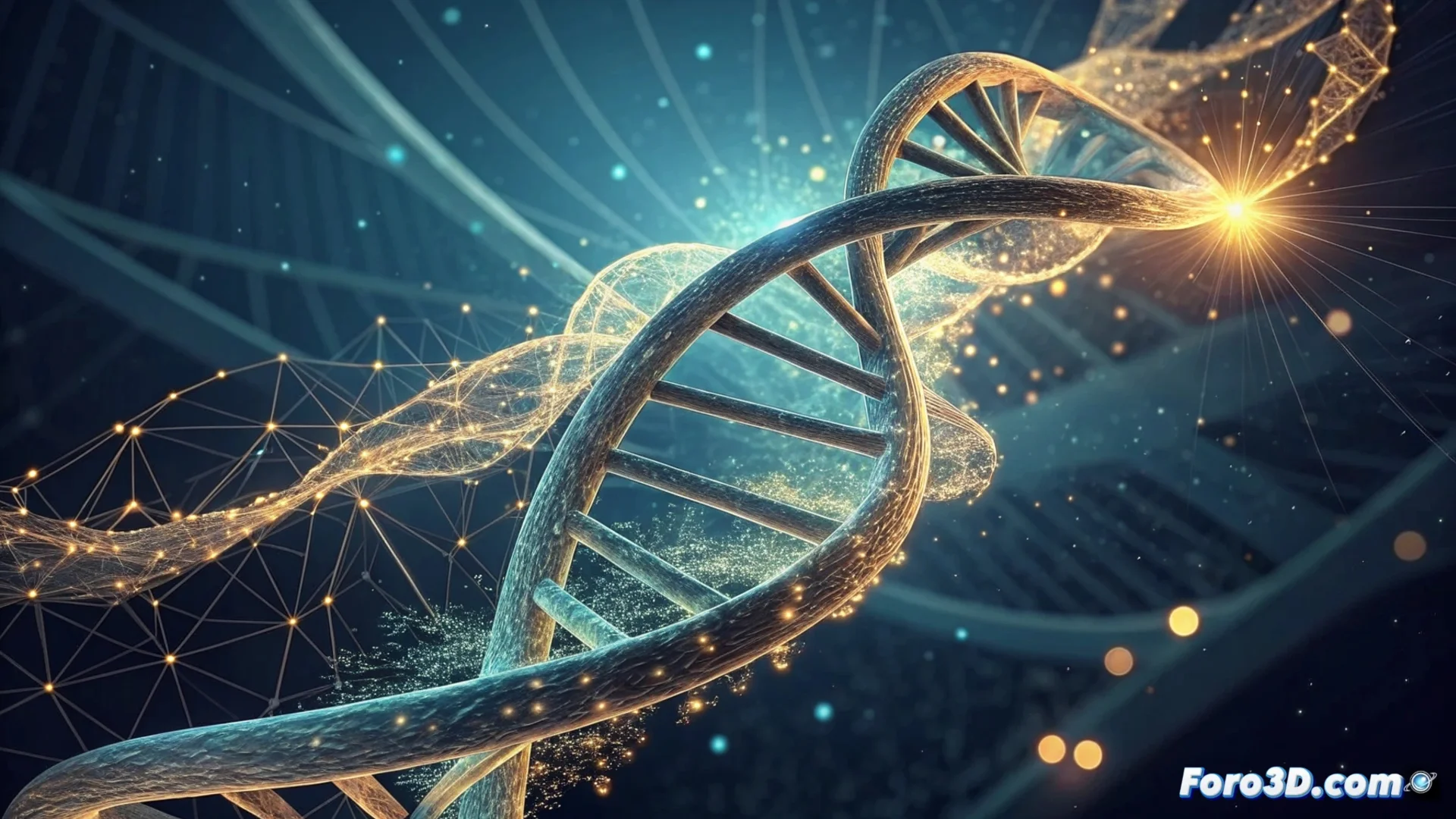
Artificial Intelligence Designs Genetic Regulators from Scratch
Current genetics combines generative artificial intelligence not only to analyze biological data, but also to build biological components that work. A recent advance shows that these algorithms can project DNA regulatory sequences, the fragments that govern how genes are expressed. This represents a fundamental shift: researchers no longer search for regulators in nature, but generate them synthetically for specific objectives. This enables the creation of genetic circuits with a level of precision never seen before. 🧬
Generative Algorithms Decipher the DNA Code
These AI systems are trained on huge collections of DNA sequences whose function is known, learning the patterns that govern how regulators operate. By processing this data, the model produces new sequences that, as it predicts, will function in a specific way, such as activating a gene only in response to a particular stimulus. The process is cyclical; the AI suggests designs, scientists synthesize them in the lab and test their function, and the results feed back into the model for it to learn and improve its next proposals.
Key Features of the Design Process:- Training with Massive Data: The model learns from vast libraries of known DNA sequences.
- Predictive Generation: Creates new sequences based on learned patterns for a desired function.
- Iterative Cycle of Testing and Feedback: Designs are synthesized, tested, and results refine the model.
The designer's mantra "form follows function" finds its molecular equivalent, where the designer is an algorithm and the client is a cell.
Practical Applications Beyond the Lab
This ability to design custom regulators has direct uses in biotechnology and medicine. It allows accelerating the cycle from conceptual idea to a functional biological product, significantly shortening development timelines.
Direct Application Areas:- Precision Agriculture: Create crops that activate drought resistance genes only when needed.
- Optimized Bioproduction: Program yeasts to produce therapeutic compounds more efficiently.
- Advanced Gene Therapies: Develop safer and more effective treatments whose activation mechanism is precisely controlled.
A New Paradigm for Biological Engineering
This approach marks a turning point by bringing generative design to the molecular realm. The AI's ability to project functional genetic components from scratch redefines how biological systems are conceived and built. The future involves algorithms that not only analyze, but invent genetic solutions for concrete challenges, fusing the digital world with the biological. 🔬⚡