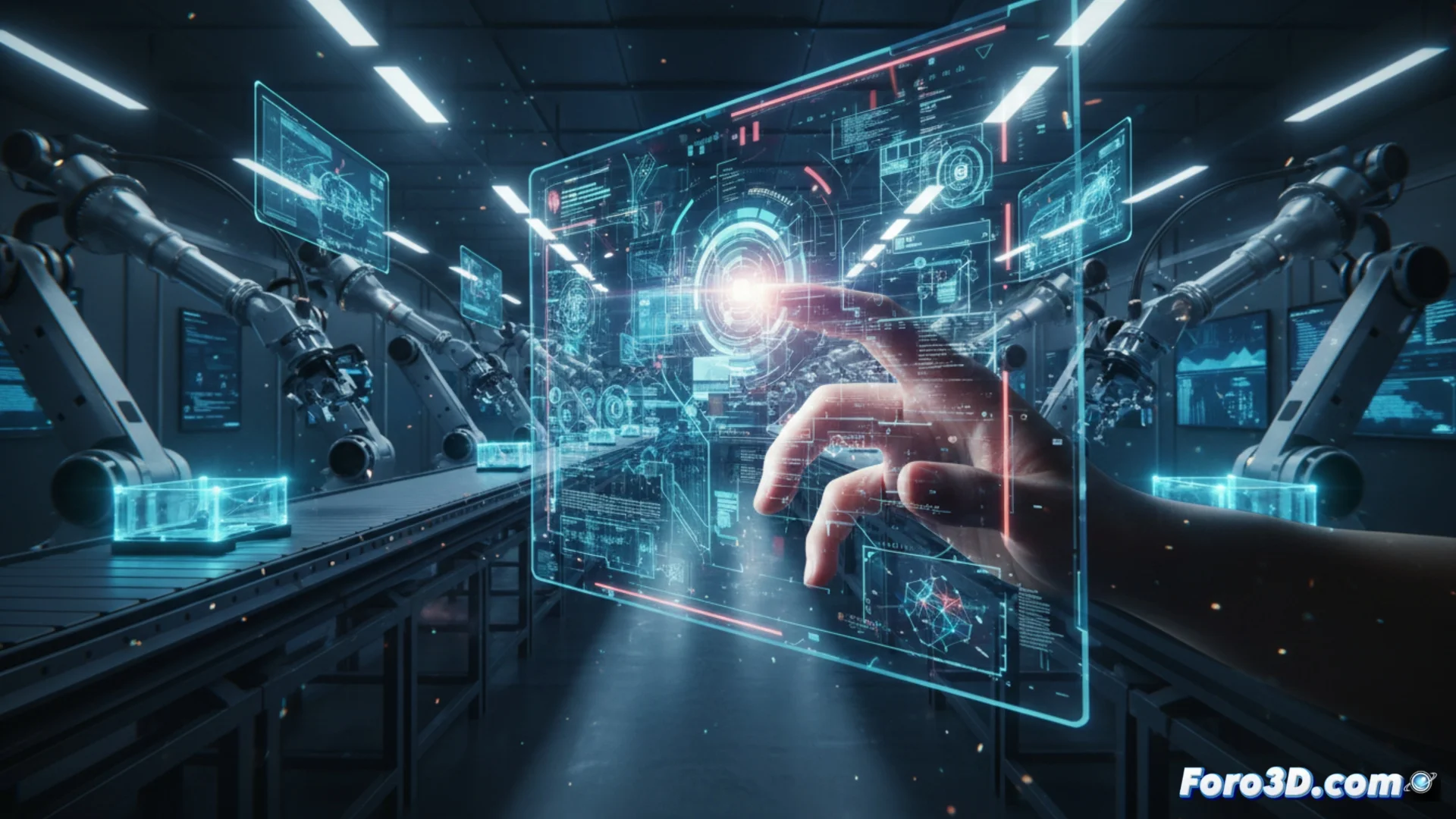
Artificial Intelligence and the Future of Employment: Adapt or Fall Behind
The discussion about whether artificial intelligence will eliminate jobs generates concern in various sectors. Technological advances allow for automation of routine processes and analysis of large volumes of data, influencing areas such as administration, manufacturing, and certain services. However, this phenomenon has historical precedents; technological innovations have always transformed the job landscape, eliminating some functions but creating new opportunities. The crucial element is how individuals and organizations respond to this continuous evolution. 🤖
AI as an Ally, Not a Substitute
Today, AI primarily functions as a tool for augmenting human capabilities. It assists professionals so they can focus on more complex tasks that require creativity, deep reasoning, and empathy. In sectors like 3D design, software creation, or healthcare, these systems help process information, sketch ideas, or identify trends, but supervision and final decisions are made by people. The emphasis now is on roles that direct, interpret, and apply the results generated by technology.
Fields where AI acts as a complement:- Design and creativity: Generates base concepts or variations, accelerating the initial phase of projects.
- Data analysis: Examines large datasets to reveal hidden patterns, supporting decision-making.
- Workflow automation: Handles repetitive tasks in production pipelines, freeing up time for creative work.
The real risk is not in the technology, but in not preparing for it. Those who adapt and learn to work alongside AI maintain their value in the market.
Continuous Preparation is the Key Strategy
The real danger is not the tool itself, but the lack of adaptation. Professionals who renew their skills and understand how to collaborate with artificial intelligences tend to remain relevant. This requires understanding the fundamentals of how these systems operate, acquiring advanced digital skills, and enhancing soft skills that algorithms cannot replicate. Continuous training and flexibility to reinvent oneself within an industry become essential factors for navigating this change.
Actions to remain relevant:- Learn the fundamentals: Understand how basic AI models work and are trained.
- Master specific tools: Specialize in AI software applied to one's own sector (e.g., for 3D modeling, animation).
- Enhance the human element: Develop critical thinking, project management, and effective communication.
Looking Toward the Future of Work
Perhaps the greatest concern is not that an algorithm can perform your job, but that leaders do not value the unique combination of human judgment and technological power. AI follows instructions, lacks its own initiative, and cannot innovate without guidance. The future of work is not about a competition between people and machines, but a synergistic collaboration where human ingenuity directs and technology amplifies possibilities. The path involves embracing change and actively preparing for an environment where interacting with intelligent systems will be the norm. 💡