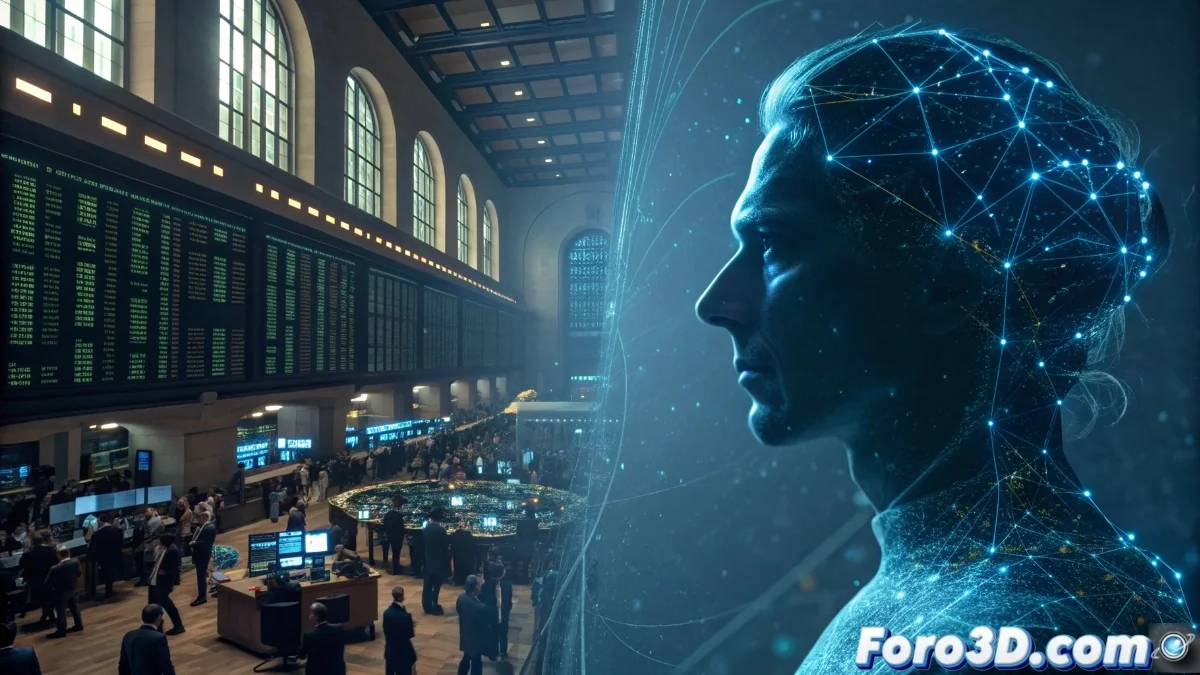
Artificial Intelligence and Its Volatile Impact on Financial Markets
Artificial intelligence systems are revolutionizing the global financial landscape, but their lack of established credibility is generating worrying volatility in the world's major stock exchanges. Investors are showing nervous reactions to contradictory information about the real performance of these technologies, producing abrupt oscillations in stock indices that evidence the constant tension between the promised technological potential and practical implementation in complex financial environments 🤖.
Immediate Repercussions on Global Markets
When doubts arise about the reliability of AI algorithms, financial markets experience sudden and unpredictable movements. Institutional traders quickly adjust their investment positions at any hint of problems in automated systems, triggering domino effects that spread across multiple economic sectors. This chain of reactions intensifies notably when the media amplifies reports on errors in financial predictions made by AI, creating a generalized climate of uncertainty that affects everything from technology companies to traditional commodities.
Concrete manifestations of volatility:- Abrupt adjustments in investment portfolios in response to signals of failures in automated systems
- Propagation of negative effects across multiple interconnected sectors
- Media amplification of errors in AI financial predictions
Algorithms continue to learn from our behavior patterns, while we continue to not fully understand theirs, creating the perfect irony where machines designed to reduce risks end up generating new types of financial uncertainty.
Public Perception as an Amplifying Factor
The general public's trust in artificial intelligence plays a fundamental role in this volatile dynamic. As stories about failures in automated investment systems circulate, small investors tend to withdraw their capital from the market, exacerbating stock market declines. Pension funds and other major financial players are forced to review their AI-based strategies, generating periods of high volatility that can last for weeks. This situation creates a self-sustaining cycle where distrust fuels instability and vice versa.
Factors that intensify instability:- Mass withdrawal of small investors in response to negative AI news
- Constant review of strategies by institutional funds
- Cycle of distrust that perpetuates market instability
The Paradoxical Future of Financial AI
While algorithms continue to evolve and learn from our financial behavior patterns, the investment community still does not fully understand the internal mechanisms of these artificial intelligences. This knowledge asymmetry creates the fundamental irony where the machines we specifically designed to reduce risks and optimize returns end up generating new types of financial uncertainty, posing regulatory and operational challenges that require innovative solutions to balance technological innovation with market stability 💹.