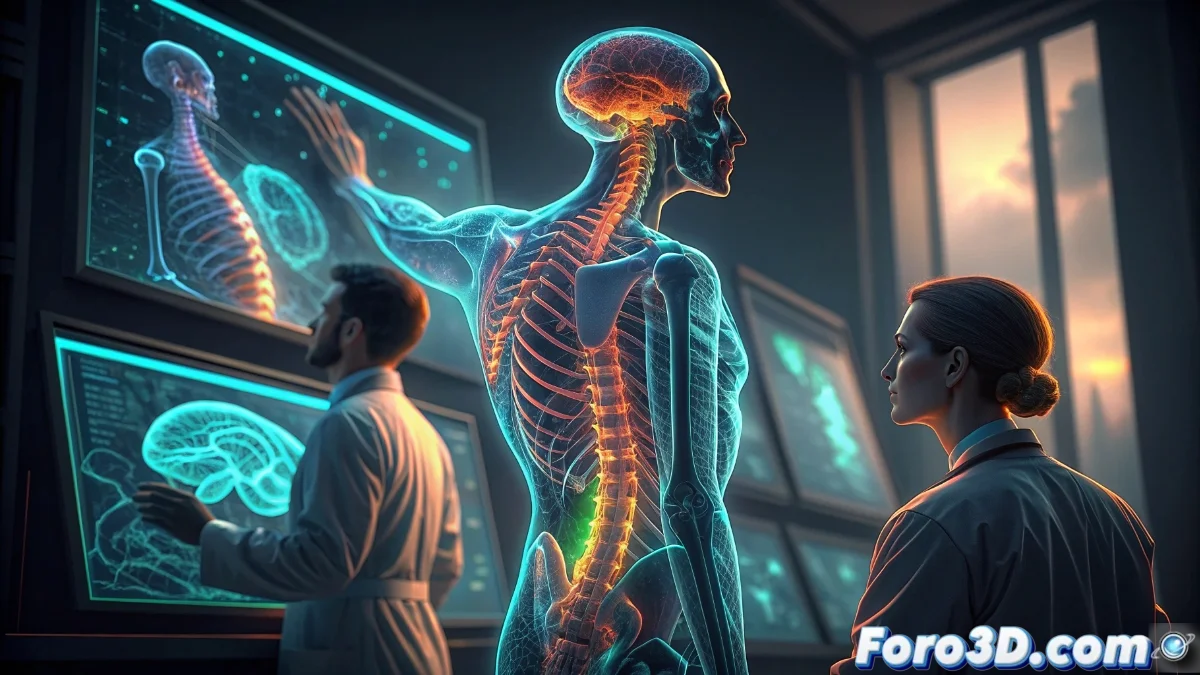
Artificial Intelligence Analyzes MRIs to Determine Biological Age of the Spine
A revolutionary breakthrough in the field of diagnostic medicine has recently emerged, where researchers have created an artificial intelligence system specialized in evaluating the real age of our spine through the analysis of magnetic resonance imaging 🩺.
Precision in Spinal Wear Assessment
This innovative model processes over 18,000 sets of medical images to identify degeneration patterns associated with aging, providing specialists with an objective metric on vertebral health status that transcends the patient's mere chronological age.
Main features of the system:- Automated analysis capability for large volumes of MRI images
- Detection of degenerative patterns invisible to the untrained human eye
- Generation of quantifiable indicators on the actual state of the spine
"The ability to objectively measure spinal wear completely changes our approach to the prevention and treatment of spinal pathologies" - Project research committee
Applications in Preventive Diagnosis
Medical professionals now have a tool that reveals early signs of vertebral deterioration that would normally go unnoticed in conventional assessments, allowing proactive interventions before the development of severe symptoms 💡.
Benefits in clinical practice:- Early identification of patients at high risk of developing vertebral problems
- Facilitation of the implementation of preventive treatments and corrective measures
- Optimization of medical resources through more precise and rapid diagnoses
Transformation in Patient Awareness
People with physically demanding occupations or poor postural habits can obtain concrete evidence on the real impact of their daily activities on spinal health, motivating significant behavioral changes and adherence to rehabilitation treatments 🚶♂️.
Social Impact and Final Reflections
This technology not only provides actionable data for healthcare professionals but also transforms the abstract perception of spinal care into tangible information that empowers patients to take active control of their spinal well-being, although it will probably still not fully justify those pains after a marathon of series on the sofa 😅.