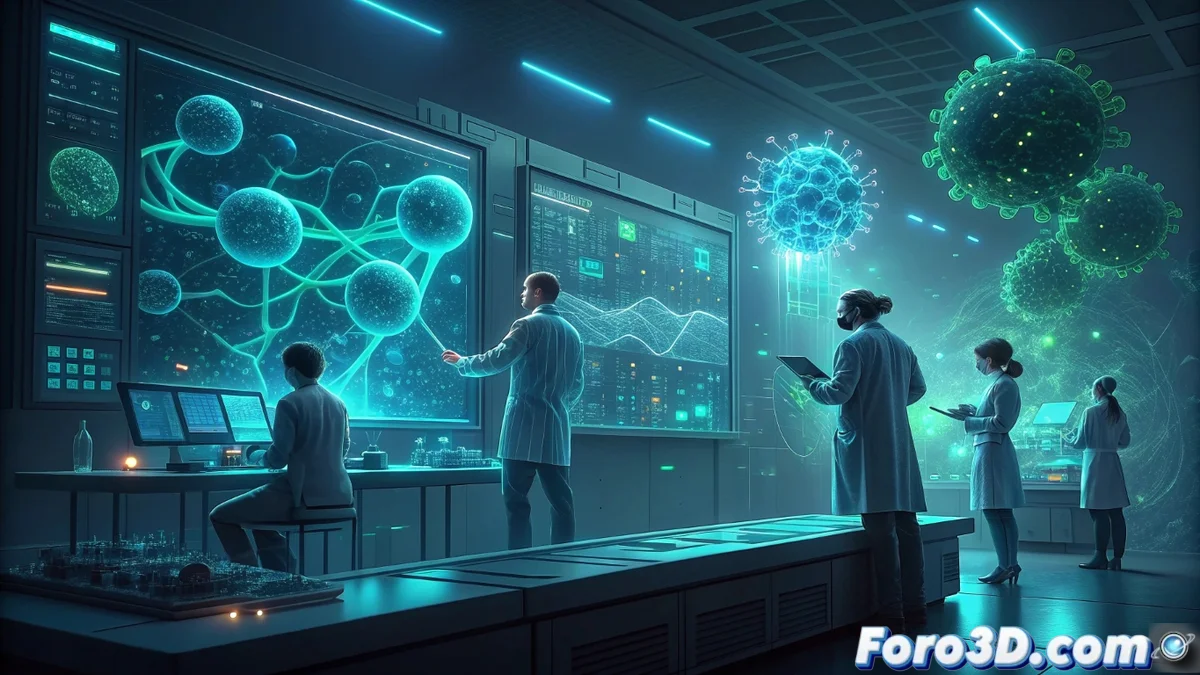
Artificial Intelligence Accelerates Drug Design
In a world dominated by technological innovation, artificial intelligence emerges as a powerful ally in the pharmaceutical field, enabling the creation and verification of molecules for new drugs in just days, instead of the long years demanded by the traditional method. Imagine how these tools, powered by AI giants, scour immense volumes of data to predict safe and effective molecules, freeing researchers to focus on clinical trials and saving massive economic resources. 😎
How These AI Platforms Work
AI platforms work thanks to sophisticated algorithms that fuse machine learning with molecular modeling techniques, generating novel chemical compounds that are virtually tested before moving on to real synthesis. For instance, systems like DeepMind's AlphaFold accelerate the process by accurately simulating protein interactions, creating a direct bridge between digital research and practical applications in the pharmaceutical industry. This not only optimizes the workflow but transforms the way drug creation is approached, making the impossible commonplace.
Benefits and Challenges in the Sector:- The main advantage is progress in treatments for serious ailments, such as cancer or rare diseases, by drastically reducing development times and allowing a faster response to urgent medical needs.
- Another key benefit is cost reduction, as scientists can skip unnecessary trial-and-error stages, focusing on what really works and boosting efficiency in laboratories.
- However, challenges include ethical and regulatory issues, as AI's speed could outpace established safety protocols, raising concerns about proper validation of results.
In an ironic twist of the digital era, while AI solves in days problems that once took years, laboratories might be filled with scientists with more free time, debating whether it's the technology or just a simple coffee that ignites true ingenuity in research.
The Potential and Ethical Challenges at the Intersection of Biology and Technology
Despite the obstacles, enthusiasm grows among scientists and companies for the possibilities this fusion opens, such as shortening drug development timelines and fostering innovative collaborations between biology and AI. These tools not only promise more effective treatments but invite reflection on how to balance speed with responsibility, ensuring that advances do not compromise public safety. It is a reminder that, in this technological race, progress must go hand in hand with ethics to avoid future stumbles. 🚀
Another Descriptive List of Impacts:- AI facilitates the prediction of molecular interactions with high precision, accelerating validation and reducing risk in early research phases.
- It faces regulatory challenges by challenging existing norms, forcing updates to standards to adapt to this new digital reality.
- Finally, it generates opportunities for professionals to reinvent themselves, dedicating more time to creativity and less to repetitive tasks, enriching the scientific landscape.
Final Reflections on This Technological Revolution
In summary, artificial intelligence is redefining the pharmaceutical landscape by making accessible what was once a slow and costly process, maintaining intact its potential to save lives while navigating the seas of ethical challenges. With tools like AlphaFold, the future looks bright, but it demands a balanced approach to maximize benefits and minimize risks, reminding us that behind every algorithm there is a human touch that makes the difference. 🌟