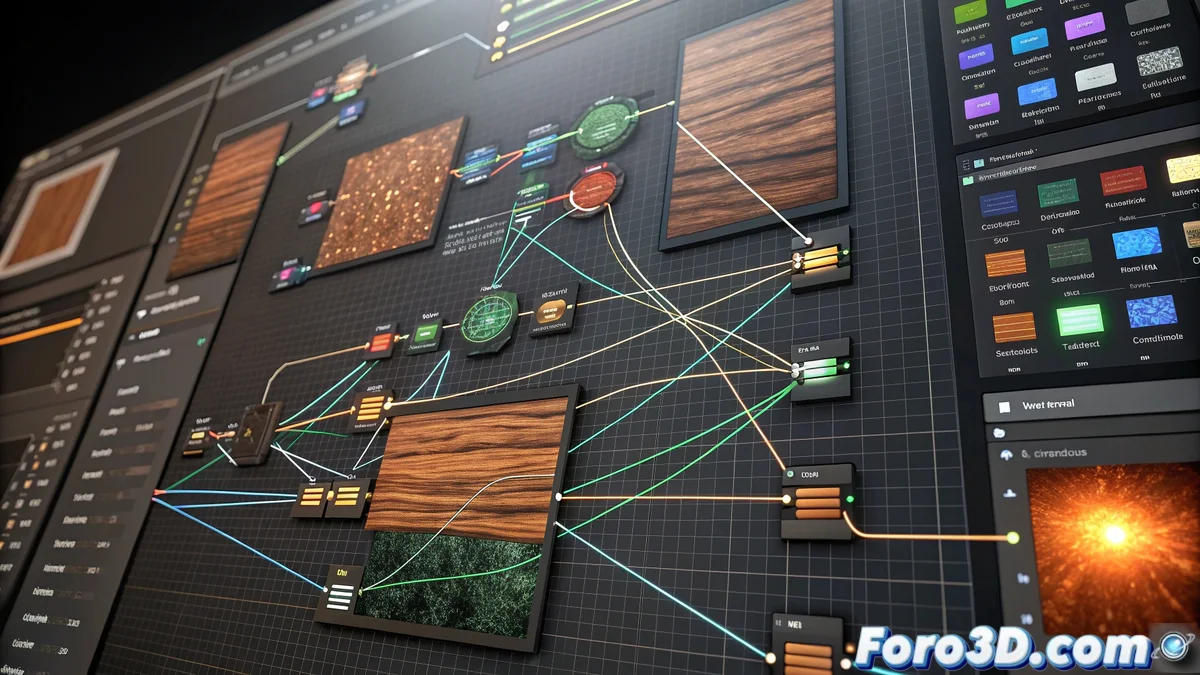
Art of Illusion and Its Visual Language for Procedural Materials
The Art of Illusion suite redefines material design through an intuitive visual language that allows for the creation of procedural textures without writing a single line of code. This visual system facilitates the generation of complex surfaces with absolute control over every parameter, from shine to roughness, ideal for artists seeking creative agility 🎨.
Advantages of the Visual Approach in Procedural Design
By eliminating the need for advanced programming, Art of Illusion's visual language democratizes material design. Users combine visual nodes by dragging and connecting components to define properties like reflectivity or dynamic patterns, achieving results that simulate everything from polished metals to abstract organic textures. This method not only speeds up experimentation but also allows for real-time adjustments through direct controls in the interface.
Key Benefits of the Visual System:- Accessibility for users without coding knowledge, reducing the learning curve
- Rapid iteration through visual manipulation of parameters like color and relief
- Ability to simulate realistic materials or artistic effects with high customizability
The creative chaos of designing textures is transformed into a controlled process thanks to Art of Illusion's visual panels.
Applications in Multimedia and Technical Projects
In fields such as 3D animation, video game development, or architectural visualization, Art of Illusion's procedural materials stand out for their scalability and reusability. Artists build texture libraries that update automatically when base nodes are modified, optimizing workflows in large-scale productions. The procedural nature ensures infinite variations, ideal for creating extensive environments without asset repetition 🔄.
Notable Uses in Creative Industries:- Generation of vast and consistent environments for video games or film
- Architectural visualizations with materials adaptable to lighting changes
- Creation of dynamic libraries that save time in design iterations
Impact on Efficiency and Creativity
The visual approach not only streamlines the workflow but also fosters artistic exploration by allowing fine-tuning in real time. From textures that mimic wood to abstract effects, Art of Illusion empowers designers to master procedural complexity with a user-friendly interface, demonstrating that the creation of advanced materials can be as intuitive as it is powerful 💫.