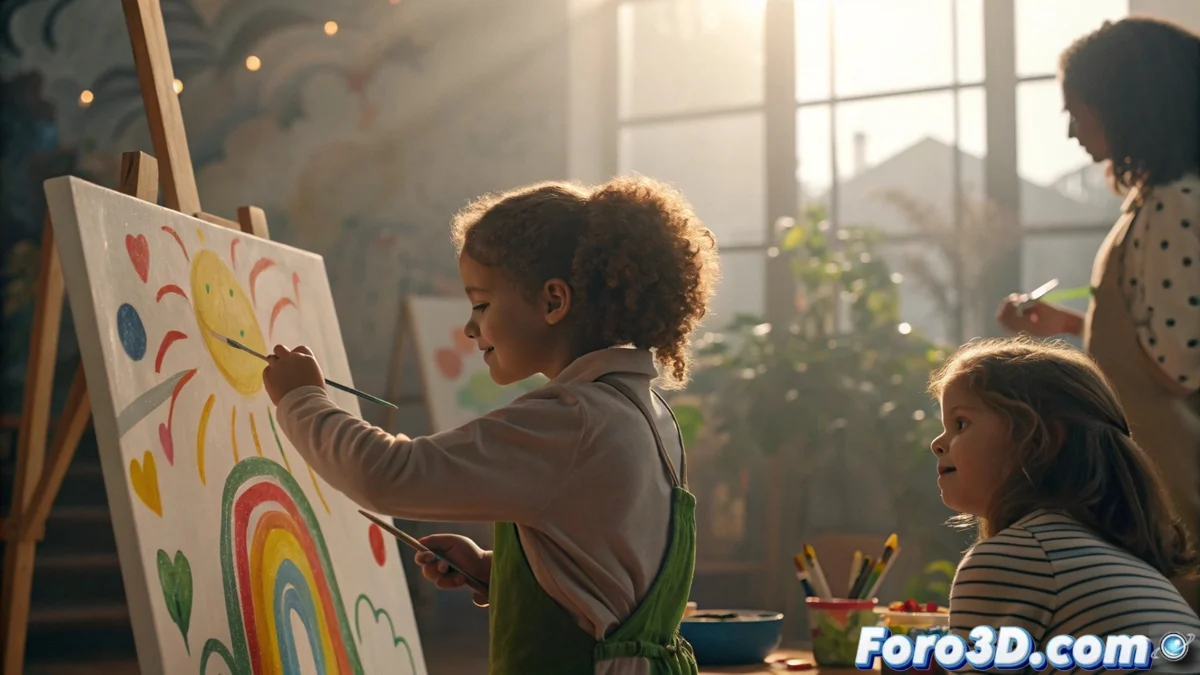
Art as a Therapeutic Tool for Childhood Trauma
In the field of child development, artistic expression emerges as a powerful channel for healing deep emotional wounds. It offers a non-verbal language where the youngest can externalize internal conflicts in a safe and constructive way, laying the foundations for comprehensive recovery 🎨.
Mechanisms of Action of Artistic Creation
Activities such as modeling or collage allow children to channel complex emotions like fear or anger. This process transforms stress energy into something tangible and, often, positive, fostering resilience and facilitating the natural integration of therapy into their daily life.
Key Documented Benefits:- Emotional Channeling: Serves as an outlet for repressed or hard-to-verbalize feelings.
- Safe Environment: Creates a judgment-free space where the child controls the narrative of their experience.
- Symbolic Reconstruction: Allows reworking and giving new meaning to traumatic events through visual metaphor.
A seemingly clumsy drawing can contain more therapeutic truth than an elaborate speech, challenging even the most serious expectations.
Impact on Overall Development
Specialists in child psychology emphasize that this approach goes beyond symptomatic relief. It stimulates personal growth by reinforcing self-esteem and social skills, blending play with healing processes for a truly holistic approach.
Practical Applications in Diverse Contexts:- Crisis Intervention: To process sudden events or losses.
- Self-Image Reinforcement: Through the creation and achievement of art projects.
- Communication Improvement: Facilitates expression and understanding in family or group dynamics.
A Tool of Unique Power
Although its simplicity may be underestimated, art therapy possesses unique efficacy. It acts as a silent ally that helps children face their "inner monsters," demonstrating that, sometimes, a pencil and paper are more powerful instruments of change than one might think ✏️.