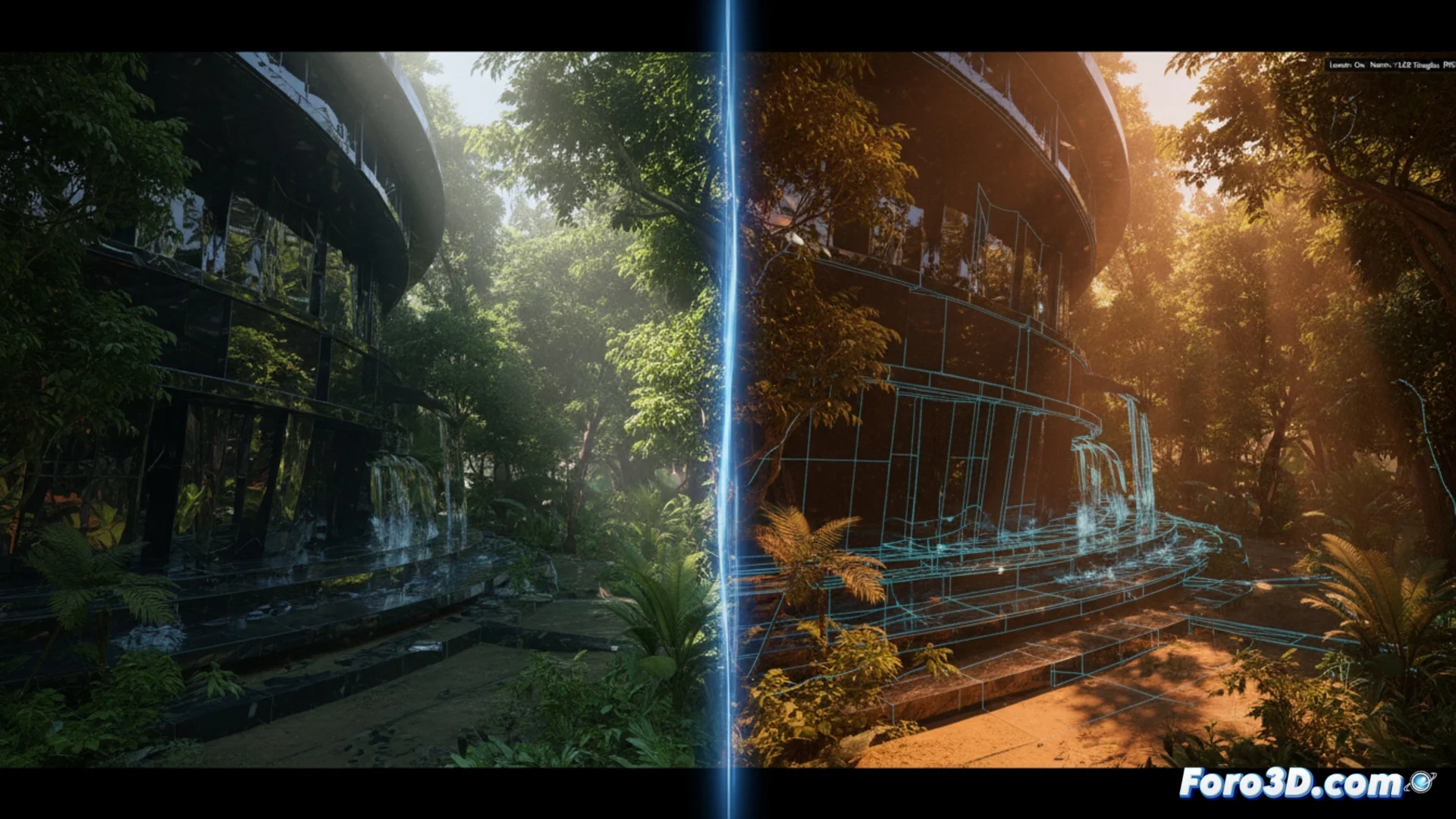
Arnold Render and Unreal Engine: Two Philosophies for Creating Images
In the world of computer graphics, choosing the right tool defines the outcome. Two engines stand out for their opposing approaches: Arnold Render, specialized in calculating light with physical precision to achieve impeccable photorealism, and Unreal Engine, designed to produce and modify complex scenes instantly and interactively. 🎨
Physical Precision vs. Interactive Speed
Arnold operates as a ray tracing engine that integrates into applications like Maya or 3ds Max. Its core simulates how light behaves in reality, allowing the generation of global illumination, complex reflections, and refractions with minimal noise. It is ideal for handling very dense geometries and advanced shaders for high-quality final frames, a process that usually consumes a lot of calculation time. In contrast, Unreal Engine functions as a unified environment that prioritizes speed. It employs systems like Lumen to simulate dynamic global illumination and Nanite to manage micro-polygons, allowing scenes to be explored and adjusted instantly. Its workflow is designed for fast iteration and immediate results. ⚡
Main Use Cases:- Arnold Render: It is chosen when the project needs maximum visual fidelity for a final product, such as a movie or an advertising image. Its detailed calculation of each light sample offers physical precision that is hard to match in real time.
- Unreal Engine: It shines in contexts where interactivity is crucial, such as previsualizations, virtual reality production, or video games. Its ability to render at interactive frame rates changes how creative decisions are made.
- Hybrid Approach: It is common for artists to use Unreal to block out and test ideas at high speed and then switch to Arnold for the final render, optimizing delivery deadlines.
The choice between engines is not just technical; it defines whether you value time for iteration or time to render the final frame more.
Integration into the Pipeline and Required Resources
Incorporating Arnold into an existing pipeline is usually straightforward for studios that already use Autodesk or SideFX software. However, it demands powerful hardware for processing and considerable time to calculate each frame. Unreal Engine consolidates many tools into a single environment, from lighting to applying effects, which can simplify the pipeline but requires learning its specific ecosystem and material nodes.
Deciding Factors for Choosing:- Available Hardware: Arnold needs robust equipment to render, while Unreal requires power to maintain interactivity in complex scenes.
- Project Type: Is it a cinematic animation seeking perfection or an interactive experience that needs immediate response?
- Learning Curve: Mastering Unreal's workflow and materials can be a project in itself, while Arnold integrates into traditional DCC workflows.
Conclusion: Strategic Complementarity
It's not about one engine being superior to the other, but about them solving different problems. Arnold Render is the option for those who cannot compromise on physical quality and detail in the final image. Unreal Engine is the tool for those who need to create, test, and modify in a dynamic environment. The current trend shows studios implementing both, using the speed of one to plan and the precision of the other to polish, demonstrating that understanding their strengths is key to optimizing any visual production. 🚀