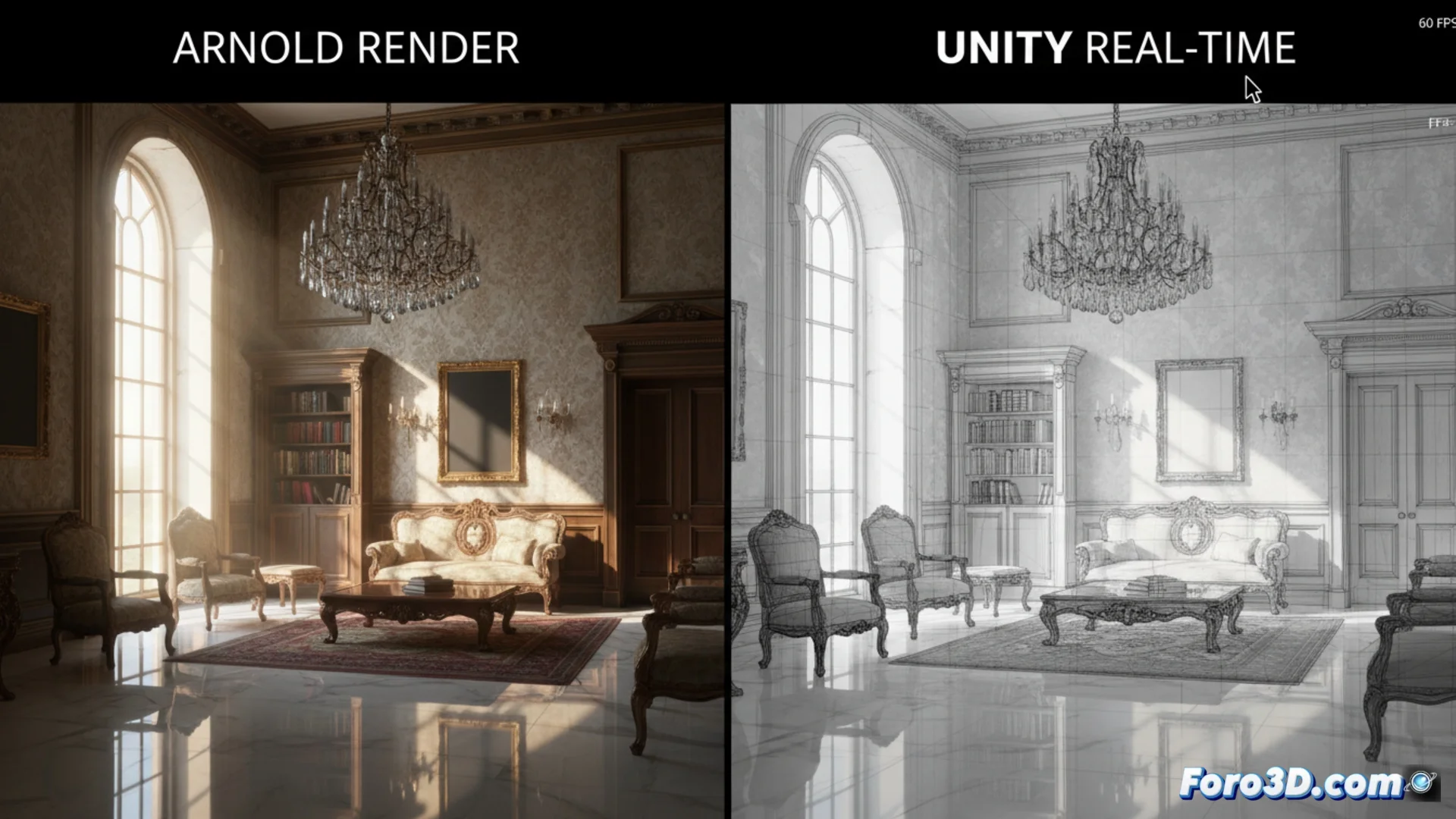
Arnold Render and Unity: Two Engines with Opposing Philosophies
In the world of computer graphics, choosing the right tool defines the final result. Arnold Render and Unity represent two extremes: one is dedicated to simulating light with maximum fidelity to produce static images, and the other prioritizes generating frames quickly for experiences that the user interacts with. Understanding their essential differences is key for any project 🎯.
Technical Core and Design Purpose
Arnold operates as a pure ray tracing engine, integrated into software like Maya or Houdini. Its goal is to accurately calculate how light behaves in an environment, allowing for photographic realism. Handling dense geometry and large textures is one of its strengths, although this means each frame requires a lot of processing time. Unity was built from scratch to be a real-time engine, designed for video games, virtual reality, or interactive applications. Here, maintaining a high frame rate is the law, so it employs techniques like lightmaps and screen-space reflections, relying on the artist to optimize resources and use systems like LOD (Level of Detail).
Key Differences in Lighting and Materials:- Arnold: Calculates lighting globally. Effects like indirect light, soft shadows, and refractions emerge naturally from the physical calculation. Its materials are based on BSDF models that mimic reality.
- Unity: Uses a hybrid system. Although it can integrate limited real-time ray tracing, it combines many approximate solutions (baked). Its shaders are highly programmable to create unique effects, but matching Arnold's realism requires a lot of tweaking and often reduces performance.
It's like comparing a slow oven with an air fryer; both can cook, but the process, time, and result invite using them for different occasions.
Workflow and Usage Context
The choice between one and the other is rarely technical, but depends on the project's final destination. Each engine adapts to a very specific pipeline and production needs.
When to Choose Each Engine:- Choose Arnold when the goal is a static image or a cinematic sequence of the highest quality for film or advertising. Render time per frame is not a critical issue, and it integrates into established studio pipelines.
- Choose Unity for interactive projects where the scene must render at 60 fps or more. Its ecosystem facilitates rapid prototyping, testing on the target platform, and managing complexity by dividing the scene and actively optimizing each asset.
Conclusion: Tools for Different Purposes
It's not about one engine being superior to the other, but that they are designed to solve different problems. Arnold Render is the choice for those seeking maximum physical fidelity without real-time pressure. Unity is the platform for those who need a complex world to render interactively and smoothly. Understanding this fundamental dichotomy between image quality and execution speed is the first step to making the right decision in any visual production pipeline 🚀.