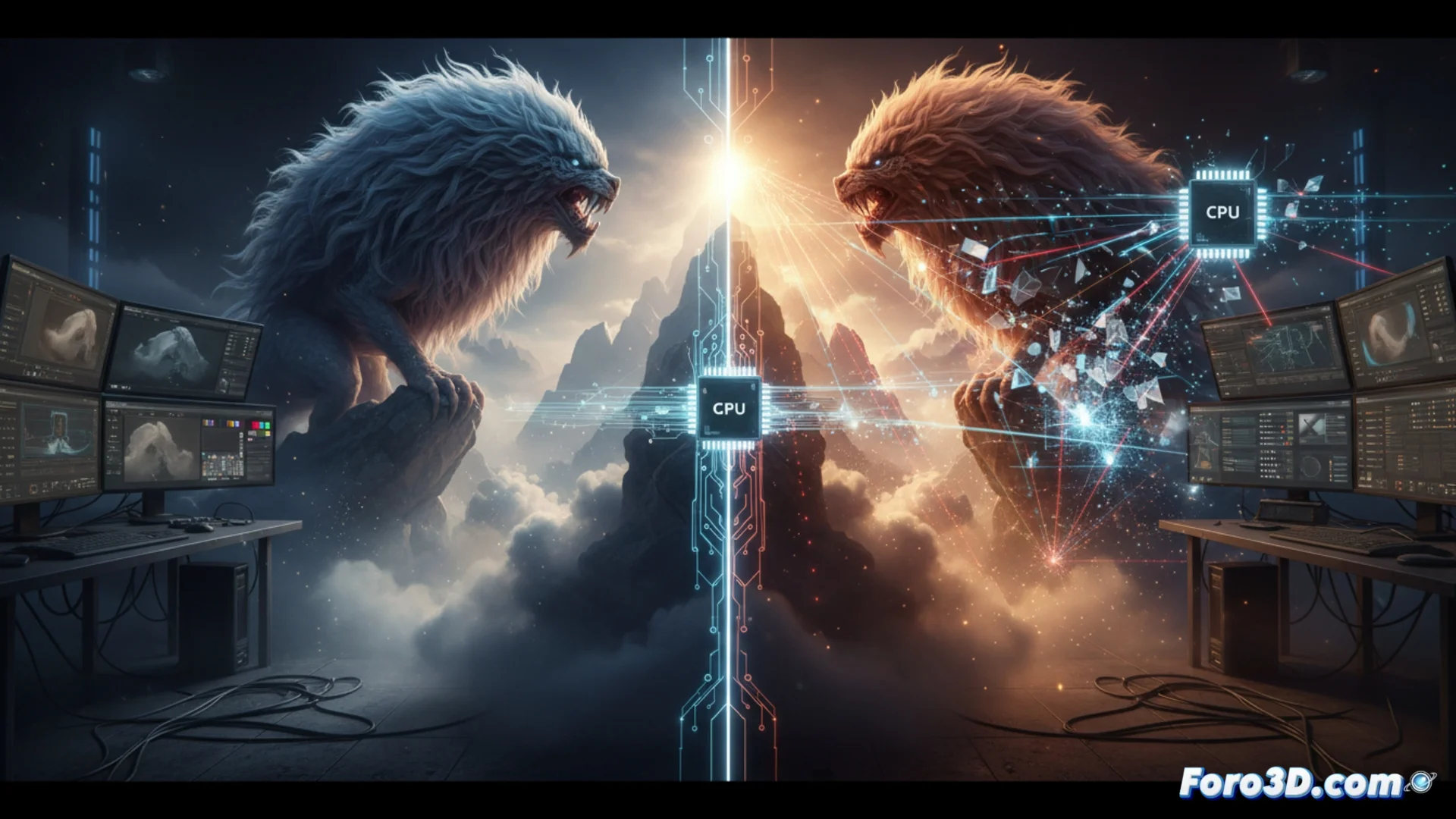
Arnold Render and MoonRay: Two Approaches to Processing Complex Scenes
In the field of 3D rendering, choosing the right engine defines how the most demanding projects are handled. Arnold Render and MoonRay represent distinct technical philosophies for tackling dense geometries, intricate shaders, and large volumes of data. While one relies on tradition and predictability, the other bets on hybridization and adaptability. 🚀
Contrasting Technical Architectures
The fundamental difference between both engines lies in their core. Arnold operates primarily on the CPU, a design that prioritizes precise control over memory and highly consistent render results. MoonRay, the open-source engine developed by DreamWorks, implements a hybrid architecture that distributes the workload between the CPU and GPU. This strategy allows accelerating certain tasks, especially those that benefit from massive parallelism, such as processing millions of instances or extensive volumetric effects.
Key features of each engine:- Arnold Render: Widely adopted node system, robust handling of dense geometries, and deep native integration with applications like Maya or Houdini.
- MoonRay: Optimizes memory usage for heavy scenes, its open-source nature allows customizing the pipeline, and it features Hydra for real-time previewing within DCCs.
- Common point: Both are designed to solve the challenges of producing photorealistic images in high-demand environments, albeit through different paths.
The architecture is not just a technical detail; it defines how a studio organizes its workflow and manages resources to meet production deadlines.
Integrating into the Production Workflow
The decision between one engine or the other often depends on the existing production ecosystem. Arnold has a long track record in the film industry, offering a consolidated and predictable workflow that many artists already master. MoonRay, being open-source, adapts better to studios that prefer to develop internal tools and need greater flexibility to customize each stage of the process.
Practical aspects of integration:- Native connectivity: Arnold connects directly with major DCC software, streamlining work in established pipelines.
- Pipeline adaptability: MoonRay allows studios to modify and extend its functions to align with their own tools.
- Agile previewing: MoonRay's Hydra renderer facilitates reviewing changes in complex scenes without waiting for final renders, optimizing artists' time.
Final Considerations for Choosing
Selecting between Arnold and MoonRay involves weighing proven stability against modern power and flexibility. For projects that require a solid workflow and extremely predictable results, Arnold remains a reference. For studios handling massive amounts of data, seeking to accelerate rendering using graphics hardware, and valuing the ability to tweak the code, MoonRay presents a very powerful alternative. The final choice will always be tied to the specific needs of the pipeline and the type of complexity the team must handle routinely. ⚖️