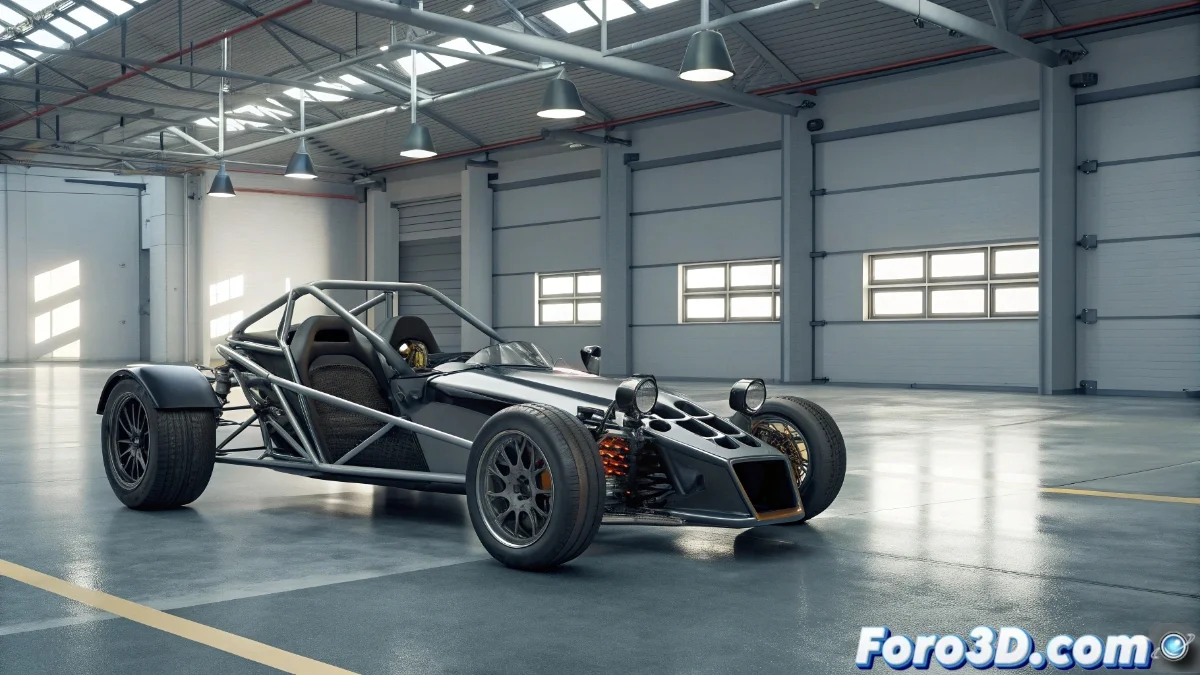
Ariel Motor Company Revolutionizes the Atom with Additive Manufacturing for Custom Components
The iconic Ariel Motor Company, world-renowned for its ultralight and spartan road vehicles, has incorporated additive manufacturing technologies into the development of the fourth-generation Atom. This strategic implementation enables the creation of fully customized components produced in limited series, marking a turning point in the production philosophy of the British brand 🚗.
Transformation of the Traditional Manufacturing Process
The adoption of industrial 3D printing makes it possible to manufacture parts with complex geometries that would be economically unviable using conventional methods like injection molding or fiberglass fabrication. This innovative approach eliminates high tooling costs, allowing Ariel to keep the vehicle's weight to a minimum while offering advanced technical solutions.
Components Manufactured by Addition:- Instrument housings with optimized aerodynamic designs
- Structural under-hood brackets with advanced topologies
- Specific enclosures for electronic systems
- Exclusive exterior customization elements
"Additive manufacturing allows us to iterate designs in a matter of days instead of months, offering our customers a level of customization previously unthinkable" - Ariel's Engineering Director
Impact on Performance and Driving Experience
The weight reduction achieved through these printed components translates directly into tangible improvements in agility, acceleration, and energy efficiency. Each additively manufactured element is structurally optimized to meet the demanding performance standards that characterize the brand, demonstrating that lightness and robustness can perfectly coexist.
Competitive Advantages Gained:- Up to 40% reduction in new component development time
- Ability to produce economically viable minimum batches
- Exhaustive customization without significant cost penalties
- Sustainability through reduction of leftover material and storage
Future of Additive Manufacturing in High-Performance Automotive
While some motor purists might show skepticism towards "printed" components, the reality shows that these parts surpass traditional ones in many aspects, offering greater specific strength and geometric freedom without compromises in durability. Ariel thus sets a crucial precedent for other manufacturers seeking more agile, economical, and sustainable production methods in the high-performance vehicle segment 💨.