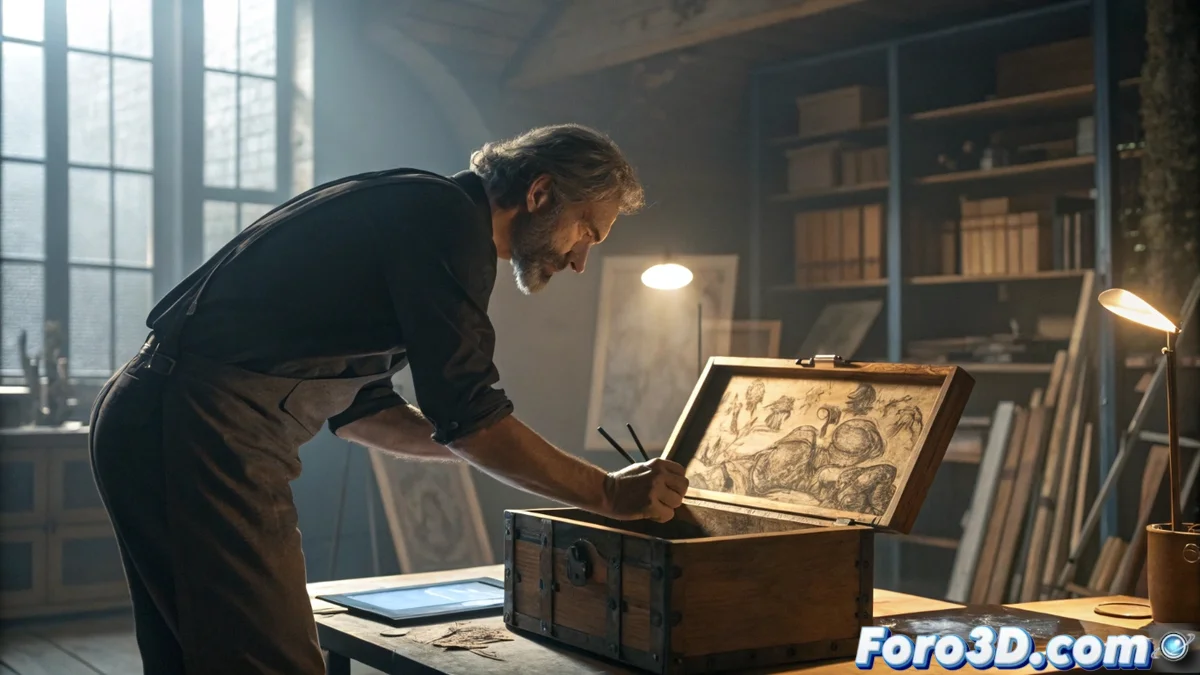
Archaeology of Personal Style in 2D Illustration
In the realm of visual creation, there exists a transformative exercise: the archaeology of your own style. It consists of digging into your digital or physical files to rescue drawings created years ago and reinterpret them with your current skill. This practice is not a mere review, but a powerful tool for artistic development. 🎨
The Value of Confronting Your Creative Past
This process goes beyond measuring technical improvement. By comparing versions, the path traveled in handling composition, color palette, and level of detail becomes evident. Fundamentally, it serves to rediscover concepts or stylistic approaches that, unconsciously, were abandoned and that can define your unique voice.
Key Benefits of This Practice:- Reinforced Self-Knowledge: The objective comparison between the "before" and the "now" reveals patterns of growth and areas for continuous improvement.
- Fusion of Eras: It allows integrating aesthetic solutions from the past into new projects, enriching your portfolio with a richer personal narrative.
- Active Learning: Identifying and avoiding the repetition of old mistakes accelerates your evolution and keeps a fresh and motivated workflow.
Turning old scribbles into modernized relics is the best joke you can play on your past self... and the best gift for your future self.
How to Conduct Your Own Artistic Excavation
Implementing this ritual requires a simple but intentional method. The key lies in selection and prior analysis, not in automatic redrawing.
Steps for an Effective Excavation:- Meaningful Selection: Choose an old piece that represents a stage, an overcome challenge, or an idea that still resonates with you. It doesn't have to be your "best" past work.
- Impartial Analysis: Examine the original work identifying its central theme, its style choices, its strengths, and its weaknesses. Take notes.
- Reinterpretation with Current Tools: Using your contemporary software and hardware (tablets, digital brushes, learned techniques), redraw the piece. The goal is not to copy, but to reimagine preserving its core essence while applying your current maturity.
A Cycle for Constant Innovation
Transforming this exercise into a recurrent practice is what generates a lasting impact. Set a reminder to perform an "excavation" every certain time. This habit acts as a creative thermostat, avoiding stagnation and keeping curiosity and passion for illustration alive. In the end, more than a simple drawing, you obtain a tangible map of your journey as a creator. 🗺️✏️