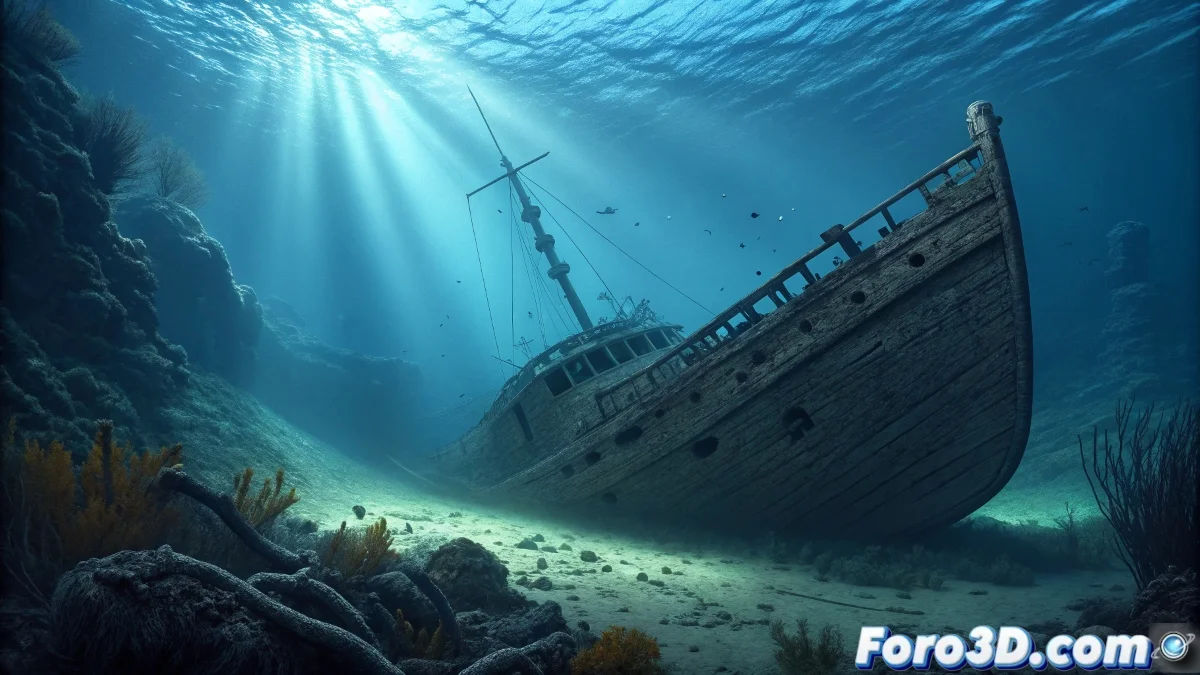
A Time Traveler in the Depths
The cold waters off the coast of Newfoundland have returned a historical treasure: the remains of a whaling ship that had been missing for more than a century and a half. ⚓ The discovery is exceptional not only for its age, but for the surprising state of preservation of the wreck, which has allowed archaeologists to access a practically intact time capsule. This ship, once a legend among local fishermen, offers an unprecedented window into the harsh life of the sailors who roamed the North Atlantic in the 19th century.
A History Lesson in Every Plank
The value of the discovery lies in the everyday details that have endured. The utensils, tools, and personal belongings found on board tell a story of effort, survival, and craftsmanship. 🛠️ The study of the hull and rigging reveals the advanced navigation and whaling techniques of the era, showing how these ships were designed to face the most extreme conditions in their pursuit of whales. Each element provides crucial data on an industry that shaped the economy and culture of the region.
This ship is not just a structure; it is an archive of 19th-century seafaring life.
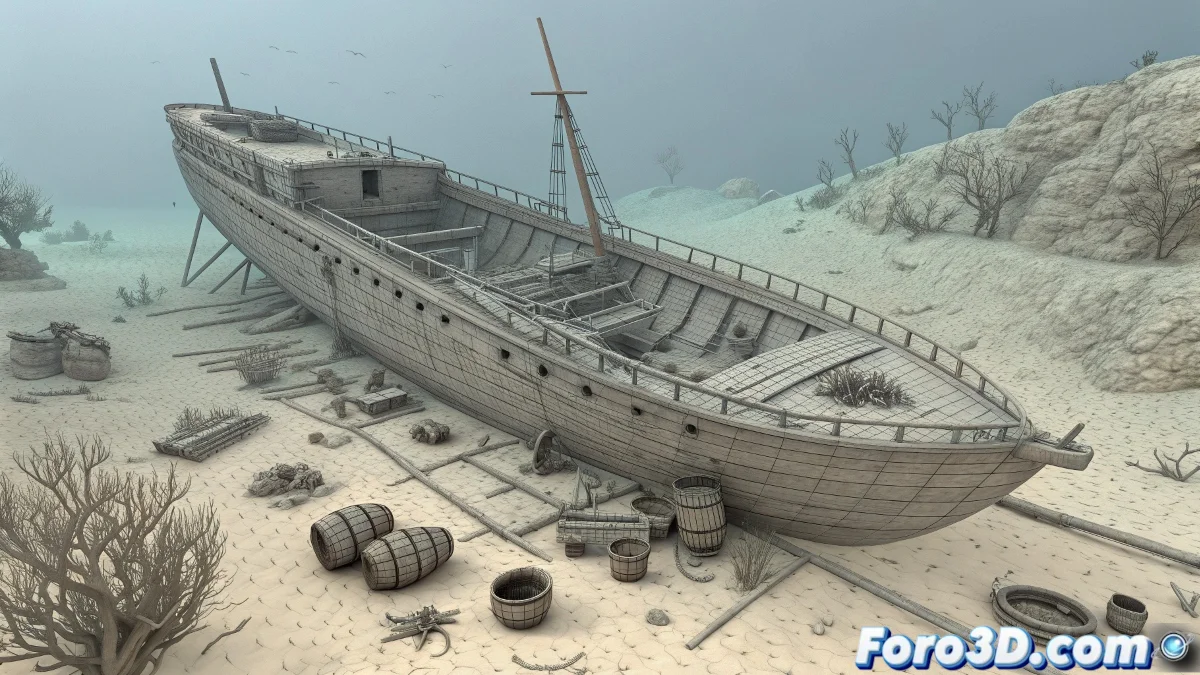
Recreating the Whaling Epic in 3D
To visualize this heritage, Houdini offers unique power. Through procedural modeling, the complex structure of the ship can be reconstructed, generating each plank and sail in a parameterized way. 🌊 Fluid simulation systems allow recreating the oceanic environment surrounding the wreck, with water, foam, and sediments that bring the scene to life. The application of precise shaders simulates wood eroded by saltwater and rusted metal, capturing the passage of time realistically.
- Underwater Lighting: Set up lights that simulate the penetration of sunlight into the depths.
- Aged Textures: Apply roughness and displacement maps to show wear.
- Environmental Context: Add marine flora and fauna around the wreck for greater realism.
A Legacy for Maritime Memory
This discovery transcends the archaeological; it is a bridge to our maritime past. 🐋 It allows a better understanding of the impact of the whaling industry and the human stories that are often lost in official chronicles. Digital recreation not only serves for documentation, but also allows the public to experience and understand the importance of this submerged cultural heritage, ensuring that its legacy does not fall into oblivion again.
After digitally recreating every detail of the ship, one can almost hear the creaking of the wood and the song of the whales. 🎣 It is a reminder that the best technology sometimes serves to keep the oldest memory alive.