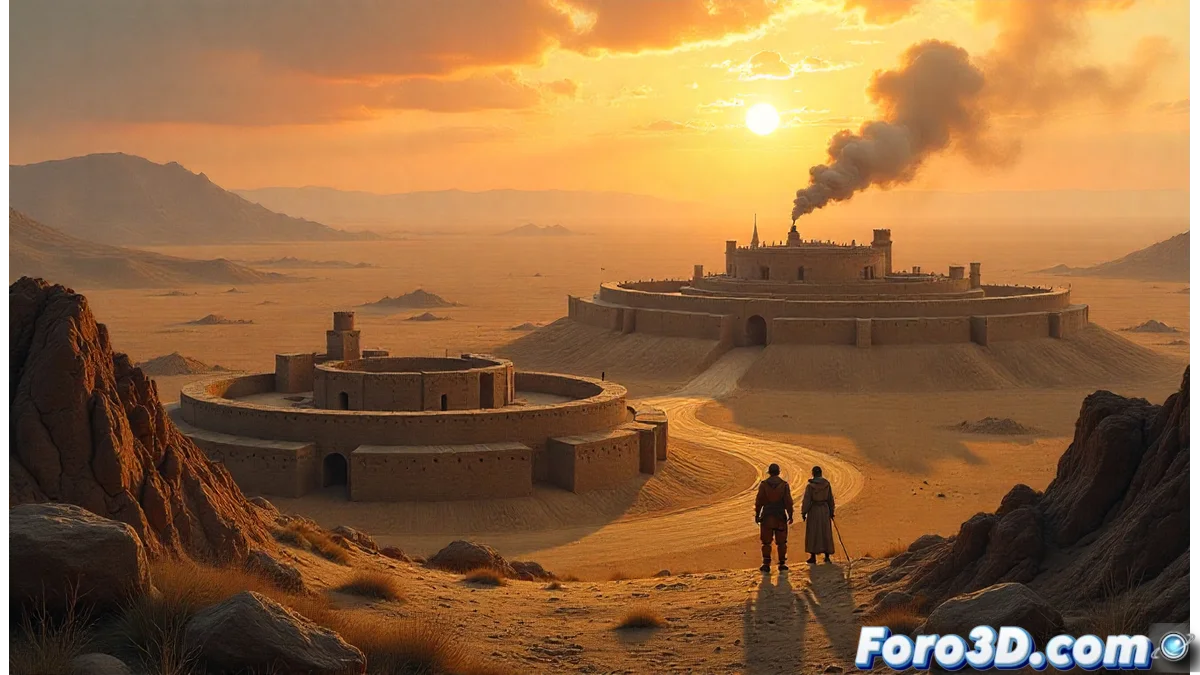
Archaeological Discovery in Kazakhstan Reveals Advanced Bronze Age City
An international team of archaeologists has unearthed the remains of an impressive city from the Bronze Age on the vast plains of northern Kazakhstan, a discovery that is radically transforming our understanding of early urban development in Central Asia 🏺
Revolutionary Architecture and Urban Design
The concentric circular city spans approximately 120 hectares and features sophisticated planning that includes advanced drainage systems and meticulously organized streets. The perimeter defensive fortifications, built with adobe and stone, protected a central core where monumental structures, likely intended for administrative and religious functions, stood 🏛️
Notable Urban Features:- Concentric circular design with specialized neighborhoods organized by sectors
- Separate bronze metallurgy workshops and ceramic production areas
- Precise astronomical orientation in the layout of the constructions
"This settlement completely challenges established historical narratives about urban emergence in the region, demonstrating a level of social complexity we did not expect to find in this period" - Archaeological Research Team
Artifacts and Cultural Connections
The recovered material finds include bronze tools of remarkable quality, elaborate jewelry made with precious metals and semi-precious stones, and ceramics decorated with complex geometric patterns. These objects provide evidence of transcontinental trade connections that extended across Eurasia during the Bronze Age 🌍
Significant Discoveries:- Bronze tools and weapons demonstrating advanced metallurgical knowledge
- Personal adornment objects indicating social stratification and artisanal specialization
- Ceramics with decorations showing diverse cultural influences
Historical Impact and Chronology
Carbon-14 analyses place the peak of this ancient metropolis between the 18th and 15th centuries BC, contemporary with the great civilizations of Mesopotamia and the Indus Valley. This discovery positions the city as a crucial cultural and economic center in the Eurasian steppes, demonstrating that complex urban development in this region is much older than previously believed 📜