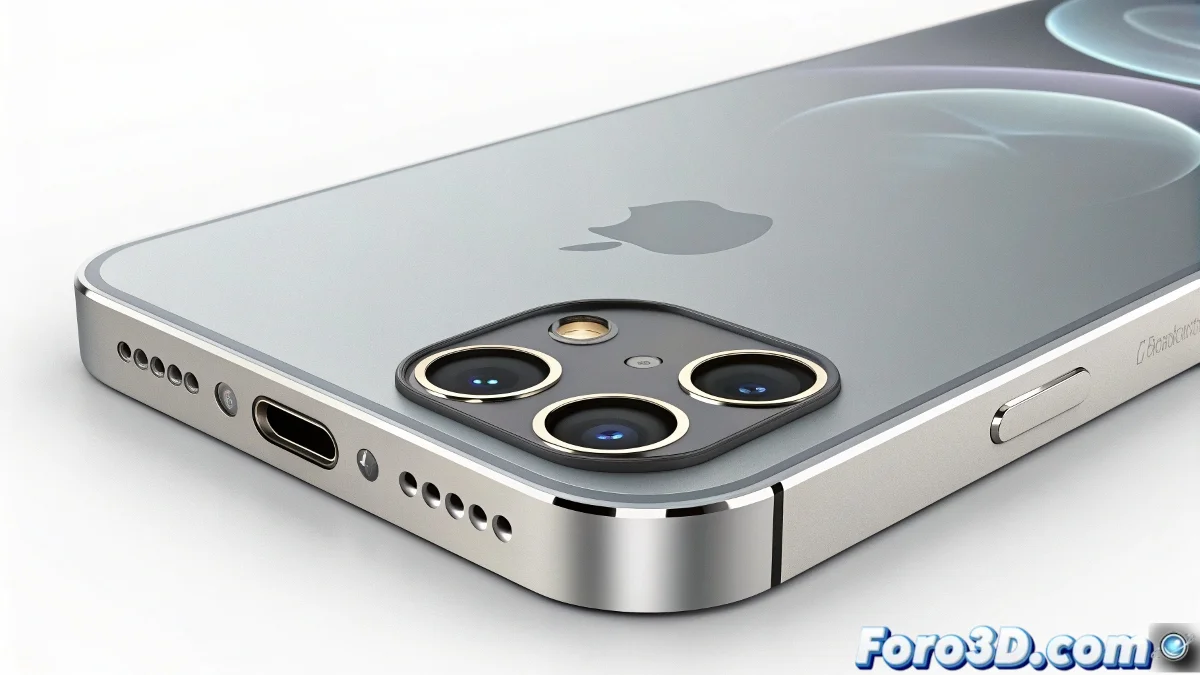
Apple Revolutionizes Manufacturing with 3D Printing in Titanium
Apple has taken a significant step in manufacturing innovation by incorporating 3D printing in the fabrication of titanium USB-C ports for its upcoming iPhone Air 🔧. This decision not only aims to optimize the design and improve the device's durability but also considerably reduces its weight, solidifying the use of advanced production technologies in its flagship product line. The choice of titanium, a material known for its strength and lightness, combined with the precision of additive manufacturing, positions Apple at the forefront of sustainable technological manufacturing. Because even the smallest component deserves an industrial revolution 💡.
Advantages of 3D Printing in Critical Components
The adoption of 3D printing for essential elements like USB-C ports allows Apple to optimize its production processes in ways previously impossible. This technology drastically reduces titanium waste, as the material is deposited only where it's needed, in contrast to traditional subtractive methods. Furthermore, it enables the creation of complex internal structures that improve the port's strength and durability, a component subject to constant mechanical stress. The result is a thinner, lighter port better capable of withstanding the rigors of daily use 🏗️.
The adoption of 3D printing for critical elements like USB-C ports allows Apple to optimize production processes, reduce titanium waste, and achieve more resistant components.
Impact on Design and Corporate Sustainability
This innovative approach has profound implications for both design and Apple's environmental commitments. The additive manufacturing process contributes to a more compact and lightweight design without compromising robustness, a crucial factor in devices where every millimeter counts. Moreover, this method significantly reduces the production carbon footprint by minimizing material and energy waste, aligning perfectly with the sustainability goals the company has promoted in recent years. A demonstration that high technology and environmental responsibility can go hand in hand 🌱.
Technical Features of the Innovation
Apple's implementation uses several advanced techniques:
- Metal 3D Printing: Use of titanium powder and laser fusion to create precise structures.
- Generative Design: Algorithms that optimize the port's shape for maximum strength with minimum material.
- Precision Finishing: Post-printing processes that guarantee millimeter tolerances and a smooth surface.
- Structural Integration: Design that allows for perfect assembly with other device components.
The Future of Manufacturing at Apple
This move represents more than an incremental improvement; it signals a strategic transition towards more advanced and sustainable manufacturing methods. 3D printing in titanium could expand in the future to other critical components, such as frames, internal supports, or even aesthetic elements, ushering in a new era of more efficient, ecological, and technologically sophisticated devices. Apple once again demonstrates that innovation isn't just in what the device does, but in how the device is made 🚀.
The Irony of Technological Advances
Your cables will still mysteriously break every six months... but at least they'll do so connected to a 3D printed titanium port with a style that would make NASA engineers weep with envy 😅.