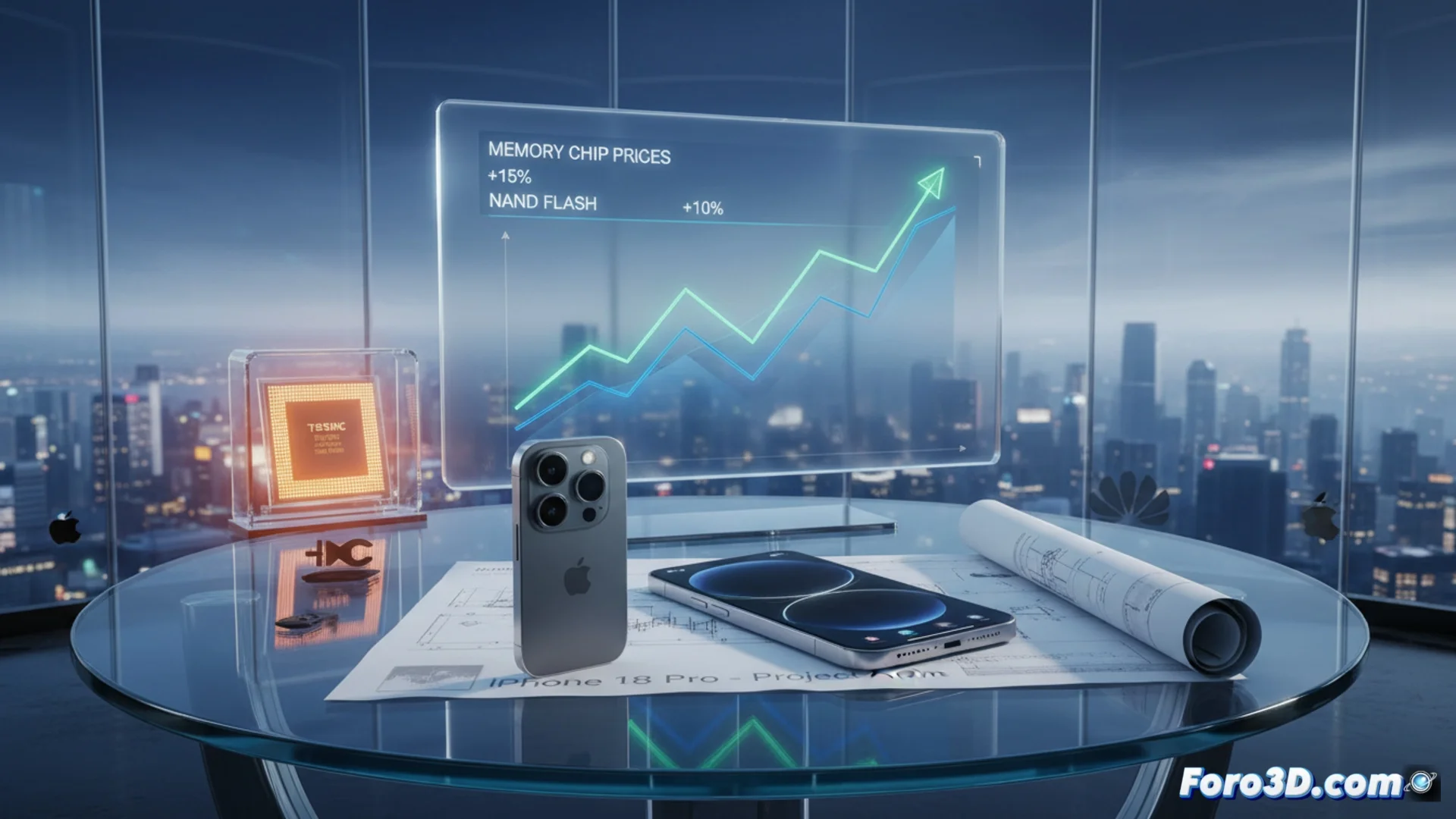
Apple Changes Its iPhone Strategy Amid Rising Component Costs
The technology industry faces constant pressure from the increase in prices of key components. Apple, although it does not detail the exact effect on its numbers after March, will hardly be able to fully absorb these additional costs and is likely to pass them on. In response, its plan for 2026 focuses on promoting and launching mainly its most expensive iPhone models. 📈
A Shift Toward the High-End Range
The company's roadmap prioritizes devices with higher profit margins. This includes an expected foldable model and two superior variants of the iPhone 18, which would integrate more powerful cameras and larger screens. In contrast, the base version of the series could delay its distribution until the second half of 2027. This move seeks to defend profitability against inflation in parts like processors manufactured by TSMC.
Key elements of the new strategy:- Focus launches on premium and luxury devices.
- Equip top models with advanced imaging technology and larger displays.
- Potentially delay the availability of the entry-level model to balance the portfolio.
The next big innovation will not be just in the hardware, but in the ability to manage the complex equation of costs to manufacture a phone.
Repercussions Across the Mobile Sector
This situation is not exclusive to Apple. Other smartphone companies are reevaluating their plans globally. The sustained increase in memory costs and the persistent shortage of various components force manufacturers to take drastic measures to keep their business viable. 🔄
Actions brands are taking:- Optimize their product lines to focus on the most profitable segments.
- Manage inventories with much stricter and more careful control.
- Reconsider launch schedules and the final pricing structure that consumers see.
The New Strategic Challenge
The current landscape redefines what it means to compete. Beyond developing the fastest chip or the camera with the most megapixels, success will depend on the ability to navigate supply chain volatility and protect financial margins. Apple's strategy for 2026 is a clear reflection that the battle for innovation is now also fought in spreadsheets and logistics. 💼