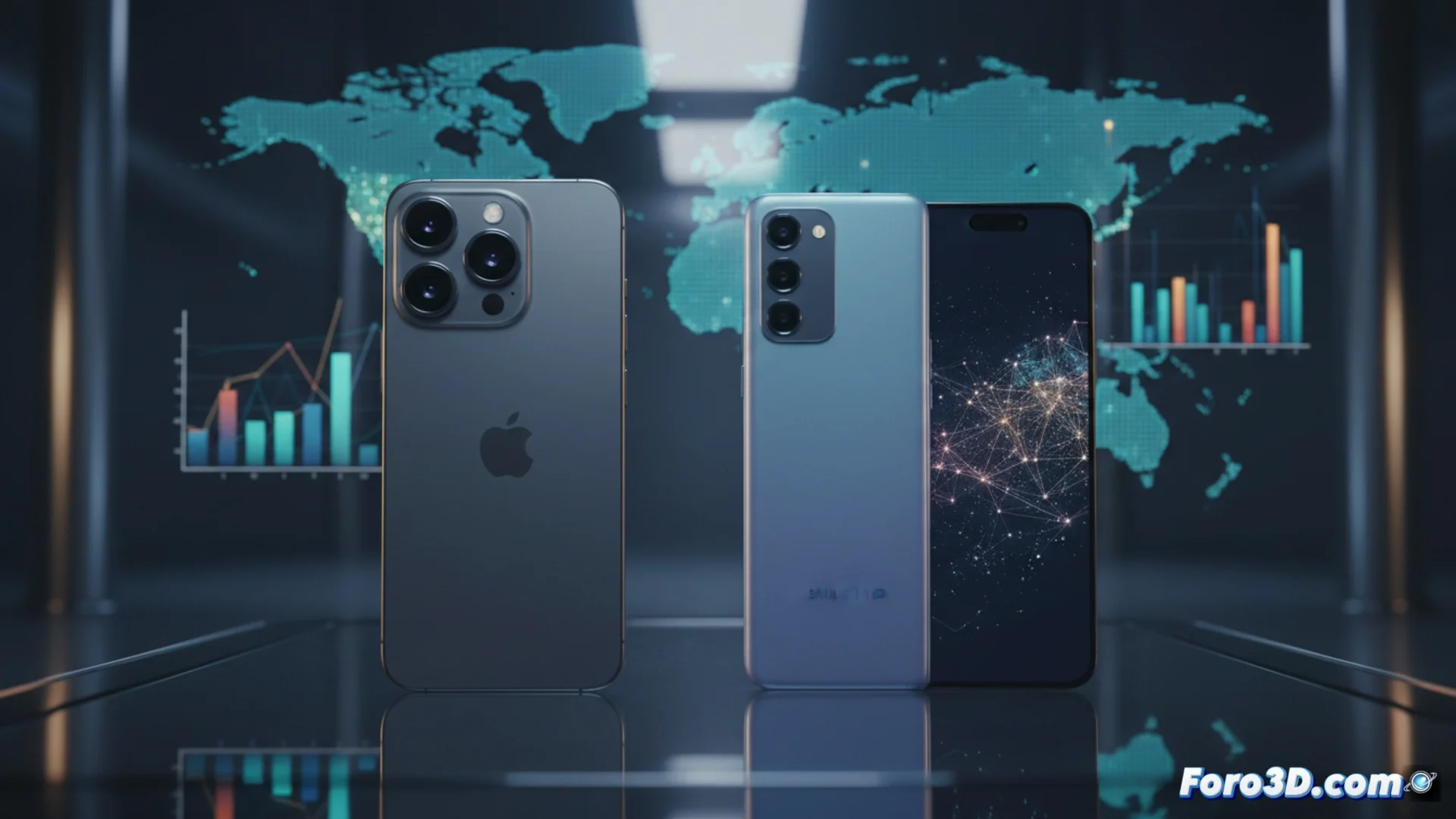
Apple and Samsung Lead the Global Smartphone Market in 2025
The latest data from Counterpoint Research confirms that Apple's iPhone 16 positions itself as the best-selling mobile device worldwide during 2025. This dominance is not exclusive, as the Cupertino firm and its main rival, Samsung, dominate most positions on the list of the ten most popular models. 🏆
The Duopoly Defining the Industry
The current landscape reflects intense but highly concentrated competition between two giants. Apple manages to place several of its devices, including variants like the iPhone 16e. For its part, Samsung succeeds in positioning three of its devices in the ranking, with its Galaxy A16 5G standing out as the most successful Android phone. Other brands participate, but it is these two manufacturers that continue to set the pace with their launches.
Key Models in the Global Top:- iPhone 16 (Apple): Absolute leader in worldwide sales.
- Galaxy A16 5G (Samsung): The best-selling Android smartphone.
- iPhone 16e (Apple): Another variant that sneaks into the most popular ones.
Innovating in the premium segment is more profitable than competing solely on specifications in the low-end range, where the lack of a single component can halt an entire production line.
A Challenge on the Horizon: Memory Shortage
Analysts project that by 2026, a shortage of memory components could significantly impact the sector. This issue would affect mid-range and low-end segments the hardest, potentially altering the ability to produce these devices and, consequently, modifying their final prices. 🚨
Factors Shaping the Market:- The anticipated memory chip shortage for next year.
- The cycles in which users decide to change their phone.
- The evolution and fluctuation of device prices.
Concentration and Its Effects
The strong dominance of Apple and Samsung directly affects how product and marketing strategies develop across the entire industry. Competition remains focused on these two main players, which defines the technological and commercial trends followed by the rest. It seems more strategic and viable for companies to focus on innovating in the high-end range, rather than waging a battle over specifications in the entry-level market, which is more vulnerable to supply chain disruptions.