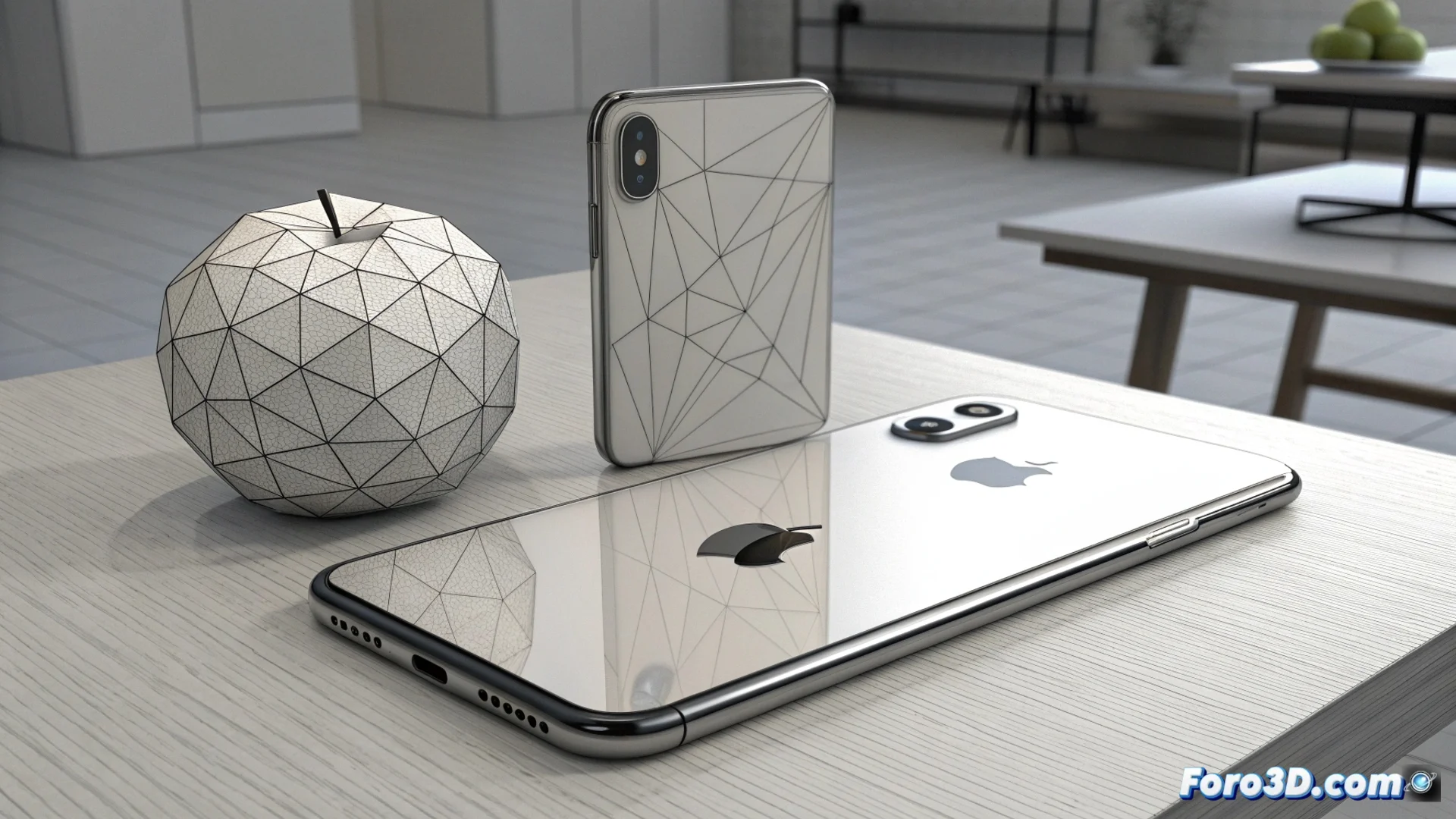
Apple Advances in Ultra-Fast 3D Scene Reconstruction with AI
New findings in artificial intelligence indicate that Apple is progressing faster than estimated in the field of computer vision. Its system, called SHARP, can produce a complete three-dimensional representation from a single flat photograph. This process is completed in less than a second, marking a milestone in speed for generating 3D models 🚀.
The SHARP Architecture Optimizes the Process
The SHARP method operates with a neural network designed to process the initial image efficiently. Instead of building the 3D scene step by step, the technique directly predicts a dense volume. This eliminates intermediate stages and significantly reduces computation time. The system learns from an extensive dataset that pairs images with their corresponding three-dimensional models.
Key Features of SHARP:- Processes a 2D image to generate a complete 3D model.
- Performs reconstruction in less than a second.
- Uses a neural network architecture that directly predicts dense volumes.
This capability has direct implications for smoother and more realistic augmented reality experiences.
Practical Applications of the Technology
This functionality directly impacts the creation of more immersive augmented reality experiences. It could be integrated into devices like the iPhone or the future Apple Vision Pro to digitize objects or spaces instantly. Beyond the consumer realm, the tool is useful in sectors such as robotics, industrial design, or cultural heritage preservation, where capturing objects in 3D quickly is essential.
Possible Uses for Ultra-Fast 3D Reconstruction:- Integration into mobile devices for instant AR.
- Digitalizing environments for robotics and automation.
- Quickly documenting and preserving cultural artifacts.
The Future of the Technology in Devices
The pending challenge lies in enabling this function to run on accessible hardware without compromising the device's thermal performance. The community hopes it won't be an exclusive feature of future ultra-high-end models. The SHARP advancement underscores the race to implement 3D generative AI in everyday products, a step further toward richer and more spontaneous digital interactions 💡.