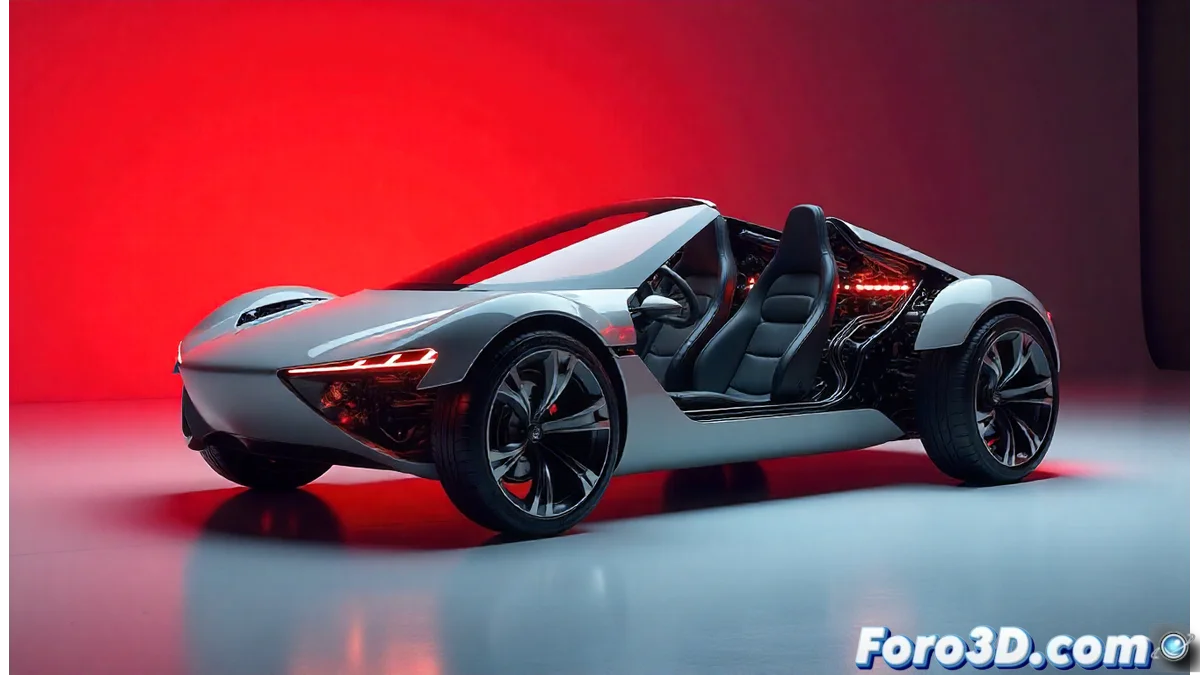
APMA Project Arrow: 3D Printing Revolutionizes the Canadian Electric Vehicle
Canada's automotive industry is reaching an unprecedented technological milestone with the development of the APMA Project Arrow, an electric vehicle prototype that incorporates a complete chassis and structural components manufactured using 3D printing. This flagship project not only demonstrates the advanced capabilities of additive manufacturing in the automotive sector but also establishes new paradigms in production efficiency and innovative design. The initiative fuses Canadian industrial tradition with disruptive technologies, positioning the country as a global benchmark in sustainable mobility. 🚗⚡
Innovative Materials and Optimized Design
The implementation of 3D printing technologies in the Project Arrow enables the creation of highly optimized structural parts that would be prohibitively costly or impossible to manufacture with conventional methods. This approach includes critical chassis components and bodywork elements, made with next-generation composite materials that combine maximum strength with reduced weight. The inherent flexibility of the additive manufacturing process facilitates rapid iterations during the design phase, significantly accelerating development and technical validation cycles.
Key advantages of additive manufacturing:- Reduction of up to 60% in prototype development times
- Ability to produce complex and intricate geometries
- Minimization of material waste through additive processes
3D printing is fundamentally transforming how we conceive and produce vehicles, enabling designs that previously existed only in theory.
Transformation of the Automotive Industry
Beyond its role as a technological demonstrator, the Project Arrow is catalyzing an unprecedented multisectoral collaboration between automotive companies, academic institutions, and the Canadian government. The integration of 3D printing processes in electric vehicle production is laying the foundations for more agile and localized supply chains, reducing historical dependence on imported components. This model could redefine traditional production systems, making vehicles more customizable and accessible to different market segments.
Strategic impacts on the industry:- Establishment of more resilient regional value chains
- Potential for mass customization of vehicle components
- Reduction of carbon footprint in manufacturing processes
The Immediate Future of Vehicle Manufacturing
Although it is still not possible to print a complete vehicle from home, the advances represented by the Project Arrow drastically shorten timelines for obtaining specialized components that previously required months of waiting. The convergence between electric mobility and 3D printing is creating an industrial ecosystem where innovation accelerates exponentially, paving the way for production methods that will make automobiles more sustainable, efficient, and tailored to users' specific needs. 🔧🌟